




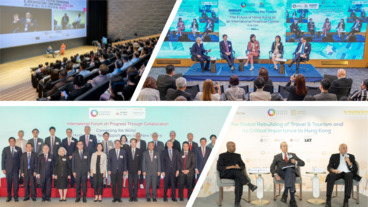



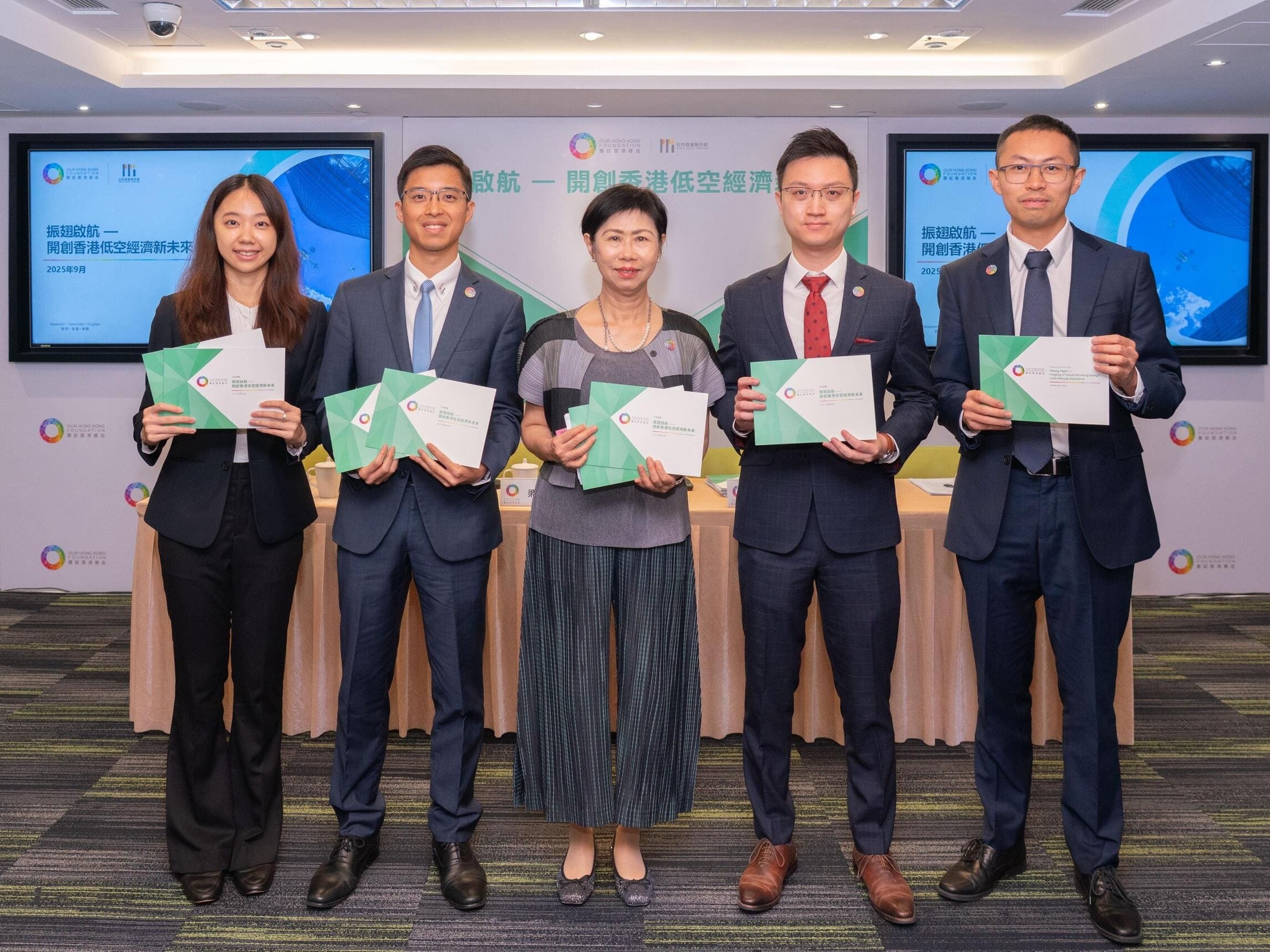
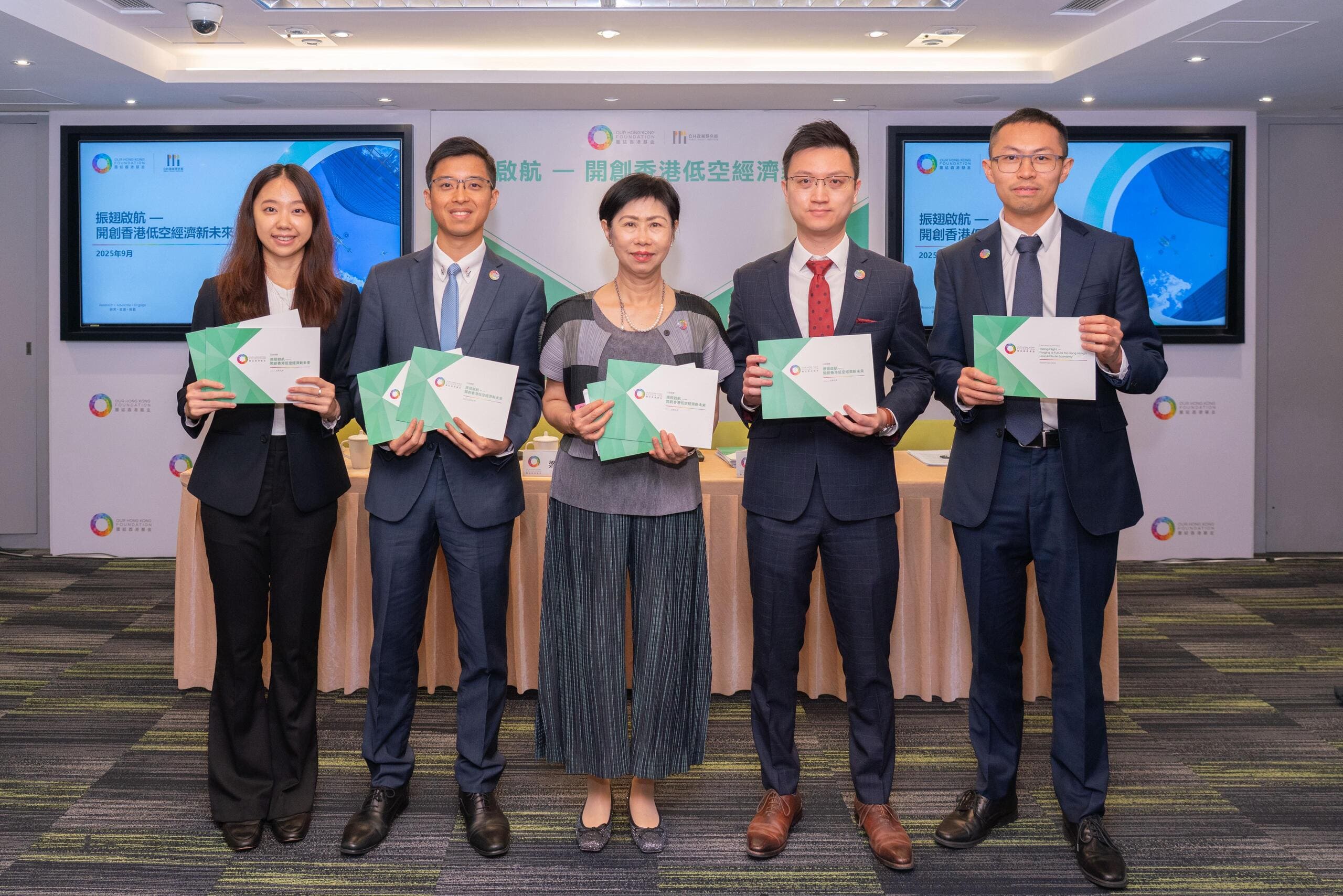
"Taking Flight — Forging a Future for Hong Kong’s Low-Altitude Economy" Press Conference





"Taking Flight — Forging a Future for Hong Kong’s Low-Altitude Economy" Press Conference

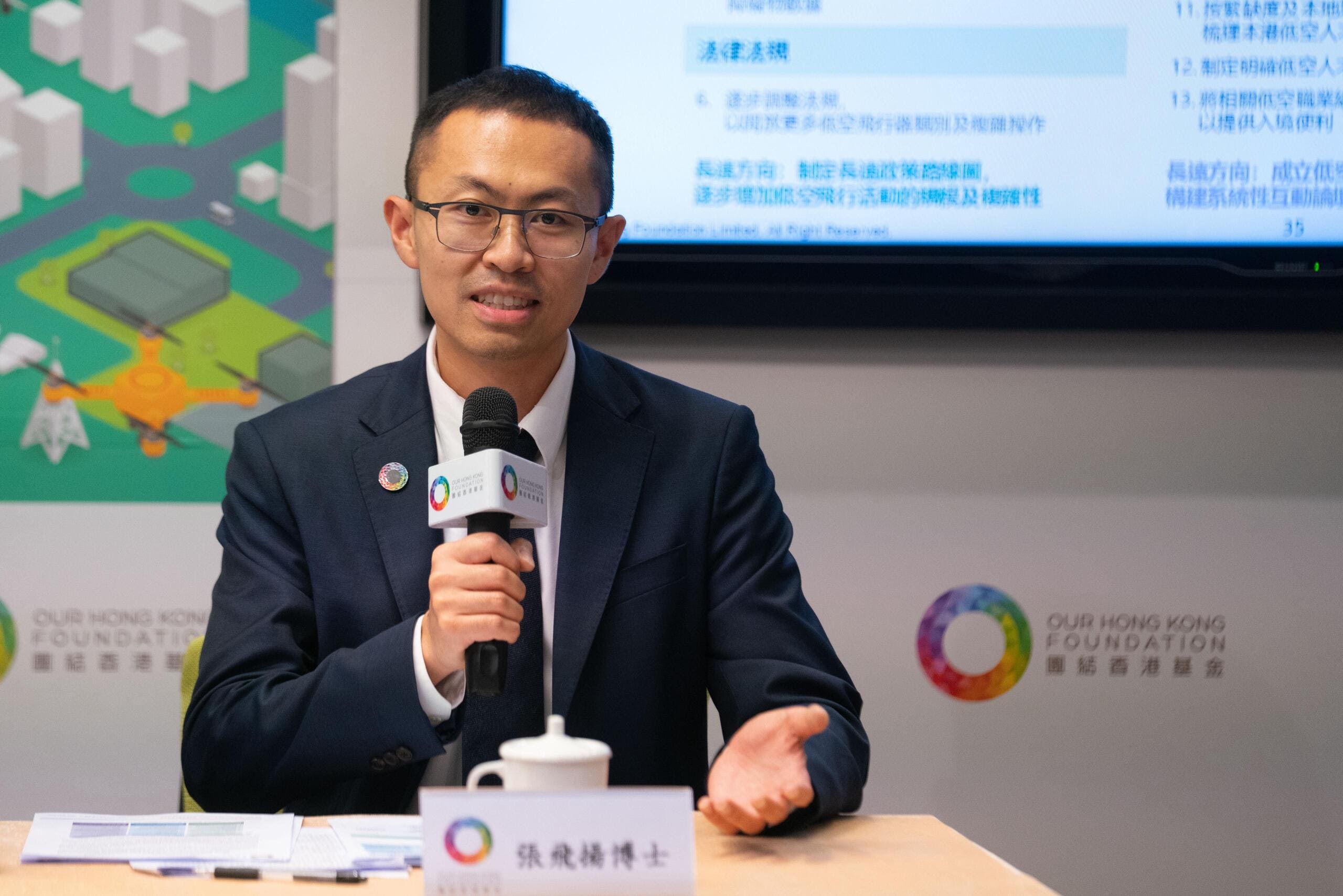
Our Hong Kong Foundation (OHKF) launched its latest research report titled “Taking Flight — Forging a Future for Hong Kong’s Low-Altitude Economy today”. As a national strategic emerging industry, the low-altitude economy (LAE) encompasses economic activities that take place in airspace below 1,000 metres, and is poised to inject new impetus into Hong Kong’s economy.
However, with its relatively small population and land size, such potential will be limited unless Hong Kong moves beyond being a mere adopter of technology. Based on the latest publicly available data, the industry value added of the LAE in Hong Kong will reach approximately HK$ 350 billion in 2050, with the majority of value generated in supporting services. In this light, OHKF advocates that the city should capture the cream of the crop in the LAE by specialising in high value-added services, leveraging its repertoire of world-class financial, legal, and professional expertise.
Grounded on infrastructure and regulations, followed by innovation and talent, and finally culminating in industry and services, the report outlined a three-layer pyramid framework for developing the LAE in Hong Kong. In total, OHKF put forward 20 actionable recommendations, with a way forward for each layer.




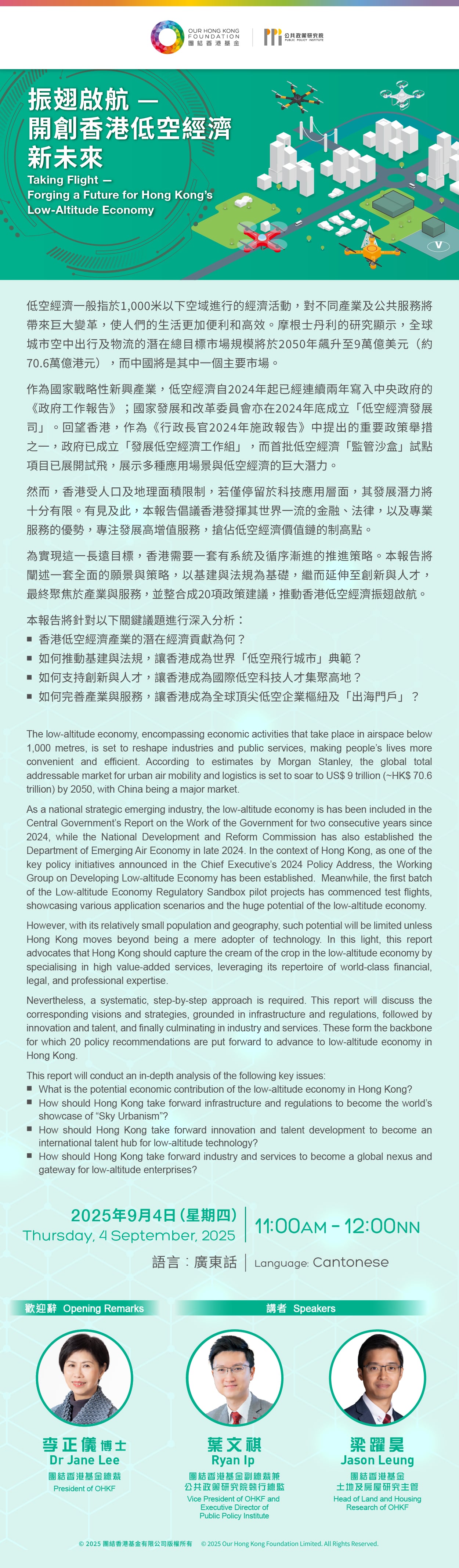

The low-altitude economy, encompassing economic activities that take place in airspace below 1,000 metres, is set to reshape industries and public services, making people’s lives more convenient and efficient. According to estimates by Morgan Stanley, the global total addressable market for urban air mobility and logistics is set to soar to US$ 9 trillion (~HK$ 70.6 trillion) by 2050, with China being a major market.
As a national strategic emerging industry, the low-altitude economy is has been included in the Central Government’s Report on the Work of the Government for two consecutive years since 2024, while the National Development and Reform Commission has also established the Department of Emerging Air Economy in late 2024. In the context of Hong Kong, as one of the key policy initiatives announced in the Chief Executive’s 2024 Policy Address, the Working Group on Developing Low-altitude Economy has been established. Meanwhile, the first batch of the Low-altitude Economy Regulatory Sandbox pilot projects has commenced test flights, showcasing various application scenarios and the huge potential of the low-altitude economy.
However, with its relatively small population and geography, such potential will be limited unless Hong Kong moves beyond being a mere adopter of technology. In this light, this report advocates that Hong Kong should capture the cream of the crop in the low-altitude economy by specialising in high value-added services, leveraging its repertoire of world-class financial, legal, and professional expertise.
Nevertheless, a systematic, step-by-step approach is required. This report will discuss the corresponding visions and strategies, grounded in infrastructure and regulations, followed by innovation and talent, and finally culminating in industry and services. These form the backbone for which 20 policy recommendations are put forward to advance to low-altitude economy in Hong Kong.
This report will conduct an in-depth analysis of the following key issues:
What is the potential economic contribution of the low-altitude economy in Hong Kong?
How should Hong Kong take forward infrastructure and regulations to become the world’s showcase of “Sky Urbanism”?
How should Hong Kong take forward innovation and talent development to become an international talent hub for low-altitude technology?
How should Hong Kong take forward industry and services to become a global nexus and gateway for low-altitude enterprises?






Our Hong Kong Foundation (OHKF) launched its latest research report titled “Taking Flight — Forging a Future for Hong Kong’s Low-Altitude Economy today”. As a national strategic emerging industry, the low-altitude economy (LAE) encompasses economic activities that take place in airspace below 1,000 metres, and is poised to inject new impetus into Hong Kong’s economy.
However, with its relatively small population and land size, such potential will be limited unless Hong Kong moves beyond being a mere adopter of technology. Based on the latest publicly available data, the industry value added of the LAE in Hong Kong will reach approximately HK$ 350 billion in 2050, with the majority of value generated in supporting services. In this light, OHKF advocates that the city should capture the cream of the crop in the LAE by specialising in high value-added services, leveraging its repertoire of world-class financial, legal, and professional expertise.
Grounded on infrastructure and regulations, followed by innovation and talent, and finally culminating in industry and services, the report outlined a three-layer pyramid framework for developing the LAE in Hong Kong. In total, OHKF put forward 20 actionable recommendations, with a way forward for each layer.
The low-altitude economy, encompassing economic activities that take place in airspace below 1,000 metres, is set to reshape industries and public services, making people’s lives more convenient and efficient. According to estimates by Morgan Stanley, the global total addressable market for urban air mobility and logistics is set to soar to US$ 9 trillion (~HK$ 70.6 trillion) by 2050, with China being a major market.
As a national strategic emerging industry, the low-altitude economy is has been included in the Central Government’s Report on the Work of the Government for two consecutive years since 2024, while the National Development and Reform Commission has also established the Department of Emerging Air Economy in late 2024. In the context of Hong Kong, as one of the key policy initiatives announced in the Chief Executive’s 2024 Policy Address, the Working Group on Developing Low-altitude Economy has been established. Meanwhile, the first batch of the Low-altitude Economy Regulatory Sandbox pilot projects has commenced test flights, showcasing various application scenarios and the huge potential of the low-altitude economy.
However, with its relatively small population and geography, such potential will be limited unless Hong Kong moves beyond being a mere adopter of technology. In this light, this report advocates that Hong Kong should capture the cream of the crop in the low-altitude economy by specialising in high value-added services, leveraging its repertoire of world-class financial, legal, and professional expertise.
Nevertheless, a systematic, step-by-step approach is required. This report will discuss the corresponding visions and strategies, grounded in infrastructure and regulations, followed by innovation and talent, and finally culminating in industry and services. These form the backbone for which 20 policy recommendations are put forward to advance to low-altitude economy in Hong Kong.
This report will conduct an in-depth analysis of the following key issues:
What is the potential economic contribution of the low-altitude economy in Hong Kong?
How should Hong Kong take forward infrastructure and regulations to become the world’s showcase of “Sky Urbanism”?
How should Hong Kong take forward innovation and talent development to become an international talent hub for low-altitude technology?
How should Hong Kong take forward industry and services to become a global nexus and gateway for low-altitude enterprises?