





Taking the Pulse of Transformation: Elevating Chinese Medicine Through Health Literacy




Taking the Pulse of Transformation: Elevating Chinese Medicine Through Health Literacy

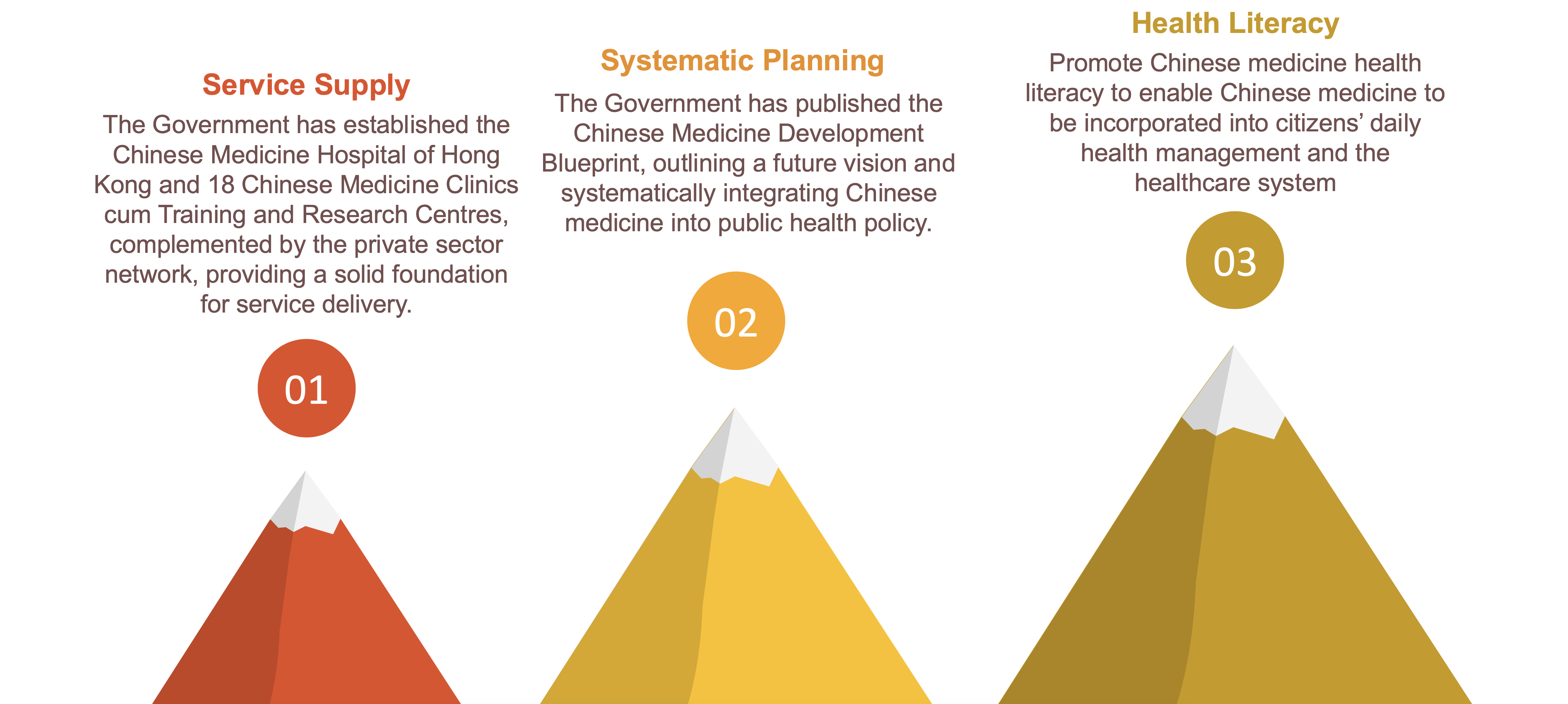
Our Hong Kong Foundation (OHKF) is launching its latest research report titled “Taking the Pulse of Transformation: Elevating Chinese Medicine Through Health Literacy.” With the commissioning of the Chinese Medicine Hospital of Hong Kong and the publication of the Chinese Medicine Development Blueprint, Hong Kong now has flagship facilities and a comprehensive strategic framework for advancing Chinese medicine. Building on this foundation, the key to elevating Chinese medicine to new heights lies in comprehensively enhancing Chinese medicine health literacy among citizens and healthcare professionals.
According to the World Health Organization, health literacy refers to the ability of individuals to access, understand, appraise, and use health information and services.
At the individual level, strong health literacy empowers people to better comprehend and apply health information, thereby enabling effective self-management of diseases, improved treatment adherence, and reduced risk of illness. At the public health level, when the overall health literacy of the population improves, citizens are better equipped to proactively adopt healthy lifestyles and actively participate in community health promotion activities. This enhances the overall health of the population and alleviates pressure on the public healthcare system.
Our Hong Kong Foundation and The Hong Kong Polytechnic University Jointly Develop Hong Kong's First Chinese Medicine Health Literacy Survey Tool
In collaboration with The Hong Kong Polytechnic University, Our Hong Kong Foundation has developed Hong Kong's first Chinese medicine health literacy survey tool and conducted policy research on promoting Chinese medicine knowledge among the public. The framework of the survey tool is based on the World Health Organization's definition of health literacy, covering fundamental concepts, CM-incorporated lifestyle, treatment, regulations and service delivery. The scale development process was rigorous to ensure it fits local conditions and possesses reliability and validity.
This study also conducted Hong Kong's first Chinese medicine health literacy survey, successfully interviewing 800 citizens without professional Chinese medicine background. Overall, citizens' Chinese medicine health literacy is at a moderate level. With a full score of 64, the average score was 44.67 (equivalent to 69.8 out of 100). Citizens generally have a deeper understanding of CM-incorporated lifestyle, regulations and service delivery, but there is significant room for improvement in knowledge of treatments and fundamental concepts. The research results showed that more than 85% of respondents were able to adopt TCM health advice, such as environmental or dietary adjustments, to improve their physical condition. Meanwhile, 40% found it difficult to distinguish proprietary Chinese medicines from health supplements. Approximately one-third of respondents were uncertain about the process of obtaining a legally valid sick leave certificate issued by a CM practitioner, and more than one-quarter were unaware of the option to provide feedback or file complaints regarding CM consultation services. 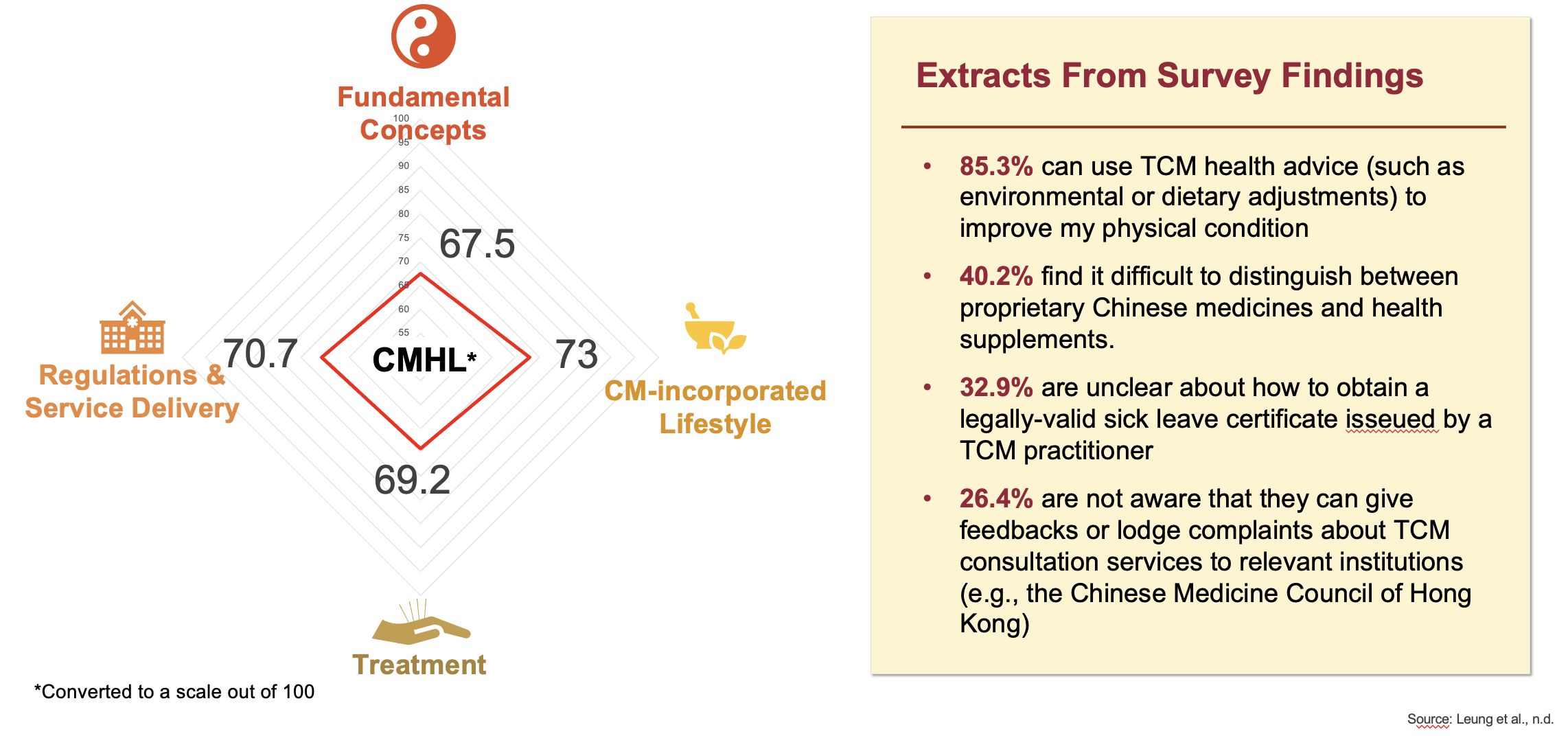
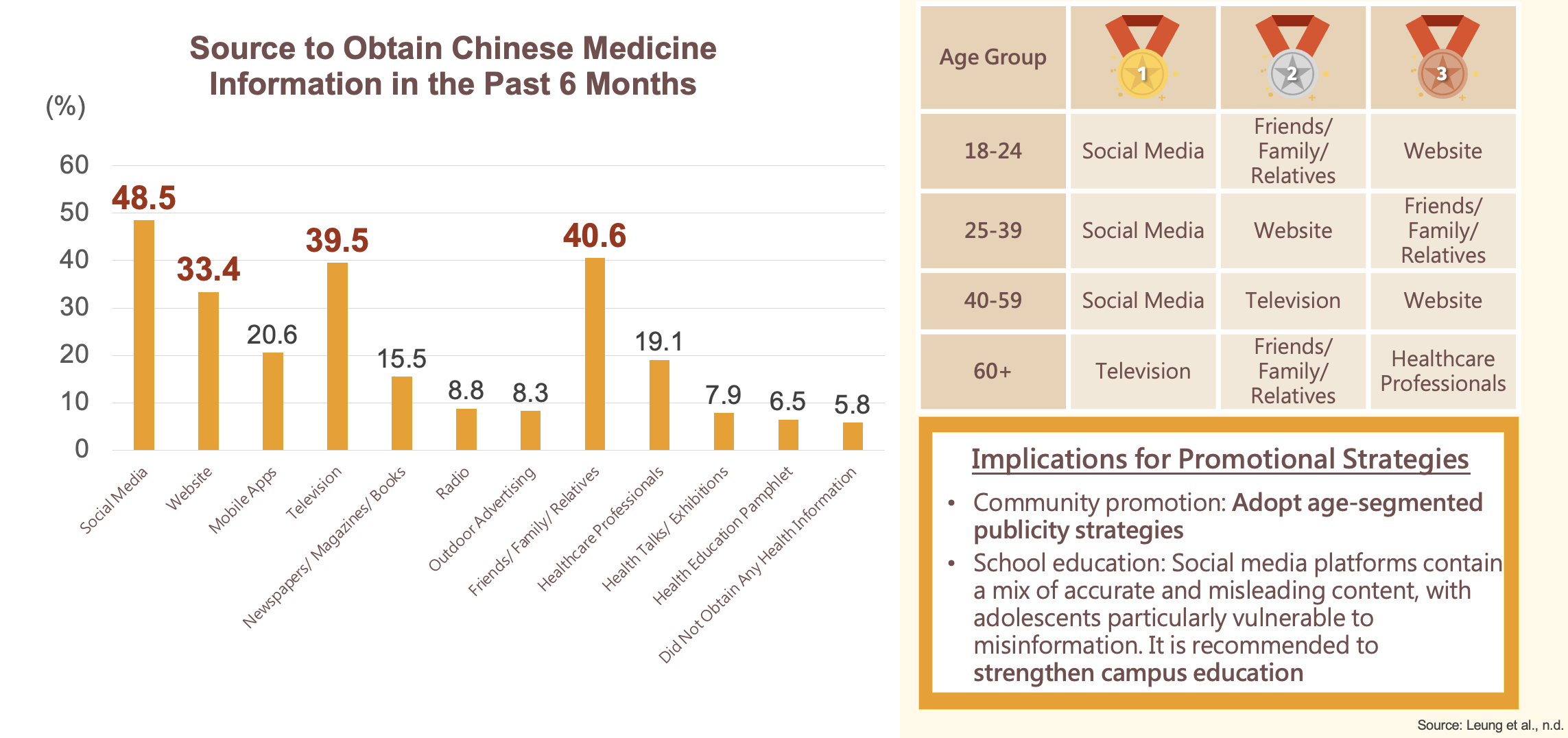
The survey also revealed clear age-based differences in information channels. Younger generations heavily rely on digital platforms, while middle-aged and elderly individuals depend more on traditional media and interpersonal networks. Therefore, community education should tailor promotion strategies to different age groups to enhance coverage and effectiveness.
Purpose, Framework, and Methodology of the Policy Research
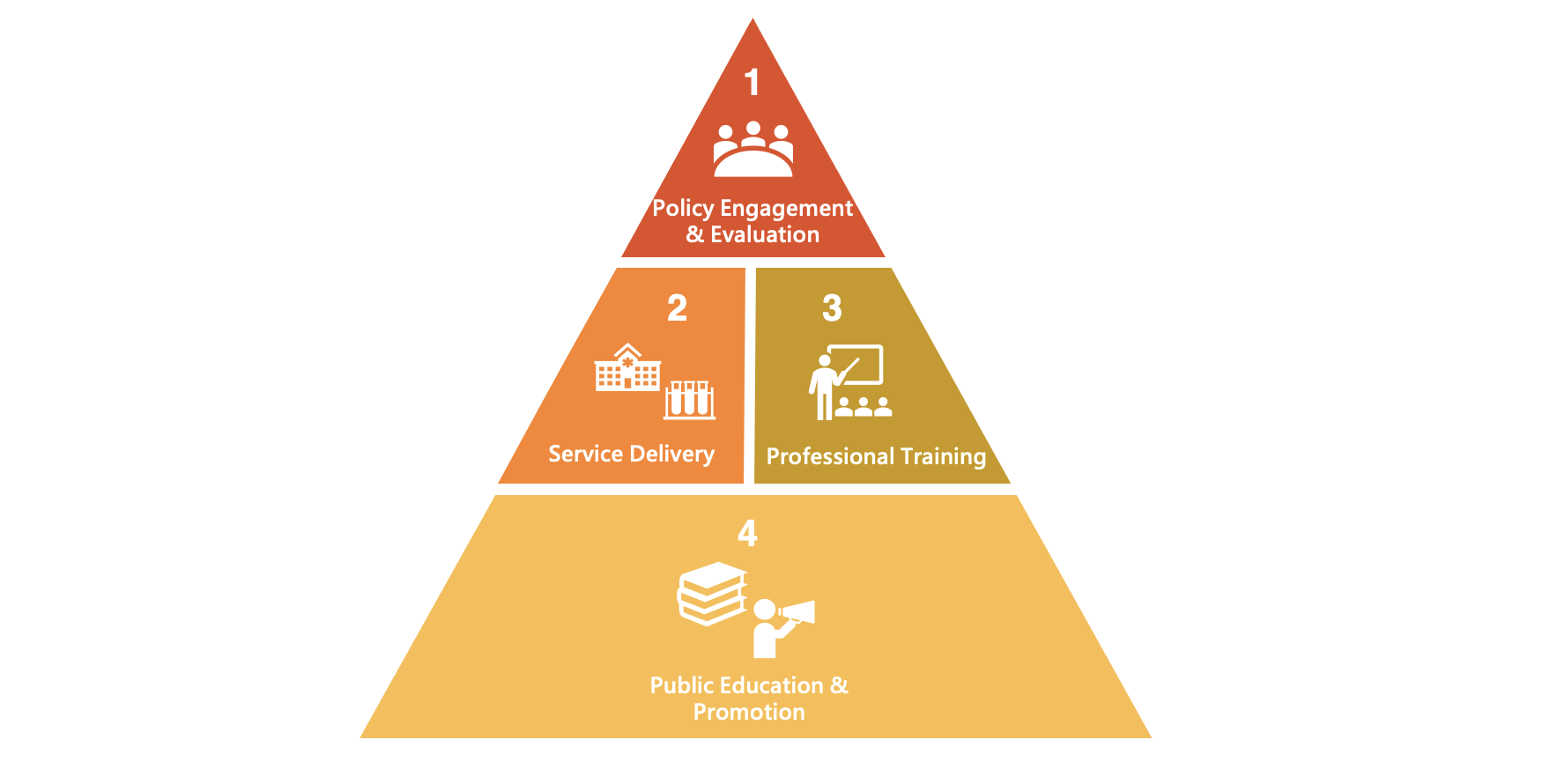
Since 2023, Our Hong Kong Foundation has actively conducted Chinese medicine policy research and advocacy. It successively released the policy advocacy report Multi-Pronged Approach to Foster Chinese Medicine Development in 2023 and the research report Transforming Chinese Medicine through System Development and Integration in 2024, driving continuous industry development. Building on this foundation, the current report focuses on Chinese medicine health literacy, providing a fresh perspective into advancing the industry. Drawing on literature reviews and stakeholder interviews, the Foundation proposes 9 recommendations across 4 major areas, including policy engagement and evaluation, service delivery, professional training, and public education and promotion. This report aims to enhance the understanding and application of Chinese medicine among citizens and healthcare professionals, thereby further improving Hong Kong's overall health level. The report's recommendations are as follows:
I. Strengthening Policy Engagement and Evaluation Mechanisms: Establish a standardised Chinese medicine health literacy assessment system as one of the key performance indicators for evaluating the effectiveness of policies and initiatives. Through stratified data analysis, precisely identify groups with low literacy levels and common knowledge gaps, enabling targeted resource allocation and supporting the Government in refining strategies. Concurrently, advocate for a permanent seat for Chinese medicine representatives on different healthcare committees to enhance Chinese medicine industry's participation and influence within the overall healthcare system.
II. Promoting Interprofessional Service Collaboration and Integration: Adopt a citizen health needs-oriented approach to strengthen interprofessional collaboration. Recognising that the Chinese Medicine Development Blueprint designates depression as an area of strength for Chinese medicine, and given successful community experiences, the Government should prioritise integrating Chinese medicine into mental health services, with phased expansion to other domains. In parallel, fully leverage the Chinese Medicine Hospital's research and teaching platform to generate robust scientific evidence, thereby boosting healthcare professionals' confidence in applying Chinese medicine and enhancing public recognition of its efficacy.
III. Optimising Professional Curricula and Continuous Training: Recommend that tertiary institutions incorporate practical Chinese medicine content into existing healthcare professional curricula. The Government should also coordinate and promote short-term clinical attachment in Chinese medicine for healthcare students to cultivate professionals equipped with Chinese medicine health literacy. Furthermore, interprofessional case-sharing should be integrated into continuous professional development programmes for Chinese medicine practitioners and other healthcare professionals. As collaboration progresses, the content should be gradually expanded to strengthen mutual confidence in interprofessional practice.
IV. Enhancing Community Promotion and School Education: For community promotion, Chinese medicine cultural festivals to be “demand-driven” and “experience-oriented”, complemented by the use of Chinese medicine health literacy survey tool to assess participation levels and improvements in literacy. For school education, strengthen cross-sector collaboration between Chinese medicine and education sectors to enable children and adolescents to develop accurate understanding from an early age. Only through the complementary efforts of school education and community promotion can all age groups be comprehensively covered, achieving an overall elevation of Chinese medicine health literacy.




Our Hong Kong Foundation (OHKF) is launching its latest research report titled “Taking the Pulse of Transformation: Elevating Chinese Medicine Through Health Literacy.” With the commissioning of the Chinese Medicine Hospital of Hong Kong and the publication of the Chinese Medicine Development Blueprint, Hong Kong now has flagship facilities and a comprehensive strategic framework for advancing Chinese medicine. Building on this foundation, the key to elevating Chinese medicine to new heights lies in comprehensively enhancing Chinese medicine health literacy among citizens and healthcare professionals.
According to the World Health Organization, health literacy refers to the ability of individuals to access, understand, appraise, and use health information and services.
At the individual level, strong health literacy empowers people to better comprehend and apply health information, thereby enabling effective self-management of diseases, improved treatment adherence, and reduced risk of illness. At the public health level, when the overall health literacy of the population improves, citizens are better equipped to proactively adopt healthy lifestyles and actively participate in community health promotion activities. This enhances the overall health of the population and alleviates pressure on the public healthcare system.
Our Hong Kong Foundation and The Hong Kong Polytechnic University Jointly Develop Hong Kong's First Chinese Medicine Health Literacy Survey Tool
In collaboration with The Hong Kong Polytechnic University, Our Hong Kong Foundation has developed Hong Kong's first Chinese medicine health literacy survey tool and conducted policy research on promoting Chinese medicine knowledge among the public. The framework of the survey tool is based on the World Health Organization's definition of health literacy, covering fundamental concepts, CM-incorporated lifestyle, treatment, regulations and service delivery. The scale development process was rigorous to ensure it fits local conditions and possesses reliability and validity.
This study also conducted Hong Kong's first Chinese medicine health literacy survey, successfully interviewing 800 citizens without professional Chinese medicine background. Overall, citizens' Chinese medicine health literacy is at a moderate level. With a full score of 64, the average score was 44.67 (equivalent to 69.8 out of 100). Citizens generally have a deeper understanding of CM-incorporated lifestyle, regulations and service delivery, but there is significant room for improvement in knowledge of treatments and fundamental concepts. The research results showed that more than 85% of respondents were able to adopt TCM health advice, such as environmental or dietary adjustments, to improve their physical condition. Meanwhile, 40% found it difficult to distinguish proprietary Chinese medicines from health supplements. Approximately one-third of respondents were uncertain about the process of obtaining a legally valid sick leave certificate issued by a CM practitioner, and more than one-quarter were unaware of the option to provide feedback or file complaints regarding CM consultation services.
The survey also revealed clear age-based differences in information channels. Younger generations heavily rely on digital platforms, while middle-aged and elderly individuals depend more on traditional media and interpersonal networks. Therefore, community education should tailor promotion strategies to different age groups to enhance coverage and effectiveness.
Purpose, Framework, and Methodology of the Policy Research
Since 2023, Our Hong Kong Foundation has actively conducted Chinese medicine policy research and advocacy. It successively released the policy advocacy report Multi-Pronged Approach to Foster Chinese Medicine Development in 2023 and the research report Transforming Chinese Medicine through System Development and Integration in 2024, driving continuous industry development. Building on this foundation, the current report focuses on Chinese medicine health literacy, providing a fresh perspective into advancing the industry. Drawing on literature reviews and stakeholder interviews, the Foundation proposes 9 recommendations across 4 major areas, including policy engagement and evaluation, service delivery, professional training, and public education and promotion. This report aims to enhance the understanding and application of Chinese medicine among citizens and healthcare professionals, thereby further improving Hong Kong's overall health level. The report's recommendations are as follows:
I. Strengthening Policy Engagement and Evaluation Mechanisms: Establish a standardised Chinese medicine health literacy assessment system as one of the key performance indicators for evaluating the effectiveness of policies and initiatives. Through stratified data analysis, precisely identify groups with low literacy levels and common knowledge gaps, enabling targeted resource allocation and supporting the Government in refining strategies. Concurrently, advocate for a permanent seat for Chinese medicine representatives on different healthcare committees to enhance Chinese medicine industry's participation and influence within the overall healthcare system.
II. Promoting Interprofessional Service Collaboration and Integration: Adopt a citizen health needs-oriented approach to strengthen interprofessional collaboration. Recognising that the Chinese Medicine Development Blueprint designates depression as an area of strength for Chinese medicine, and given successful community experiences, the Government should prioritise integrating Chinese medicine into mental health services, with phased expansion to other domains. In parallel, fully leverage the Chinese Medicine Hospital's research and teaching platform to generate robust scientific evidence, thereby boosting healthcare professionals' confidence in applying Chinese medicine and enhancing public recognition of its efficacy.
III. Optimising Professional Curricula and Continuous Training: Recommend that tertiary institutions incorporate practical Chinese medicine content into existing healthcare professional curricula. The Government should also coordinate and promote short-term clinical attachment in Chinese medicine for healthcare students to cultivate professionals equipped with Chinese medicine health literacy. Furthermore, interprofessional case-sharing should be integrated into continuous professional development programmes for Chinese medicine practitioners and other healthcare professionals. As collaboration progresses, the content should be gradually expanded to strengthen mutual confidence in interprofessional practice.
IV. Enhancing Community Promotion and School Education: For community promotion, Chinese medicine cultural festivals to be “demand-driven” and “experience-oriented”, complemented by the use of Chinese medicine health literacy survey tool to assess participation levels and improvements in literacy. For school education, strengthen cross-sector collaboration between Chinese medicine and education sectors to enable children and adolescents to develop accurate understanding from an early age. Only through the complementary efforts of school education and community promotion can all age groups be comprehensively covered, achieving an overall elevation of Chinese medicine health literacy.