





OHKF Proposes 18 Budget Measures to Boost Revenue and Reduce Expenditure, Projecting HK$64 Billion in Revenue Gains Leasing Naming Rights for Public Facilities, Increasing GSH Supply, and Raising VHIS Tax Deduction Limit




OHKF Proposes 18 Budget Measures to Boost Revenue and Reduce Expenditure, Projecting HK$64 Billion in Revenue Gains Leasing Naming Rights for Public Facilities, Increasing GSH Supply, and Raising VHIS Tax Deduction Limit

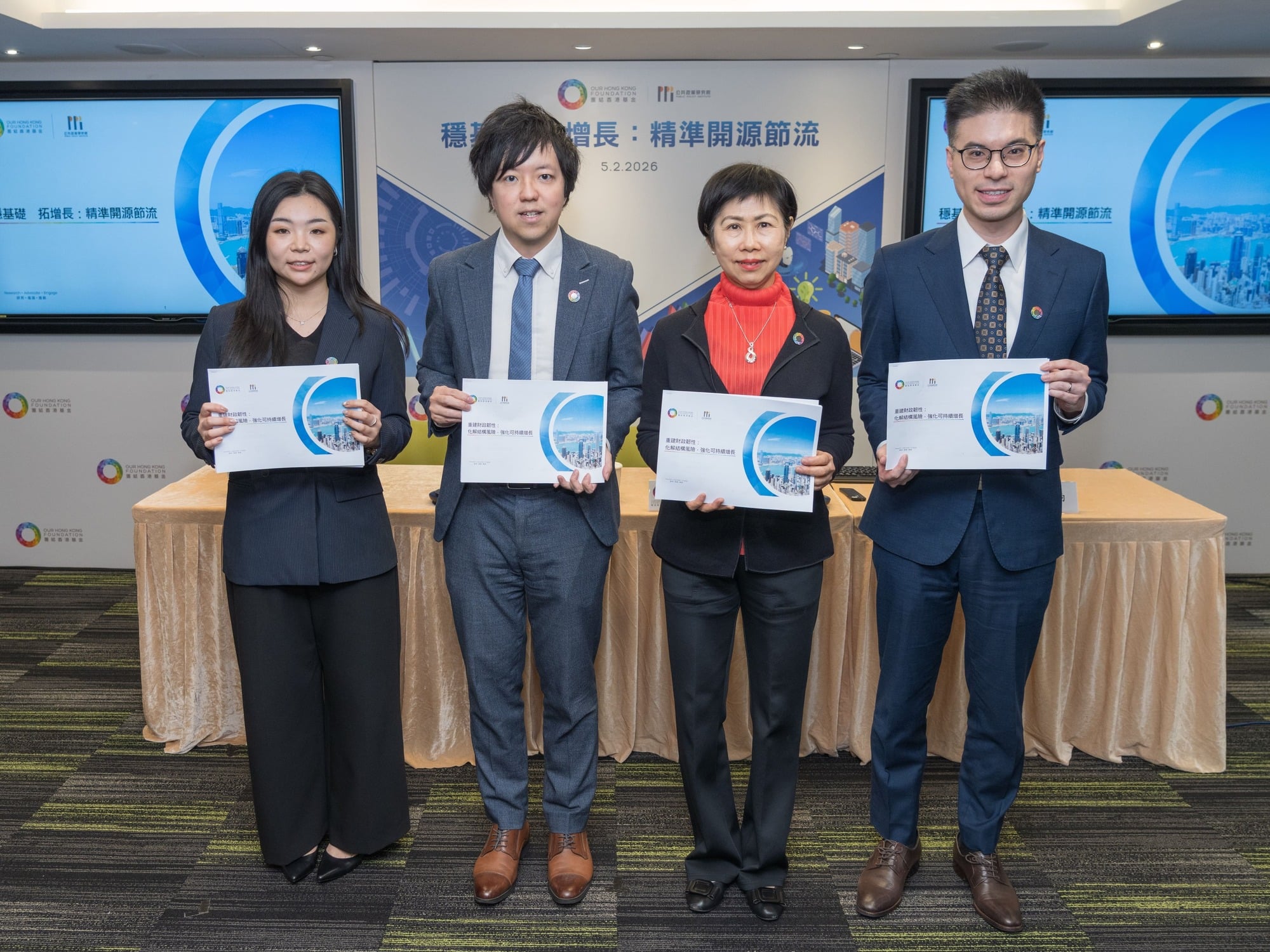
[28 January 2026, Hong Kong] Amidst the rapidly evolving global landscape, maintaining fiscal stability is essential for navigating diverse risks. With the Financial Secretary set to deliver the 2026-27 Budget, Our Hong Kong Foundation (OHKF) today presented a research project which proposes 18 measures to increase revenue and reduce expenditure. These recommendations cover three areas: fiscal discipline, revenue generation, and expenditure control. They aim to strengthen the resilience of public finances and provide a more solid fiscal foundation for long-term development.
Improved Financial Position: Narrowing of the Consolidated Deficit
Latest data indicates that the Government’s “Operating Account” (reflecting revenue and expenditure from day-to-day operations, excluding capital expenditure such as infrastructure spending) is expected to move from deficit to surplus this year, following six consecutive years of deficits. Driven by improvements in the Operating Account, OHKF forecasts that the “Consolidated Account” (the sum of the “Operating” and “Capital Account”, encompassing both profits and expenditure from daily operations and infrastructure projects) for the current financial year is expected to narrow significantly from last year’s deficit of HK$80.3 billion to a deficit ranging between HK$5 billion and HK$10 billion.
However, public finances still face challenges on both the revenue and expenditure fronts: an ageing population will continue to drive up healthcare and social welfare expenditures, while major infrastructure projects will keep capital works expenditure at high levels. Conversely, as the development of emerging industries and new markets requires time to yield sustainable revenue, the Government needs to exercise fiscal prudence to safeguard the long-term health of public finances.
Upholding the Basic Law’s Principle of Keeping the Expenditure within the Limits of Revenues to Re-establish Long-term Fiscal Discipline
Article 107 of the Basic Law stipulates that the Hong Kong Special Administrative Region shall follow the principle of keeping expenditure within the limits of revenues in drawing up its budget, strive to achieve a fiscal balance, and avoid deficits. Building upon this foundation, OHKF proposes the following directions:
(I) Reassess and Implement Fiscal Disciplines
Firstly, OHKF recommends a comprehensive review and modernisation of the series of fiscal disciplines proposed in 2014 report by the Working Group on Long-Term Fiscal Planning. In light of the current economic environment, it is recommended that the Government aims to reduce the public expenditure-to-GDP ratio back to 20% or below in the long run, and maintain the debt-to-GDP ratio at 20% or below over the long term. Simultaneously, the Government should continue to adhere to the principle that proceeds from bond issuance are exclusively allocated to long-term investment projects, and must not be used to cover operating account expenditures, thereby preserving a healthy fiscal structure.
To achieve the aforementioned fiscal disciplines, OHKF proposes ‘Eight Measures to Increase Revenue’ and ‘Nine Ways to Reduce Expenditure’. All recommendations have been carefully assessed, with each measure expected to yield benefits of HK$500 million or more. These initiatives aim to expand fiscal space while minimising impacts on citizens’ livelihood and avoiding complex administrative procedures.
Full implementation of these measures is projected to generate approximately HK$64 billion in additional revenue for the Government (comprising HK$56.2 billion in one-off income and HK$7.8 billion in recurrent income), alongside savings of around HK$12.8 billion in expenditure. Collectively, these account for 2.3% of GDP.
We hope these suggestions will serve as a catalyst to assist the Government in gradually consolidating its fiscal foundation. Through targeted expenditure reductions, it is hoped that the public expenditure-to-GDP ratio could be brought back to pre-pandemic levels in the long term. Meanwhile, diversified revenue-generating measures will enhance fiscal resilience, reduce the Government’s need for bond issuance, and keep the debt-to-GDP ratio at a relatively low level.
(II) ‘Eight Measures to Increase Revenue’
“Painless” Revenue Raising Measures
Leasing of Public Facility Naming Rights to Unlock Commercial Value
Drawing on domestic and international experience, naming rights for public facilities hold considerable commercial value. OHKF suggests the Government to utilise the economic values of existing assets by categorising facilities into two types for leasing: “Permanent Naming Rights” and “Time-limited Naming Rights”:
• Permanent Naming Rights: Applicable to hospitals, universities, social welfare facilities, public housing estates, and major infrastructure (e.g. infrastructure and streets in the Northern Metropolis). Proceeds would fund construction, expansion, or improvement of relevant facilities. This is estimated to generate approximately HK$1 billion in one-off revenue.
• Time-limited Naming Rights: Applicable to facilities with higher commercial value, such as large-scale sports facilities, MTR stations (e.g. this needs to adopt the “Original Name + Corporate Name” model), and community centres. Government is suggested to set a fixed term (e.g. 5 to 10 years) for open tendering. This is estimated to increase operating revenue by HK$200 million annually.
Increase the Proportion of Green Form Subsidised Home (GSH) Units and Relaunch the Tenants Purchase Scheme (TPS) to Release Public Housing Resources
OHKF notes that effectively monetising housing assets can boost revenue while releasing public housing resource to build the housing ladder. Two directions are proposed:
• Increase GSH Supply: It is recommended to increase the supply of GSH units by an additional 2,000 units annually. Selling these at an average price of approximately HK$2.5 million is estimated to generate about HK$5 billion in additional revenue annually while addressing the demand of Green Form applicants for home ownership.
• Relaunch the Tenants Purchase Scheme (TPS): Given the certain societal demand for relaunching the TPS, the Government is advised to carefully study reintroducing the scheme in selected estates after addressing management issues arising from mixed ownership. Assuming extra 10% of public housing units (about 80,000 units) are included in the scheme, and conservatively estimating that 15% of tenants will purchase their units, this is expected to generate approximately HK$12.2 billion in one-off revenue.
Adjust the Lottery Duty Rate for Mark Six
The Government is recommended to increase the lottery duty rate for Mark Six from 25% to 30%, and correspondingly lower the prize fund ratio for Mark Six by 5 percentage points to 49%. Provided that the Hong Kong Jockey Club’s commission and charitable allocations remain unaffected, this measure is expected to generate an additional HK$500 million in annual revenue.
Taxation
Introduce a Three-Tier Standard Tax Rate for Personal Income
It is recommended to refine the current two-tier standard tax rate for personal income into a three-tier system: maintaining 15% for the first HK$5 million, retaining 16% for the portion between HK$5 million and HK$7.5 million, and raising the rate to 17% for income exceeding HK$7.5 million. This adjustment would affect only approximately 5,000 of the highest-income individuals in Hong Kong, with no impact on the vast majority of citizens. It is projected to generate an additional HK$940 million in annual revenue.
(III) ‘Nine Ways to Reduce Expenditure’
Optimise Civil Service Staffing via Strategic Replacement to Cut Costs
To further align with the Government’s policy of reducing expenditure and enhancing manpower utilisation, OHKF recommends moving away from the usual approach of “one-for-one” replacement of staff who retire or resign. Instead of immediately recruiting new hires for these vacancies (approximately 3.4% of positions annually), the Government should prioritise internal redeployment and technological solutions. This is estimated to yield annual savings of HK$5.35 billion.
Concurrently, to further support the Government’s establishment of the “AI Efficacy Enhancement Team”, OHKF recommends establishing a “Digital Government Efficiency Fund” and strengthen training for directorate-grade and frontline civil servants to leverage AI to increase efficiency. Regarding the remuneration system, it is suggested to introduce a “Forced Performance Distribution System” to link salary adjustments more closely with performance.
Optimise Public Transport Subsidy Schemes: Focus Resources on Long-Distance Commuters
OHKF recommends raising the threshold of the “Public Transport Fare Subsidy Scheme” from HK$500 to HK$600 monthly, while lowering the subsidy cap to HK$300. This aims to concentrate resources on subsidising long-distance commuters. Regarding the “$2 Scheme” (Government Public Transport Fare Concession Scheme for the Elderly and Eligible Persons with Disabilities), it is recommended to set a monthly cap of 120 trips (i.e. 4 trips per day) to better align with the actual usage of the vast majority of users and prevent abuse. These two adjustments are projected to yield annual savings of HK$600 million.
Utilise the Voluntary Health Insurance Scheme (VHIS) to Achieve Diversion of Healthcare Activities from Public to Private Sector
To alleviate the service pressure and financial burden on the public healthcare system, OHKF recommends deepening the diversion of healthcare activities from public to private sector through two measures: increasing the tax deduction ceiling for the “Voluntary Health Insurance Scheme” (VHIS) from HK$8,000 to HK$12,000; and simultaneously establishing a private healthcare price transparency system. The system would mandate institutions to publish fee data for common medical procedures, thereby guiding financially capable citizens towards the private market. It is estimated that successfully diverting approximately 10% of public hospital admissions to the private sector through these two policies could yield annual savings of HK$3.8 billion.
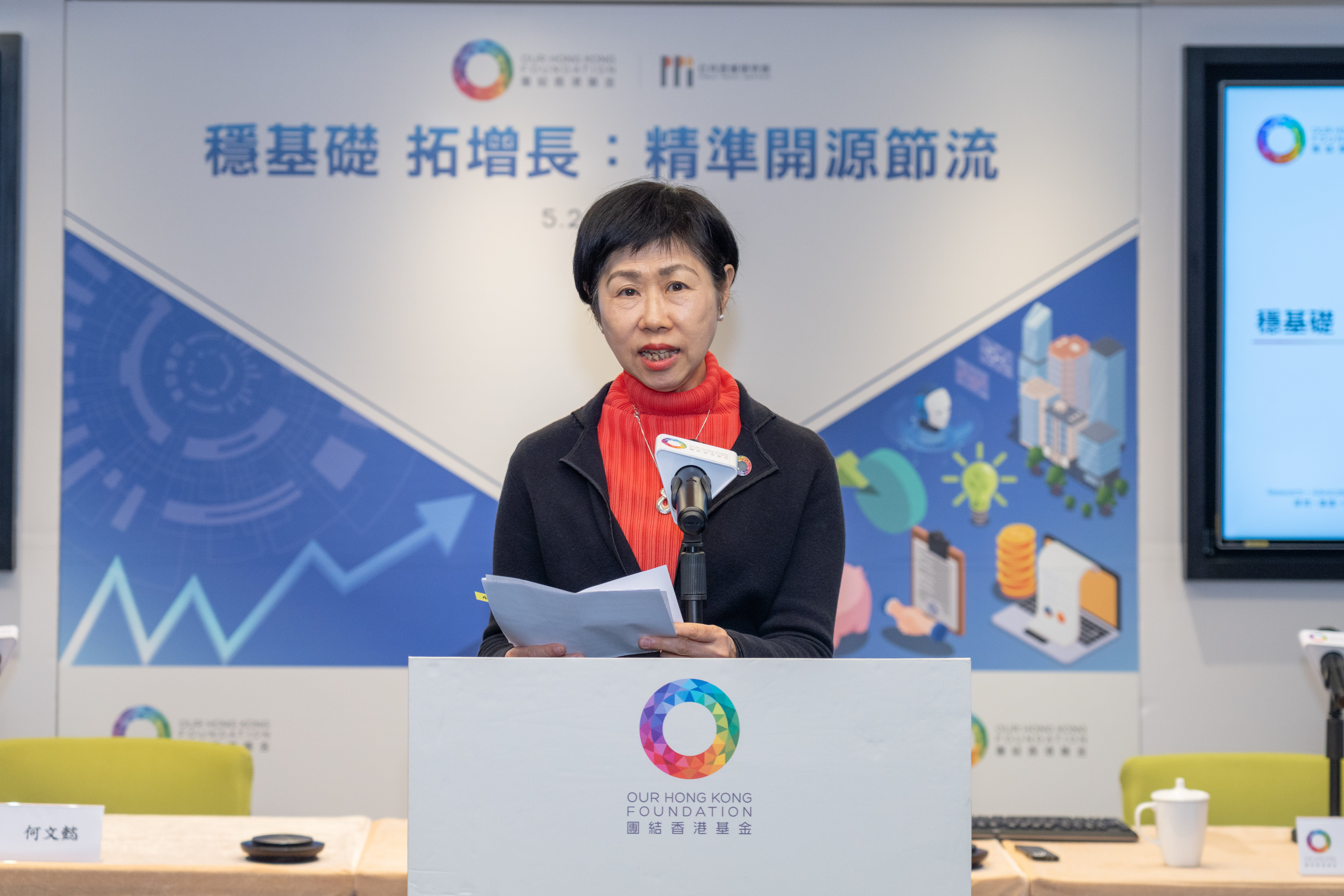
Dr Jane Lee, President of OHKF, stated: “While the short-term fiscal improvement is commendable, the policy focus must remain balanced with long-term development, particularly the structural challenges posed by the population ageing. Sound public finances are the cornerstone for investing in the future and driving economic transformation. OHKF’s recommendations aim to ensure Hong Kong not only maintains stability but achieves sustainable growth, equipping the Government with the fiscal resilience needed to cultivate innovation, expand connections with other economies, and drive sustained momentum for the city’s long-term development.”
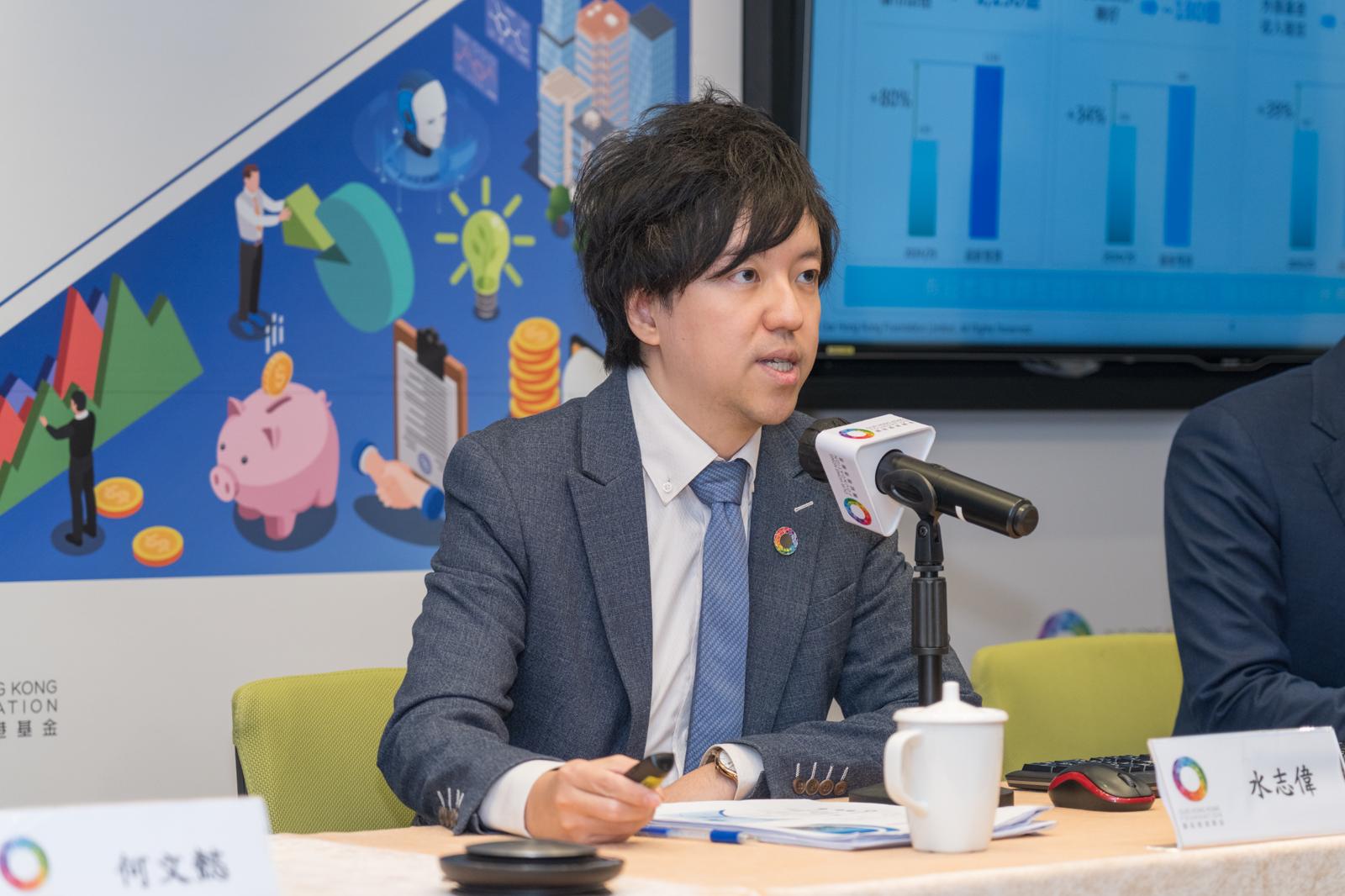
Mr Kenny Shui, Vice President of OHKF and Executive Director of PPI, stated: “The report proposes ‘Eight Measures to Increase Revenue’ and ‘Nine Ways to Reduce Expenditure’, aiming to strengthen the position of public finance through a multi-pronged approach. We estimate that the full implementation of these recommendations could generate approximately HK$64 billion in additional revenue for the government, comprising HK$56.2 billion in one-off income and HK$7.8 billion in recurrent annual income, while achieving annual expenditure savings of around HK$12.8 billion. Collectively, they lay out a clear and pragmatic pathway for Hong Kong to achieve fiscal sustainability.”
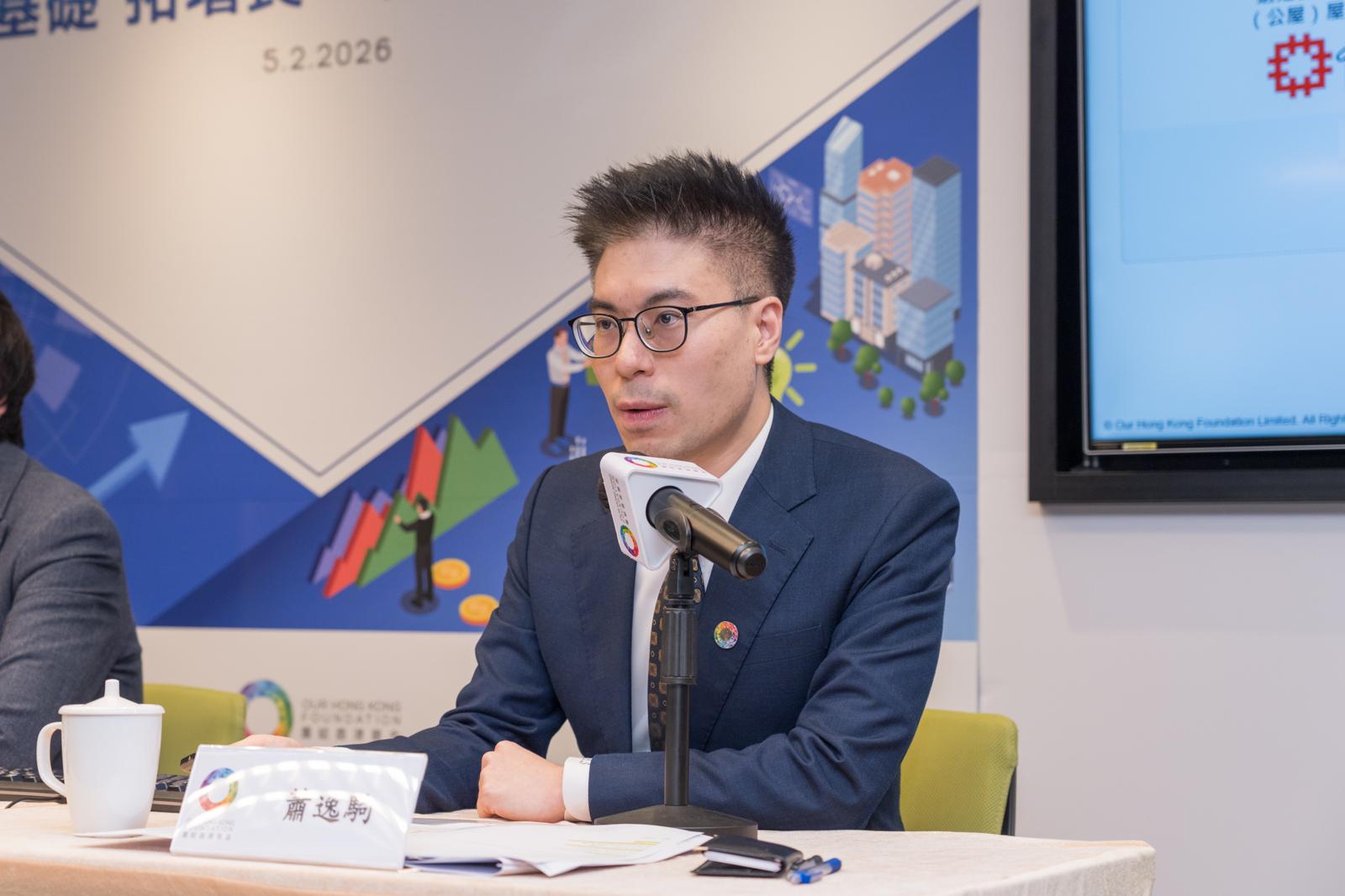
Mr Pascal Siu, Head of Green and Sustainability of OHKF, stated: “The recommendations in the report were formulated with careful consideration of their impact on citizens and businesses. We placed particular emphasis on studying ‘painless’ revenue-generating measures, such as leasing naming rights for government facilities, carefully studying the feasibility of equity divestment in certain government assets, and enhancing investment returns. These aim to effectively improve public finances while minimising adverse effects on social welfare and public wellbeing.”
Our Hong Kong Foundation 2026 Budget Advocacy
Appendix: https://bit.ly/4tEEYJt
Presentation: https://bit.ly/4kiL0Lw
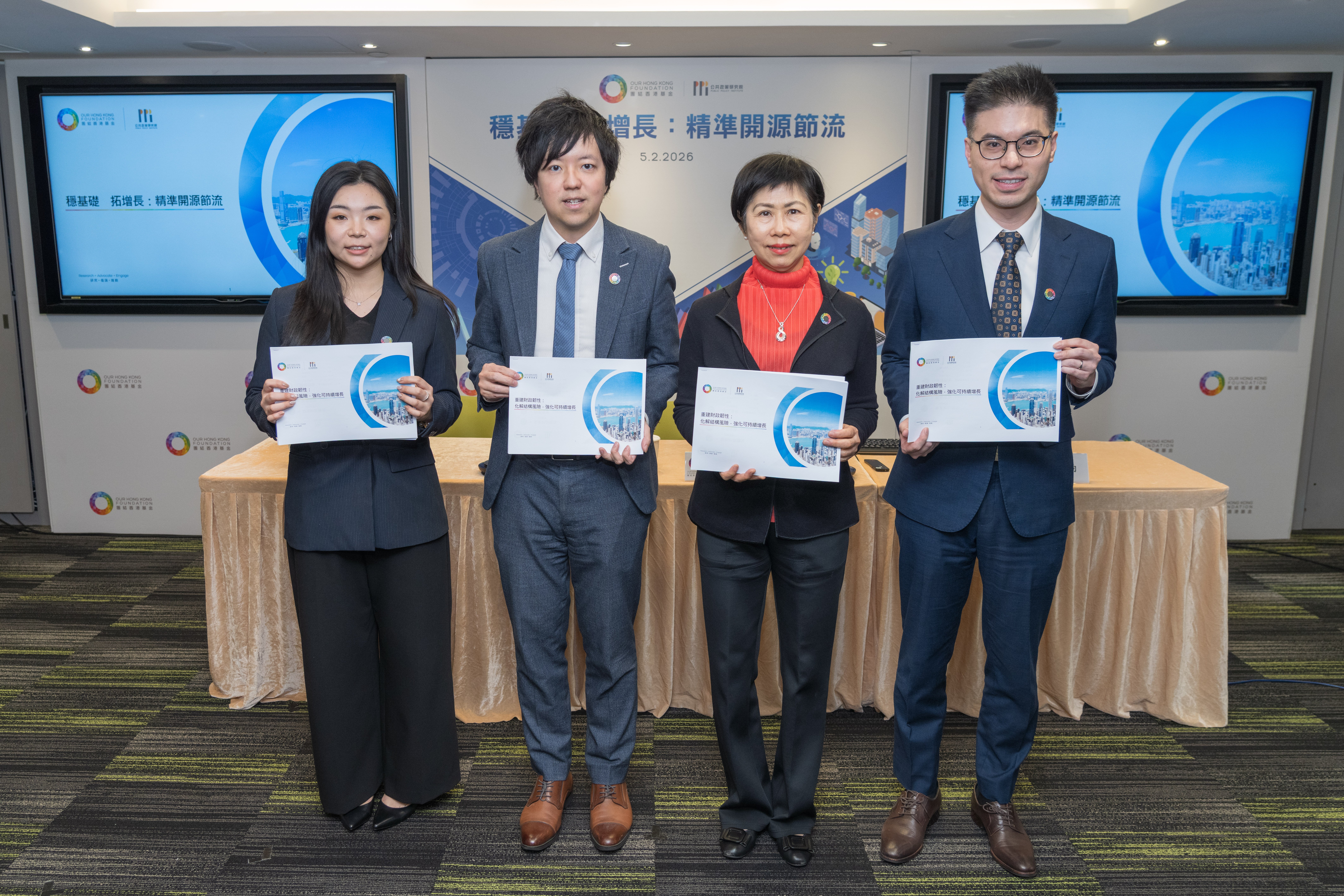


[28 January 2026, Hong Kong] Amidst the rapidly evolving global landscape, maintaining fiscal stability is essential for navigating diverse risks. With the Financial Secretary set to deliver the 2026-27 Budget, Our Hong Kong Foundation (OHKF) today presented a research project which proposes 18 measures to increase revenue and reduce expenditure. These recommendations cover three areas: fiscal discipline, revenue generation, and expenditure control. They aim to strengthen the resilience of public finances and provide a more solid fiscal foundation for long-term development.
Improved Financial Position: Narrowing of the Consolidated Deficit
Latest data indicates that the Government’s “Operating Account” (reflecting revenue and expenditure from day-to-day operations, excluding capital expenditure such as infrastructure spending) is expected to move from deficit to surplus this year, following six consecutive years of deficits. Driven by improvements in the Operating Account, OHKF forecasts that the “Consolidated Account” (the sum of the “Operating” and “Capital Account”, encompassing both profits and expenditure from daily operations and infrastructure projects) for the current financial year is expected to narrow significantly from last year’s deficit of HK$80.3 billion to a deficit ranging between HK$5 billion and HK$10 billion.
However, public finances still face challenges on both the revenue and expenditure fronts: an ageing population will continue to drive up healthcare and social welfare expenditures, while major infrastructure projects will keep capital works expenditure at high levels. Conversely, as the development of emerging industries and new markets requires time to yield sustainable revenue, the Government needs to exercise fiscal prudence to safeguard the long-term health of public finances.
Upholding the Basic Law’s Principle of Keeping the Expenditure within the Limits of Revenues to Re-establish Long-term Fiscal Discipline
Article 107 of the Basic Law stipulates that the Hong Kong Special Administrative Region shall follow the principle of keeping expenditure within the limits of revenues in drawing up its budget, strive to achieve a fiscal balance, and avoid deficits. Building upon this foundation, OHKF proposes the following directions:
(I) Reassess and Implement Fiscal Disciplines
Firstly, OHKF recommends a comprehensive review and modernisation of the series of fiscal disciplines proposed in 2014 report by the Working Group on Long-Term Fiscal Planning. In light of the current economic environment, it is recommended that the Government aims to reduce the public expenditure-to-GDP ratio back to 20% or below in the long run, and maintain the debt-to-GDP ratio at 20% or below over the long term. Simultaneously, the Government should continue to adhere to the principle that proceeds from bond issuance are exclusively allocated to long-term investment projects, and must not be used to cover operating account expenditures, thereby preserving a healthy fiscal structure.
To achieve the aforementioned fiscal disciplines, OHKF proposes ‘Eight Measures to Increase Revenue’ and ‘Nine Ways to Reduce Expenditure’. All recommendations have been carefully assessed, with each measure expected to yield benefits of HK$500 million or more. These initiatives aim to expand fiscal space while minimising impacts on citizens’ livelihood and avoiding complex administrative procedures.
Full implementation of these measures is projected to generate approximately HK$64 billion in additional revenue for the Government (comprising HK$56.2 billion in one-off income and HK$7.8 billion in recurrent income), alongside savings of around HK$12.8 billion in expenditure. Collectively, these account for 2.3% of GDP.
We hope these suggestions will serve as a catalyst to assist the Government in gradually consolidating its fiscal foundation. Through targeted expenditure reductions, it is hoped that the public expenditure-to-GDP ratio could be brought back to pre-pandemic levels in the long term. Meanwhile, diversified revenue-generating measures will enhance fiscal resilience, reduce the Government’s need for bond issuance, and keep the debt-to-GDP ratio at a relatively low level.
(II) ‘Eight Measures to Increase Revenue’
“Painless” Revenue Raising Measures
Leasing of Public Facility Naming Rights to Unlock Commercial Value
Drawing on domestic and international experience, naming rights for public facilities hold considerable commercial value. OHKF suggests the Government to utilise the economic values of existing assets by categorising facilities into two types for leasing: “Permanent Naming Rights” and “Time-limited Naming Rights”:
• Permanent Naming Rights: Applicable to hospitals, universities, social welfare facilities, public housing estates, and major infrastructure (e.g. infrastructure and streets in the Northern Metropolis). Proceeds would fund construction, expansion, or improvement of relevant facilities. This is estimated to generate approximately HK$1 billion in one-off revenue.
• Time-limited Naming Rights: Applicable to facilities with higher commercial value, such as large-scale sports facilities, MTR stations (e.g. this needs to adopt the “Original Name + Corporate Name” model), and community centres. Government is suggested to set a fixed term (e.g. 5 to 10 years) for open tendering. This is estimated to increase operating revenue by HK$200 million annually.
Increase the Proportion of Green Form Subsidised Home (GSH) Units and Relaunch the Tenants Purchase Scheme (TPS) to Release Public Housing Resources
OHKF notes that effectively monetising housing assets can boost revenue while releasing public housing resource to build the housing ladder. Two directions are proposed:
• Increase GSH Supply: It is recommended to increase the supply of GSH units by an additional 2,000 units annually. Selling these at an average price of approximately HK$2.5 million is estimated to generate about HK$5 billion in additional revenue annually while addressing the demand of Green Form applicants for home ownership.
• Relaunch the Tenants Purchase Scheme (TPS): Given the certain societal demand for relaunching the TPS, the Government is advised to carefully study reintroducing the scheme in selected estates after addressing management issues arising from mixed ownership. Assuming extra 10% of public housing units (about 80,000 units) are included in the scheme, and conservatively estimating that 15% of tenants will purchase their units, this is expected to generate approximately HK$12.2 billion in one-off revenue.
Adjust the Lottery Duty Rate for Mark Six
The Government is recommended to increase the lottery duty rate for Mark Six from 25% to 30%, and correspondingly lower the prize fund ratio for Mark Six by 5 percentage points to 49%. Provided that the Hong Kong Jockey Club’s commission and charitable allocations remain unaffected, this measure is expected to generate an additional HK$500 million in annual revenue.
Taxation
Introduce a Three-Tier Standard Tax Rate for Personal Income
It is recommended to refine the current two-tier standard tax rate for personal income into a three-tier system: maintaining 15% for the first HK$5 million, retaining 16% for the portion between HK$5 million and HK$7.5 million, and raising the rate to 17% for income exceeding HK$7.5 million. This adjustment would affect only approximately 5,000 of the highest-income individuals in Hong Kong, with no impact on the vast majority of citizens. It is projected to generate an additional HK$940 million in annual revenue.
(III) ‘Nine Ways to Reduce Expenditure’
Optimise Civil Service Staffing via Strategic Replacement to Cut Costs
To further align with the Government’s policy of reducing expenditure and enhancing manpower utilisation, OHKF recommends moving away from the usual approach of “one-for-one” replacement of staff who retire or resign. Instead of immediately recruiting new hires for these vacancies (approximately 3.4% of positions annually), the Government should prioritise internal redeployment and technological solutions. This is estimated to yield annual savings of HK$5.35 billion.
Concurrently, to further support the Government’s establishment of the “AI Efficacy Enhancement Team”, OHKF recommends establishing a “Digital Government Efficiency Fund” and strengthen training for directorate-grade and frontline civil servants to leverage AI to increase efficiency. Regarding the remuneration system, it is suggested to introduce a “Forced Performance Distribution System” to link salary adjustments more closely with performance.
Optimise Public Transport Subsidy Schemes: Focus Resources on Long-Distance Commuters
OHKF recommends raising the threshold of the “Public Transport Fare Subsidy Scheme” from HK$500 to HK$600 monthly, while lowering the subsidy cap to HK$300. This aims to concentrate resources on subsidising long-distance commuters. Regarding the “$2 Scheme” (Government Public Transport Fare Concession Scheme for the Elderly and Eligible Persons with Disabilities), it is recommended to set a monthly cap of 120 trips (i.e. 4 trips per day) to better align with the actual usage of the vast majority of users and prevent abuse. These two adjustments are projected to yield annual savings of HK$600 million.
Utilise the Voluntary Health Insurance Scheme (VHIS) to Achieve Diversion of Healthcare Activities from Public to Private Sector
To alleviate the service pressure and financial burden on the public healthcare system, OHKF recommends deepening the diversion of healthcare activities from public to private sector through two measures: increasing the tax deduction ceiling for the “Voluntary Health Insurance Scheme” (VHIS) from HK$8,000 to HK$12,000; and simultaneously establishing a private healthcare price transparency system. The system would mandate institutions to publish fee data for common medical procedures, thereby guiding financially capable citizens towards the private market. It is estimated that successfully diverting approximately 10% of public hospital admissions to the private sector through these two policies could yield annual savings of HK$3.8 billion.
Dr Jane Lee, President of OHKF, stated: “While the short-term fiscal improvement is commendable, the policy focus must remain balanced with long-term development, particularly the structural challenges posed by the population ageing. Sound public finances are the cornerstone for investing in the future and driving economic transformation. OHKF’s recommendations aim to ensure Hong Kong not only maintains stability but achieves sustainable growth, equipping the Government with the fiscal resilience needed to cultivate innovation, expand connections with other economies, and drive sustained momentum for the city’s long-term development.”
Mr Kenny Shui, Vice President of OHKF and Executive Director of PPI, stated: “The report proposes ‘Eight Measures to Increase Revenue’ and ‘Nine Ways to Reduce Expenditure’, aiming to strengthen the position of public finance through a multi-pronged approach. We estimate that the full implementation of these recommendations could generate approximately HK$64 billion in additional revenue for the government, comprising HK$56.2 billion in one-off income and HK$7.8 billion in recurrent annual income, while achieving annual expenditure savings of around HK$12.8 billion. Collectively, they lay out a clear and pragmatic pathway for Hong Kong to achieve fiscal sustainability.”
Mr Pascal Siu, Head of Green and Sustainability of OHKF, stated: “The recommendations in the report were formulated with careful consideration of their impact on citizens and businesses. We placed particular emphasis on studying ‘painless’ revenue-generating measures, such as leasing naming rights for government facilities, carefully studying the feasibility of equity divestment in certain government assets, and enhancing investment returns. These aim to effectively improve public finances while minimising adverse effects on social welfare and public wellbeing.”
Our Hong Kong Foundation 2026 Budget Advocacy
Appendix: https://bit.ly/4tEEYJt
Presentation: https://bit.ly/4kiL0Lw