





Minister of Science and Technology Wan Gang Reiterates Hong Kong-Mainland Cooperation to Jointly Promote "Three Innovations" Development and Encourage Hong Kong Youth to Start Businesses in the Mainland




Minister of Science and Technology Wan Gang Reiterates Hong Kong-Mainland Cooperation to Jointly Promote "Three Innovations" Development and Encourage Hong Kong Youth to Start Businesses in the Mainland

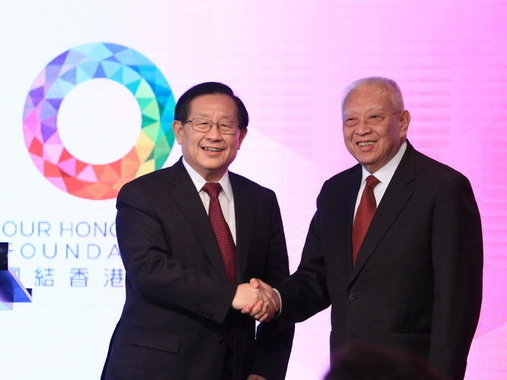
(Hong Kong, December 7, 2015) Vice Chairman of the National Committee of the Chinese People's Political Consultative Conference and Minister of the Ministry of Science and Technology Wan Gang attended and spoke at the "Innovation, Creativity, and Entrepreneurship" luncheon organized by Our Hong Kong Foundation today. He stated that the country is currently strengthening cooperation with Hong Kong in various aspects and actively jointly promoting the development of "Three Innovations."
Minister Wan stated that Hong Kong has just signed a development agreement with the Mainland to jointly establish four maker spaces. When Hong Kong youth develop in the Mainland, they can enjoy the inclusive policies of the Mainland for developing maker spaces. In the initial stage of entrepreneurship, the country will even arrange their accommodation, living, social circles, and mentoring in the Mainland as interns to facilitate the integration of Hong Kong youth with Mainland makers and strengthen the cooperation between youths of both regions in innovation, creativity, and entrepreneurship.
At the same time, Shenzhen and Hong Kong have signed the "Cooperation Agreement on Joint Promotion of the Shenzhen-Hong Kong Youth Innovation and Entrepreneurship Base Construction," which increases the opportunities for Hong Kong youth to start businesses in Shenzhen.
Minister Wan mentioned that the country has successively established three partner bases in the Hong Kong Science Park, namely the National Green Technology Industrialisation, National Modern Service Industry Industrialisation, and National Integrated Circuit High-Tech Industrialisation, to jointly promote high-tech industry development with Hong Kong. Additionally, the "Guangdong-Hong Kong Science and Technology Cooperation Pilot Working Group" has been established to promote technology cooperation between Guangdong-Hong Kong and Shenzhen-Hong Kong. So far, six universities from Hong Kong have entered Shenzhen Science Park and are carrying out industry-university-research cooperation with Mainland institutions.
Minister Wan emphasized: "Hong Kong is a global tech hub and innovation highland; a highland needs the support of plains, and a hub also requires the support of hinterland, the strengthened cooperation between the Mainland and Hong Kong will have greater prospects." He also mentioned: "The level of higher education in Hong Kong is quite high, and Hong Kong's service industries such as finance, business, legal, intellectual property services are well developed, and there is a professional team in design, construction, testing, and surveying, hence there is vast development space in high-tech and internet industries."
Minister Wan particularly encouraged Hong Kong youth to venture into the Mainland with confidence. He noted: "The Mainland has over 200 maker spaces, 1,600 incubators, 146 high-tech zones, 11 national innovation demonstration zones, 453 national technology transfer demonstration institutions, 30 technology property rights trading institutions, and 20 regional technology transfer alliances; there is a broad space for Hong Kong youth to conduct innovation, creativity, and entrepreneurship in the Mainland."
Besides this, he also encouraged the Hong Kong business community to invest more in technology. He said: "The Hong Kong business community knows how to accurately judge the market; it is natural for capitalists to make quick money, but real estate is not the only industry that can make quick money. The Mainland's development of electric vehicles saw the number rise from 85,000 in 2014 to 200,000 this year and is expected to reach 2 million in 2020. Such rapid growth may not be achievable in real estate." He added: "The Mainland's promotion of energy-saving lighting has grown to a market worth CNY 450 billion in just four to five years, so investing in technology can also yield quick profits."
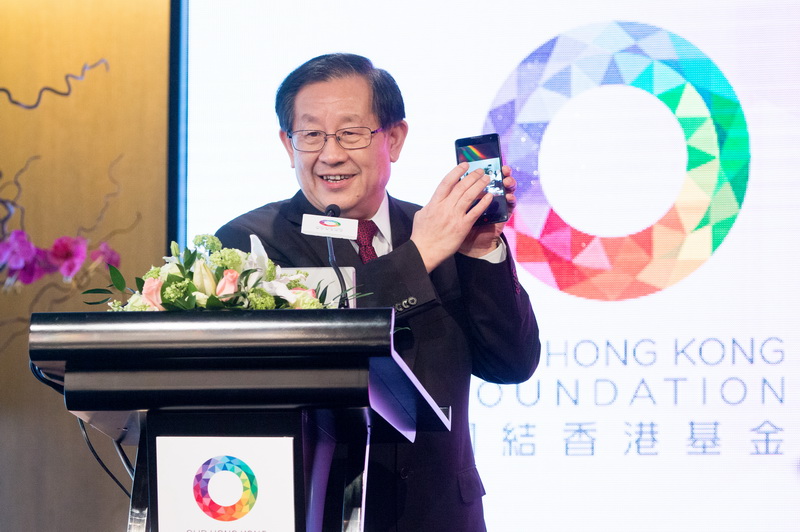
Regarding sci-tech cooperation between the Mainland and Hong Kong, Minister Wan stated that the Ministry of Science and Technology and Hong Kong established the Mainland-Hong Kong Science and Technology Cooperation Committee as early as 2004 and have since held ten meetings, focusing on scientific research cooperation, scientific and technological rewards, jointly building partner laboratories and joint research centres, and promoting high-tech industry development. In the future, they will continue to promote scientific research and technological innovation between Hong Kong and the Mainland, share the national large scientific facilities and technology resources, jointly participate in international scientific projects, strengthen innovation cooperation in science parks, support young talent in innovation and entrepreneurship, and encourage the development of Hong Kong's technology service industry in the Mainland to create a win-win situation with complementary advantages.
He also stated that in the "13th Five-Year Plan," the country has placed "innovation" as the top priority. The main deployments include: First, to create an innovation-led economy by implementing a series of major science and technology projects and "Internet+;" Second, to promote mass entrepreneurship and innovation, with an average of 130 enterprises emerging daily in Zhongguancun, and over 116,000 new technology-based enterprises registered in high-tech zones in the first eight months of 2015; Third, to advance the construction of innovation capabilities by forming national laboratories in major innovative fields and strengthening major scientific research infrastructure such as large scientific devices; Fourth, to comprehensively promote open innovation, deepening the Belt and Road initiative and technology cooperation with Hong Kong, Macao, and Taiwan. In 2014, the total social research and development expenditure in the Mainland reached CNY 1.34 trillion, accounting for 2.05% of GDP.
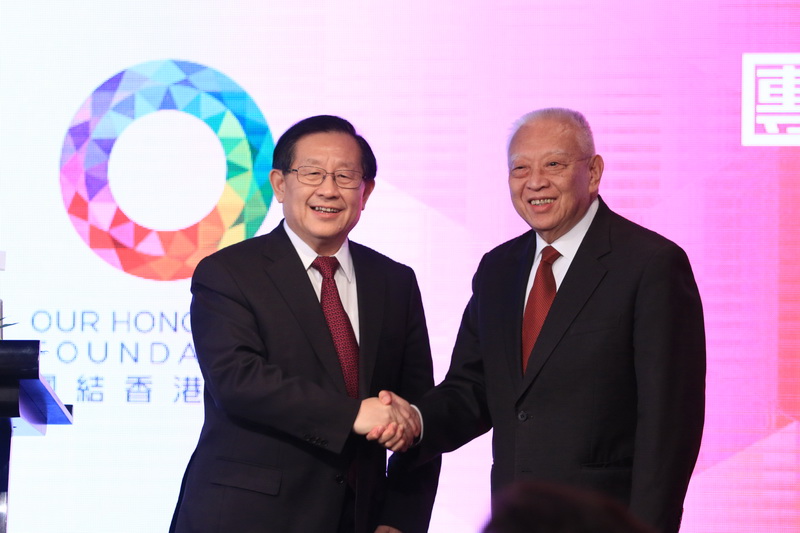
Minister Wan Gang was specially invited by Our Hong Kong Foundation to attend a luncheon and give a policy speech on "Deepening Cooperation between the Two Places and Promoting Triple Innovations Together" today. Guests attending the luncheon included Vice Chairman of the National Committee of the Chinese People's Political Consultative Conference, Founder, and Chairman of Our Hong Kong Foundation, Tung Chee-hwa, Secretary for Innovation and Technology of Hong Kong, Nicholas Yang Wei-hsiung, Founding President of Hong Kong Academy of Sciences, Professor Tsui Lap-chee, Deputy Director of the Liaison Office of the Central People's Government in the Hong Kong Special Administrative Region, Ms. Qiu Hong, Government Chief Information Officer of the Hong Kong Special Administrative Region, Allen Yeung Tak-bun, President of The Hong Kong University of Science and Technology, Tony Chan Fan-cheong, Former President of Hong Kong Baptist University, Professor Albert Chan Sun-chi, Permanent Secretary for Innovation and Technology, Annie Choi Yuk-yin, as well as the elite from the local research and academic communities, scientists, and young leaders. Our Hong Kong Foundation echoes the nation's policy of "Mass Entrepreneurship and Innovation" and has been dedicated to advocating "Innovation, Creativity, and Entrepreneurship" in Hong Kong. Following the release of the research report on land and housing, the foundation will also publish research reports on various fields one after another. | |
(Attached: Full text of the speech by Minister Wan Gang of the Ministry of Science and Technology) | |
Respected Chairman Tung Chee-hwa, distinguished guests from Hong Kong: Thank you, Chairman Tung Chee-hwa, for introducing me. I feel very honored. When Hong Kong was handed over, I was abroad. There was a time difference between the local time and Hong Kong, and I stayed up very late to catch a glimpse of Chairman Tung Chee-hwa's demeanor. In 2006, Chairman Tung Chee-hwa and his wife visited Tongji University. I have two precious photos of you, one of which shows me reporting work to you, and the other shows you looking at a car developed by students, giving them great encouragement. There is another one that I didn’t bring today, where the two of us had a joyride in a car I developed within the campus. It was driven a bit fast, but fortunately, there was no traffic police on the campus. Speaking of innovation, creativity, and entrepreneurship, Our Hong Kong Foundation is a significant force in promoting "Innovation, Creativity, and Entrepreneurship" in Hong Kong. I have had multiple exchanges with Mr. Tung on issues related to global energy development. Mr. Tung has many friends in the United States who introduced me to the Secretary of Energy, which was very helpful to my work. Recently, I told Mr. Tung about "Double Innovations"—Mass Entrepreneurship, and Mass Innovation. Mr. Tung told me about "Triple Innovations"—Innovation, Creativity, and Entrepreneurship, integrating everyone's ideas together. The first point I want to talk about is how the Mainland explores new development paths through mass entrepreneurship and mass innovation. I. Mass Entrepreneurship and Mass Innovation open up new development paths1. Mass Entrepreneurship and Mass Innovation drive the innovation economy Makers are actually a form of innovation under the popularization of the internet. Makers are composed of people with ideas, creativity, capabilities, and a sense of dissatisfaction with the status quo. Through the internet, using open-source software and hardware, they can realize their thinking through computers and then form maker communities through WeChat discussions. A maker is both a user and a creator. How to support these makers in innovation and entrepreneurship? Firstly, provide makers with a space to survive by offering office environments, cyber space, communication spaces, and technology resources exchange spaces through the market-oriented mass creation model. Under market-driven support, makers can enjoy professional services and capital convenience structures. Using the internet with a demand-oriented approach, create an all-encompassing service platform to promote products extensively online. The service industry can also apply crowdsourcing. Secondly, it is necessary to create a channel for funding. Everyone can invest. If you have 1000 CNY, you can also do crowdfunding, and the whole society can support its development. We should open up the laboratories, where students become makers, allowing them to conveniently, efficiently, and under guidance, use the resources of university laboratories to reduce the cost of entrepreneurship. In summary, through the innovative organisations, financing models, and production methods of crowd creation, crowdfunding, crowdsourcing, and crowd support, we can reconstruct market resource allocation methods, allowing intellectual resources, industrial resources, and social capital to flow more openly, fairly, and freely. 2. Building low-cost, convenient, and all-element crowd creation spaces Whenever accompanying Premier Li Keqiang on inspections, Premier Li always looks for a maker space and gives instructions each time. At 3W Café in Zhongguancun, the coffee sold out on the same day. We must adapt to the hopes of young people and let innovation flow throughout society. How exactly should this be done? By building low-cost, convenient, and all-element crowd creation spaces. Such spaces are new entrepreneurial service platforms with low cost, convenience, full elements, openness, and internationalisation, constructed through market mechanisms, specialised services, and capital pathways. Along with tech incubators, accelerators, and industrial parks, they form an entrepreneurial service chain, combining innovation with entrepreneurship, online with offline, incubation with investment, creating an open entrepreneurial ecosystem characterised by mutual assistance and user participation. It is quite normal for young people in the internet age to be dissatisfied with the status quo. We hope everyone has their own entrepreneurial dreams and that young people will find the biggest space for their creativity. To enable young people to start businesses, we need to provide them with excellent services, lower the threshold for entrepreneurship, and let the world know about their work. This is what the government should do. Outside the cities, the rural version of innovation is what we promote as "Star Innovation Spaces". These are crowd creation spaces in the field of agriculture and rural areas, creating a specialised, socialised, and convenient entrepreneurial service environment for science and technology commissioners, returning migrant workers, university students, local talent, and small and micro enterprises. Currently, pilot projects have been carried out in Chongqing, Shaanxi, Sichuan, and other places. 3. Establishing and improving entrepreneurship guidance systems We encourage experienced entrepreneurs, angel investors, and expert scholars with rich entrepreneurial resources to serve as entrepreneurial mentors. Universities are encouraged to develop innovation and entrepreneurship exchange courses to provide venues, public services, and funding support for university students starting businesses. In crowd creation spaces, young people are especially willing to share their ideas, and we need to guide them. On this trip to the University of Science and Technology, I learned that many professors are also becoming entrepreneurial mentors, offering tailored assistance to help students complete both their studies and their entrepreneurial projects, which is excellent. Following the concept of "selecting fine horses at the racetrack and matching resources through the market", the Ministry of Science and Technology, along with relevant departments, has organised the China Innovation and Entrepreneurship Competition, which has been held four times so far. The competition has received applications from nearly 60,000 entrepreneurial companies and teams, promoting more than 10 billion CNY in venture investment and over 20 billion CNY in bank credit loans. 4. Strengthening intellectual property protection for innovation and entrepreneurship We should improve the laws related to intellectual property protection, study the protection of intellectual property under open-source hardware and software, and examine new forms of innovation outcomes and methods of intellectual property protection under new business models. We should implement strict intellectual property protection systems, include information on infringement activities in social credit records, and pay special attention to protecting the intellectual property rights of small and micro enterprises. We should eliminate unreasonable entry barriers that restrict the development of new technology products and new business models, and establish an open and transparent market entry standard system. 5. Improving entrepreneurial investment and financing mechanisms Government guidance: Establish emerging industry funds, SME funds, and technology achievement transformation guidance funds. Leverage the role of fiscal guidance funds by comprehensively utilizing venture capital sub-funds, loan risk compensation, performance rewards, and other methods to guide social funds towards innovation and entrepreneurship. Technology finance: Promote the banking sector to increase support for small and micro enterprises, leverage the role of multi-level capital markets, conduct pilot internet equity crowdfunding, improve angel investment, venture capital exit, and circulation mechanisms, and increase the success rate of startup enterprises. 6. Diverse innovative activities open up new markets and give birth to new business forms Innovation characterized by disruptive and iterative improvements uses technological breakthroughs, accumulation, and continuous refinement to create new products, meet new demands, and open up new market spaces. Current innovations such as robots, drones, and bracelets are examples. It used to be challenging to inspect power grids located in rugged mountains, but a young person solved this problem by using drones to patrol the power grid through the Beidou navigation system. The success of the annual Double Eleven festival teaches us two things: first, people's lifestyles are changing, with young people buying clothes online after checking them out in stores; second, circulation costs are too high, and online shopping is an important way to reform social resources. Innovation characterized by the reallocation of resources uses the internet and big data to transform traditional business models, reduce business costs, and improve allocation efficiency. Innovation characterized by serving new business forms allows many personalized demands to receive specialized services. On my birthday, my daughter gave me a USB drive with beautifully crafted family photos and music. I asked her how she did it, and she said young people know how to use "Zhubajie.com," where many designers are gathered. They can help you complete designs and productions based on your requirements. Some enterprises transform hierarchical management into flat new entrepreneurial platforms, changing internal organizational structures into "investor and entrepreneur relationships" and turning from "product manufacturers" into "creator manufacturers." Haier promotes innovation; their internal creators applied aviation refrigeration technology to solve the problem of noisy refrigeration equipment. At first, the cost was high, so they successfully used it in wine cabinets first. 7. The wave of mass entrepreneurship and innovation is flourishing nationwide The entrepreneurial ecosystem is continually improving: There are now more than 200 maker spaces in the Mainland; over 1600 technology business incubators and accelerators; 146 national high-tech zones and 11 national independent innovation demonstration zones; 453 national technology transfer demonstration institutions; 30 technology (property) trading institutions; and 20 regional technology transfer alliances. The main body of entrepreneurship continues to expand: An average of 130 enterprises are born daily in Zhongguancun; in the first eight months of 2015, over 116,000 new tech enterprises were registered in high-tech zones, which now have over 760,000 registered companies, adding more than 1 million new jobs each year; in 2014, 12.93 million new market entities were added nationwide, a year-on-year increase of 45.9%. 8. Hong Kong-Mainland creative cooperation is becoming increasingly close Shenzhen and Hong Kong jointly established the "Shenzhen-Hong Kong Creative Design Corridor," introducing nearly 20 Hong Kong designer brands to Shenzhen for the first time. Hong Kong creativity illuminated the opening ceremony of the Nanjing Youth Olympic Games. The Hong Kong innovation at the Nanjing Youth Olympic Games: the armillary sphere igniting the main torch. Hong Kong's film and visual effects companies support the Mainland's film and television industry. 9. Close exchanges among young innovation and entrepreneurship talents What interests me more is the cooperation in innovation, creativity, and entrepreneurship between the youth of the Mainland and Hong Kong. Hong Kong's universities have cultivated many scientific talents for the Mainland. A positive trend has emerged where Mainland students pursue advanced studies in Hong Kong, start businesses in the Mainland, and give back to Hong Kong. Prominent examples include Wang Tao of DJI Technology and Zhang Yunfei, who was selected for the "Thousand Talents Program," awarded as one of the "World's Top 100 Young Innovators," and is involved in "unmanned ships." After their successful ventures, they have returned to their alma mater to establish scholarships and engage in industry-academia-research collaborations at the Hong Kong University of Science and Technology, promoting innovation and entrepreneurship cooperation among young talents from both regions. Wang Tao launched the "Joint Scholarship Program" with his alma mater, Hong Kong University of Science and Technology, providing full scholarships for postgraduate students in electronic and computer engineering. Zhang Yunfei and his alma mater, Hong Kong University of Science and Technology, have initiated project development, student training, industrialisation of scientific achievements, and joint laboratory establishment. Recently, some Mainland entrepreneurs have also started to set up innovation and entrepreneurship funds in Hong Kong. For example, in May this year, Jack Ma announced an investment of HKD 1 billion to establish the "Hong Kong Young Entrepreneurs Fund," igniting the entrepreneurial dreams of Hong Kong youth. More people will come to do these things, fueling the entrepreneurial dreams of Hong Kong's youth. Entrepreneurship in Hong Kong and the Mainland is interconnected. Hong Kong is a high ground of science and a hub of innovation, but this high ground needs a plain, the seeds of science need to bloom, and the hub of innovation needs a hinterland, which is the Mainland. Young people have already taken the lead. All of you present have made significant contributions to the Mainland's reform and opening up. We must encourage young people to move towards the Mainland with confidence. We hope to do more practical work in policy support, market liberalisation, standard alignment, and promoting integration together. This morning, we signed four cooperation agreements for joint innovation spaces between the two places. Maker spaces in four Mainland cities are collaborating with Hong Kong Science Park. I believe that cooperation between the two regions can create a new world of innovation and entrepreneurship for Hong Kong's young people. II. Strategic Guidance, Solid Foundation, Supporting Major Economic Development1. Manned Spaceflight and Lunar Exploration Projects Shenzhou 8, 9, and 10 successfully launched into space, achieving docking and space-to-earth communication, conducting a series of scientific experiments and space lectures. Chang'e lunar exploration: "orbit," "land," and "return." 2. Space-based Engineering Promotes Economic and Social Development The development and application of the BeiDou Navigation System have been widely used in fields such as surveying and mapping, urban construction, water conservancy, transportation, tourism, and emergency rescue and disaster relief. Over 50,000 fishing vessels use BeiDou navigation to locate fish schools and ensure safety; more than 200 car models are equipped with BeiDou in-car navigation devices. In the past, incidents of Chinese fishermen crossing borders to fish were common, but after equipping fishermen with BeiDou navigation devices, we can now notify them from the shore when we detect such incidents via BeiDou navigation, greatly reducing these occurrences. In Inner Mongolia, situations where cattle graze across the national border also occurred, but now, with WiFi connectivity monitoring, when the cattle graze across the border, drones are dispatched to herd them back. Fengyun meteorological satellites cover the globe, providing short, medium, and long-term weather forecasts. They are used for land monitoring; if one square kilometre of land is illegally occupied, the satellite detects it immediately. When Australia had wildfires, our satellites detected them and informed them right away, which is an excellent example of international cooperation. 3. Manned Deep Diving, Autonomous Underwater Vehicles, and Deep-Sea Equipment Manned deep diving, autonomous underwater vehicles, and deep-sea equipment. A small deep-sea mobile workstation. Foreigners say that the seabed at a depth of 3,500 meters is now transparent to Chinese people, which is a testament to our capabilities. We can also observe life at a depth of 5,000 meters. In deep-sea operations, unmanned operations are essential for responsible exploitation of the ocean environment. 4. Proactive Deployment and Long-term Commitment to Supercomputer Research and Development The supercomputer has become a high-tech strategic point fiercely competed for by major countries. In May 2013, China developed "Tianhe-2," the world's first 5-petaflop supercomputer, making breakthroughs in a series of core technologies such as system architecture, heterogeneous arrays, high-speed interconnection, system fault tolerance and fault management, and comprehensive energy consumption control technology. It features high performance, high energy efficiency, and autonomous control, with significant advantages in both scientific computing and big data processing. Tianhe-2 ranked first on the world's supercomputer list for six consecutive times, achieving significant benefits in fields such as weather forecasting, biomedicine, engineering simulation, smart cities, and new materials. 5. Tianhe-2 is widely used in various fields In November 2013, Tianhe-2 was settled in the National Supercomputing Centre in Guangzhou, establishing six major application service platforms for materials science and engineering, biology and personalized medicine, full digital equipment design and manufacturing, digitalization of energy resources, astronomy, geoscience, and environment. To date, it has provided services for more than 500 users both domestically and internationally. Tianhe-2 serves the electronic government data management system of Guangzhou, becoming an efficient and reliable platform for smart cities and electronic government. High-throughput drug screening (Shanghai Institute of Materia Medica): Screening of 400,000 molecular compounds for anti-Ebola virus drugs in one day. High-resolution dark matter simulation: Revealed the evolutionary process of the universe from the Big Bang to the present, approximately 13.7 billion years (Beijing Normal University). Earthquake simulation (Technical University of Munich): Realistically simulated the propagation of seismic waves that have the greatest impact on the earth engineering of Southern California (Gordon Bell Prize winner). Safe electronic government platform: Smart city electromagnetic spectrum management (Guangzhou Municipal Government). 6. Leapfrog development of the mobile communication industry Status before and after implementation: Inclusion in the basic patents of international standards was less than 2% before implementation, now it is 10%; core chip domestic market share: less than 1% before implementation, now it is 20%; domestic market system equipment share: less than 10% before implementation, now it is 50%; international market system equipment share: almost zero before implementation, now it is 20%. Major breakthroughs: China's leading TD-LTE Advanced technology has become one of the two major 4G international standards, with over 100 million users, more than 700,000 base stations, covering 300 cities; a total of 42 commercial networks have been launched in 26 countries worldwide; promoted the entry of system equipment, chip design, smart terminals, and test instruments into the mid-to-high end of the international market. Achievements: Strongly supported the leapfrog development of China's mobile communication industry to achieve "2G follow-up," "3G breakthrough," and "4G synchronization," putting the communications manufacturing industry at the forefront of the world. Further enhanced the international competitiveness of key enterprises such as Huawei, ZTE, and the three major mobile operators, and the key index parameters proposed by China for 5G were adopted by international standard organizations. 7. Technical innovation in the information field strongly promotes industrial development Over the past 30 years, continuous investment by the Chinese government in information technology and the long-term efforts of Chinese scientific and technological personnel have led to significant achievements in China's information industry, effectively promoting the processes of industrialisation, informatization, urbanization, and agricultural modernisation. Enterprises such as Huawei, ZTE, Lenovo, Inspur, Xiaomi, CETC, and the three major mobile operators are renowned both domestically and internationally, with Alibaba, Baidu, Tencent, and JD.com listed among the world's top ten internet companies. The popularization of the Internet of Things profoundly influences and changes the modes of production, lifestyle, and human communication, injecting new momentum into economic and social development and providing strong support for mass entrepreneurship and innovation. 8. Scientific and technological innovation provides strong support for economic and social development—Key industries achieve leapfrog development The C919 large passenger aircraft rolled off the assembly line on November 2. China's total high-speed railway mileage exceeds 16,000 kilometres, accounting for more than 50% of the world's total high-speed rail, becoming a calling card for China. Our country ranks first in the world for both newly installed capacity and cumulative installed capacity of wind and photovoltaic power. Therefore, we are very confident at this climate summit. The construction of the third-generation nuclear power plants Hualong One and AP1000 has commenced, and the design of the CAP1400 has been completed; fourth-generation nuclear power has made new progress, with the high-temperature gas-cooled reactor commercial demonstration power plant progressing smoothly and the fast neutron reactor successfully connected to the grid for power generation. In 2014, there were 85,000 electric vehicles, and by the end of this year, the number will reach 200,000. By 2020, it is expected to reach 2 million vehicles. 9. Agricultural technology innovation strongly ensures national food security This year's total grain output reached 1.229 trillion catties, the contribution rate of agricultural technological progress reached 56%, the comprehensive mechanisation rate of main crops for cultivation and harvesting reached 61%, and technological innovation has made active contributions to the "twelve consecutive increases" in grain production and the "twelve consecutive fast increases" in farmers' income. Good seeds: The yield of super rice per mu reached 1026.7 kilograms, setting a new world record. Technology projects in the seed industry cultivated 535 new varieties and promoted 350 million mu of quality varieties. Good methods: The implementation of the grain bountiful harvest science and technology project has resulted in a cumulative grain production increase of 43.02 million tonnes, a yield increase of 8.75%, and additional benefits amounting to 100.2 billion CNY, achieving significant breakthroughs in single yield technology. Good fields: The comprehensive advancement of the Bohai Granary science and technology demonstration project has established 57 experimental demonstration bases for transforming medium- and low-yield fields and saline-alkali wastelands, adding 700 million catties of grain. 10. Technological innovation benefits hundreds of millions of people The domestically developed Ebola vaccine has received clinical approval and is the world's first vaccine for the 2014 gene mutation type Ebola virus. Our country's comprehensive ability to prevent and control major infectious diseases has been significantly enhanced, successfully responding to the sudden H7N9 avian influenza outbreak, receiving high praise from the World Health Organization. The major project on new drug development has cumulatively obtained 73 new drug certificates and 199 clinical approvals, with significant new drugs like icotinib hydrochloride and chidamide breaking the market monopoly of foreign drugs in our country. The Innovation Medical Device Ten Hundred Thousand Demonstration Project has successfully applied over 100,000 sets of medical equipment, with major products such as the 1.5T magnetic resonance imaging system breaking foreign monopolies and achieving domestic production. 11. Technological innovation provides fundamental support for economic and social development – Major breakthroughs in basic research emerge Star-earth quantum communication; iron-based high-temperature superconductivity; the production of the world's longest carbon nanotubes; the first observation of the quantum anomalous Hall effect; the discovery of the heat shock protein 90α tumor marker; the cloning of mice from Cops stem cells: Qingqing; obtaining the most detailed 3D structure of the spliceosome. 12. Basic research receives international awards: The international influence of China's scientific research continues to rise Mr. Tu Youyou received the Nobel Prize in Physiology or Medicine, reflecting the prosperity and progress of Chinese science and technology, the significant contribution of traditional Chinese medicine to human health, and fully showcasing the continuous enhancement of our country's comprehensive national strength and international influence. Mr. Tu Youyou received four national science and technology awards in 1978, and her first overseas award was the "Outstanding Scientific Achievement Collective Award" presented by the Qiu Shi Science and Technology Foundation of Hong Kong 20 years ago (1996). The Daya Bay Neutrino Experiment first in the world confirmed neutrino oscillation in reactors and accurately measured the oscillation parameters. The team from the Institute of High Energy Physics, Chinese Academy of Sciences, received the 2016 Breakthrough Prize in Fundamental Physics. 13. Progress in key indicators of technological innovation In 2014, R&D expenditure across society reached 1.34 trillion CNY, with R&D spending accounting for 2.05% of GDP, more than 76% of which was contributed by enterprises. The number of international scientific and technological papers remains second in the world, with citation frequency and the number of highly cited papers rising annually to fourth place, and citation rates in seven major fields, including agriculture, chemistry, computing, materials, mathematics, medicine, and engineering technology, reaching the second place in the world. The number of effective domestic invention patents reached 660,000, a 12% increase compared to the previous year. The national transaction value of technical contracts was CNY 857.7 billion, an increase of 14.8% over the previous year; The main business income of high-tech industries reached CNY 13 trillion, an increase of 12% over the previous year; The contribution rate of scientific and technological progress reached 54%; The industrial added value, R&D investment, invention patents, new product quantities, and tax benefits of the 11 national independent innovation demonstration zones and 146 national high-tech zones all maintained double-digit growth, surging against the trend despite significant downward economic pressure. 14. Comparative analysis of national innovation capabilities China: RMB 1,190.6 billion in total R&D expenditure; RMB 246 billion in central financial technology expenditure. United States: USD 453.5 billion in total R&D expenditure; USD 142.2 billion in federal financial technology expenditure. From 2003 to 2012, the total R&D expenditure in the United States in ten years was USD 3,768.6 billion, which was 4.7 times the total R&D expenditure in China during the same period (equivalent to USD 801.5 billion). After years of efforts, China has made substantial progress in building an innovative country, with national innovation capabilities approaching the level of moderately developed countries when the GDP per capita reached USD 7,000, ranking 19th in the national innovation capability index. 15. Deeply implement the innovation-driven development strategy Focus on national strategies to promote leapfrog development in key areas. Deepen reforms in the scientific and technological system and institutional innovations to improve the quality and efficiency of scientific and technological innovation. Promote mass innovation and entrepreneurship: Strengthen the construction of innovative and entrepreneurial carriers such as maker spaces, actively develop new forms such as mass innovation, crowd-sourcing, crowd-support, and crowd-funding, and encourage the establishment of professional innovation platforms serving public entrepreneurship by leading enterprises, universities, and research institutions. Strengthen basic research to enhance original innovation capabilities. Build an internationally competitive modern industrial technology system. Open up regional innovation and development spaces. Strengthen the dominant position and leading role of enterprises. Build a large-scale team of innovative talents. Promote open innovation in all aspects. III. Hong Kong and Mainland: Jointly Create and Develop Good Prospects1. Hong Kong is a global technology hub and innovation highland Hong Kong is a global science highland and innovation hub, ranking 2nd in the world competitiveness ranking and 7th in the global competitiveness ranking in May 2015. Hong Kong universities rank among the top: In the rankings by the UK higher education research institutions (QS) and the Asian University Rankings, the University of Hong Kong, Hong Kong University of Science and Technology, Chinese University of Hong Kong, and City University of Hong Kong ranked in the top 50. Hong Kong's financial, business, legal, and intellectual property services industries are well-developed, with teams of professionals in design, architecture, inspection, and surveying. In recent years, high-tech and internet industries have developed rapidly. Hong Kong has a solid foundation in scientific research, a perfect market environment, a high degree of internationalisation, a developed capital market, and a mature service industry. It is fully capable of developing into a more internationally influential innovation centre and continuing to play an important role as a pioneer of open innovation. 2. Deepening scientific research cooperation From 2006 to 2014, 472 Hong Kong researchers participated in 143 national science and technology project topics under the 973 Program, 863 Program, and Support Program; 109 Hong Kong research institutions participated as main or participating institutions in 93 research topics, achieving significant results. Since 2012, the Ministry of Science and Technology has established special projects for scientific and technological cooperation with Hong Kong, Macao, and Taiwan. Up to now, 80 projects have been approved, including 41 cooperative projects with Hong Kong, effectively promoting R&D cooperation between Hong Kong and Mainland in fields such as biomedicine, electronic information, new energy, and new materials. The team led by Tan Lihai from the University of Hong Kong proposed the theory of cultural specificity in the brain's language centres, achieving precise localisation of the brain's language areas for different languages. The results have been used in the design of cranial surgery plans at multiple hospitals. The team led by Tang Benzhong from the Hong Kong University of Science and Technology has made continuous breakthroughs in the field of Aggregation-Induced Emission (AIE), achieving the structure of AIE materials, and developing new fluorescent biological probes and color-changing coatings. These can be used for clinical testing and detecting weak spots in aircraft during wind tunnel tests. They have been praised by Thomson Reuters as "a research frontier originated and led by Chinese scientists." 3. Co-establishing National Scientific Research Bases The Ministry of Science and Technology and Hong Kong have co-established National Key Laboratory Partner Laboratories. Currently, 16 partner laboratories have been set up at the University of Hong Kong, The Chinese University of Hong Kong, Hong Kong University of Science and Technology, City University of Hong Kong, Hong Kong Polytechnic University, and Hong Kong Baptist University. These partner laboratories have received strong support from the Special Administrative Region Government. The National Key Laboratory Partner Laboratories have made outstanding contributions in the fields of biomedicine, electronic information, ecological environment, and high-end manufacturing. In 2014, the application work for the Hong Kong Joint Centres of the National Engineering Research Centre was initiated. This October, five joint centres from three Hong Kong universities were approved for establishment. 4. Jointly Promoting the Development of High-tech Industries Relying on the Hong Kong Science Park, three (partner) bases have been established: the National Green Technology Industrialisation Base, the National Modern Service Industry Industrialisation Base, and the National Integrated Circuit High-tech Industrialisation Base. A "Guangdong-Hong Kong Science and Technology Cooperation Pilot Working Group" was established to promote cooperation between Guangdong and Hong Kong, as well as between Shenzhen and Hong Kong. Six universities in Hong Kong have already settled in the Shenzhen Science Park, achieving positive results in industry-university-research cooperation with Mainland institutions and participating in national science and technology projects. In 2013, Shenzhen and Hong Kong signed the "Cooperation Agreement on Jointly Promoting the Construction of Youth Innovation and Entrepreneurship Bases in Shenzhen and Hong Kong," strengthening youth innovation and entrepreneurship exchanges. Since 2014, the China Innovation and Entrepreneurship Competition has specifically organised the Hong Kong, Macao and Taiwan Competition and the Cross-Strait Four Places University Student Innovation and Entrepreneurship Competition. 5. Important Contributions from All Sectors of Hong Kong to the Scientific and Technological Progress of the Motherland The Ho Leung Ho Lee Foundation for Science and Technology, established by patriotic financiers and industrialists from Hong Kong, and the Qiu Shi Science & Technologies Foundation's Outstanding Scientist Award have rewarded approximately 1,500 outstanding scientists and young scientific talents in Mainland China, including contributors to the "Two Bombs, One Satellite" project and aerospace merits. They encourage scientific and technological workers to achieve new heights in science and technology. The Hong Kong Innovation and Technology Commission's work in recommending candidates for the National Science and Technology Awards has been very effective. Over the past decade, Hong Kong scientists have received 24 National Science and Technology Awards, including the First Class Award in Natural Science and the First Class Award in Scientific and Technological Progress. After each science and technology award ceremony, Vice Premier Liu Yandong has hosted special banquets for Hong Kong technology experts, holding meetings to listen to their suggestions on the development of national science and technology and Hong Kong-Mainland science and technology innovation cooperation. Many Hong Kong entrepreneurs have established various scholarships and funds in Mainland China, supporting scientific research cooperation and infrastructure construction, actively contributing to the development of science and technology in Mainland China. 6. Further Advancing Cooperation in Science and Technology Innovation between Hong Kong and Mainland China The two places are one family, with blood being thicker than water. Warm congratulations on the formal establishment of the Innovation and Technology Bureau of the Hong Kong Special Administrative Region and the Hong Kong Academy of Sciences. We sincerely wish the Innovation and Technology Bureau will make new contributions in coordinating and promoting the development of Hong Kong's innovation and technology industry, and wish the Hong Kong Academy of Sciences will achieve new success in Hong Kong's scientific research and innovation. In 2004, the Ministry of Science and Technology and Hong Kong's then Commerce, Industry and Technology Bureau signed the "Agreement on the Establishment of the Mainland and Hong Kong Science and Technology Cooperation Committee." The committee has held ten meetings, making significant achievements in scientific research cooperation, science and technology awards, co-establishing partner laboratories and joint research centres, promoting high-tech industrial development, enhancing Guangdong-Hong Kong and Shenzhen-Hong Kong cooperation, and fostering youth innovation and entrepreneurship in both places. In the future, we will continue to advance scientific research and technological innovation between Hong Kong and the Mainland, share national major scientific facilities and technological resources, jointly participate in international scientific programs, strengthen innovative cooperation in science and technology industrial parks, support young talents in innovation and entrepreneurship, demonstrate the market-oriented operation of innovative products, encourage the development of Hong Kong’s technological service industry in the Mainland, promote cooperation in science and technology finance, promote regional and civil scientific and innovative cooperation, and jointly create an innovation ecosystem with complementary advantages and deep integration, build a national innovation system together, and promote the common development of economy and society. Thank you! |


(Hong Kong, December 7, 2015) Vice Chairman of the National Committee of the Chinese People's Political Consultative Conference and Minister of the Ministry of Science and Technology Wan Gang attended and spoke at the "Innovation, Creativity, and Entrepreneurship" luncheon organized by Our Hong Kong Foundation today. He stated that the country is currently strengthening cooperation with Hong Kong in various aspects and actively jointly promoting the development of "Three Innovations."
Minister Wan stated that Hong Kong has just signed a development agreement with the Mainland to jointly establish four maker spaces. When Hong Kong youth develop in the Mainland, they can enjoy the inclusive policies of the Mainland for developing maker spaces. In the initial stage of entrepreneurship, the country will even arrange their accommodation, living, social circles, and mentoring in the Mainland as interns to facilitate the integration of Hong Kong youth with Mainland makers and strengthen the cooperation between youths of both regions in innovation, creativity, and entrepreneurship.
At the same time, Shenzhen and Hong Kong have signed the "Cooperation Agreement on Joint Promotion of the Shenzhen-Hong Kong Youth Innovation and Entrepreneurship Base Construction," which increases the opportunities for Hong Kong youth to start businesses in Shenzhen.
Minister Wan mentioned that the country has successively established three partner bases in the Hong Kong Science Park, namely the National Green Technology Industrialisation, National Modern Service Industry Industrialisation, and National Integrated Circuit High-Tech Industrialisation, to jointly promote high-tech industry development with Hong Kong. Additionally, the "Guangdong-Hong Kong Science and Technology Cooperation Pilot Working Group" has been established to promote technology cooperation between Guangdong-Hong Kong and Shenzhen-Hong Kong. So far, six universities from Hong Kong have entered Shenzhen Science Park and are carrying out industry-university-research cooperation with Mainland institutions.
Minister Wan emphasized: "Hong Kong is a global tech hub and innovation highland; a highland needs the support of plains, and a hub also requires the support of hinterland, the strengthened cooperation between the Mainland and Hong Kong will have greater prospects." He also mentioned: "The level of higher education in Hong Kong is quite high, and Hong Kong's service industries such as finance, business, legal, intellectual property services are well developed, and there is a professional team in design, construction, testing, and surveying, hence there is vast development space in high-tech and internet industries."
Minister Wan particularly encouraged Hong Kong youth to venture into the Mainland with confidence. He noted: "The Mainland has over 200 maker spaces, 1,600 incubators, 146 high-tech zones, 11 national innovation demonstration zones, 453 national technology transfer demonstration institutions, 30 technology property rights trading institutions, and 20 regional technology transfer alliances; there is a broad space for Hong Kong youth to conduct innovation, creativity, and entrepreneurship in the Mainland."
Besides this, he also encouraged the Hong Kong business community to invest more in technology. He said: "The Hong Kong business community knows how to accurately judge the market; it is natural for capitalists to make quick money, but real estate is not the only industry that can make quick money. The Mainland's development of electric vehicles saw the number rise from 85,000 in 2014 to 200,000 this year and is expected to reach 2 million in 2020. Such rapid growth may not be achievable in real estate." He added: "The Mainland's promotion of energy-saving lighting has grown to a market worth CNY 450 billion in just four to five years, so investing in technology can also yield quick profits."
Regarding sci-tech cooperation between the Mainland and Hong Kong, Minister Wan stated that the Ministry of Science and Technology and Hong Kong established the Mainland-Hong Kong Science and Technology Cooperation Committee as early as 2004 and have since held ten meetings, focusing on scientific research cooperation, scientific and technological rewards, jointly building partner laboratories and joint research centres, and promoting high-tech industry development. In the future, they will continue to promote scientific research and technological innovation between Hong Kong and the Mainland, share the national large scientific facilities and technology resources, jointly participate in international scientific projects, strengthen innovation cooperation in science parks, support young talent in innovation and entrepreneurship, and encourage the development of Hong Kong's technology service industry in the Mainland to create a win-win situation with complementary advantages.
He also stated that in the "13th Five-Year Plan," the country has placed "innovation" as the top priority. The main deployments include: First, to create an innovation-led economy by implementing a series of major science and technology projects and "Internet+;" Second, to promote mass entrepreneurship and innovation, with an average of 130 enterprises emerging daily in Zhongguancun, and over 116,000 new technology-based enterprises registered in high-tech zones in the first eight months of 2015; Third, to advance the construction of innovation capabilities by forming national laboratories in major innovative fields and strengthening major scientific research infrastructure such as large scientific devices; Fourth, to comprehensively promote open innovation, deepening the Belt and Road initiative and technology cooperation with Hong Kong, Macao, and Taiwan. In 2014, the total social research and development expenditure in the Mainland reached CNY 1.34 trillion, accounting for 2.05% of GDP.
Minister Wan Gang was specially invited by Our Hong Kong Foundation to attend a luncheon and give a policy speech on "Deepening Cooperation between the Two Places and Promoting Triple Innovations Together" today. Guests attending the luncheon included Vice Chairman of the National Committee of the Chinese People's Political Consultative Conference, Founder, and Chairman of Our Hong Kong Foundation, Tung Chee-hwa, Secretary for Innovation and Technology of Hong Kong, Nicholas Yang Wei-hsiung, Founding President of Hong Kong Academy of Sciences, Professor Tsui Lap-chee, Deputy Director of the Liaison Office of the Central People's Government in the Hong Kong Special Administrative Region, Ms. Qiu Hong, Government Chief Information Officer of the Hong Kong Special Administrative Region, Allen Yeung Tak-bun, President of The Hong Kong University of Science and Technology, Tony Chan Fan-cheong, Former President of Hong Kong Baptist University, Professor Albert Chan Sun-chi, Permanent Secretary for Innovation and Technology, Annie Choi Yuk-yin, as well as the elite from the local research and academic communities, scientists, and young leaders. Our Hong Kong Foundation echoes the nation's policy of "Mass Entrepreneurship and Innovation" and has been dedicated to advocating "Innovation, Creativity, and Entrepreneurship" in Hong Kong. Following the release of the research report on land and housing, the foundation will also publish research reports on various fields one after another. | |
(Attached: Full text of the speech by Minister Wan Gang of the Ministry of Science and Technology) | |
Respected Chairman Tung Chee-hwa, distinguished guests from Hong Kong: Thank you, Chairman Tung Chee-hwa, for introducing me. I feel very honored. When Hong Kong was handed over, I was abroad. There was a time difference between the local time and Hong Kong, and I stayed up very late to catch a glimpse of Chairman Tung Chee-hwa's demeanor. In 2006, Chairman Tung Chee-hwa and his wife visited Tongji University. I have two precious photos of you, one of which shows me reporting work to you, and the other shows you looking at a car developed by students, giving them great encouragement. There is another one that I didn’t bring today, where the two of us had a joyride in a car I developed within the campus. It was driven a bit fast, but fortunately, there was no traffic police on the campus. Speaking of innovation, creativity, and entrepreneurship, Our Hong Kong Foundation is a significant force in promoting "Innovation, Creativity, and Entrepreneurship" in Hong Kong. I have had multiple exchanges with Mr. Tung on issues related to global energy development. Mr. Tung has many friends in the United States who introduced me to the Secretary of Energy, which was very helpful to my work. Recently, I told Mr. Tung about "Double Innovations"—Mass Entrepreneurship, and Mass Innovation. Mr. Tung told me about "Triple Innovations"—Innovation, Creativity, and Entrepreneurship, integrating everyone's ideas together. The first point I want to talk about is how the Mainland explores new development paths through mass entrepreneurship and mass innovation. I. Mass Entrepreneurship and Mass Innovation open up new development paths1. Mass Entrepreneurship and Mass Innovation drive the innovation economy Makers are actually a form of innovation under the popularization of the internet. Makers are composed of people with ideas, creativity, capabilities, and a sense of dissatisfaction with the status quo. Through the internet, using open-source software and hardware, they can realize their thinking through computers and then form maker communities through WeChat discussions. A maker is both a user and a creator. How to support these makers in innovation and entrepreneurship? Firstly, provide makers with a space to survive by offering office environments, cyber space, communication spaces, and technology resources exchange spaces through the market-oriented mass creation model. Under market-driven support, makers can enjoy professional services and capital convenience structures. Using the internet with a demand-oriented approach, create an all-encompassing service platform to promote products extensively online. The service industry can also apply crowdsourcing. Secondly, it is necessary to create a channel for funding. Everyone can invest. If you have 1000 CNY, you can also do crowdfunding, and the whole society can support its development. We should open up the laboratories, where students become makers, allowing them to conveniently, efficiently, and under guidance, use the resources of university laboratories to reduce the cost of entrepreneurship. In summary, through the innovative organisations, financing models, and production methods of crowd creation, crowdfunding, crowdsourcing, and crowd support, we can reconstruct market resource allocation methods, allowing intellectual resources, industrial resources, and social capital to flow more openly, fairly, and freely. 2. Building low-cost, convenient, and all-element crowd creation spaces Whenever accompanying Premier Li Keqiang on inspections, Premier Li always looks for a maker space and gives instructions each time. At 3W Café in Zhongguancun, the coffee sold out on the same day. We must adapt to the hopes of young people and let innovation flow throughout society. How exactly should this be done? By building low-cost, convenient, and all-element crowd creation spaces. Such spaces are new entrepreneurial service platforms with low cost, convenience, full elements, openness, and internationalisation, constructed through market mechanisms, specialised services, and capital pathways. Along with tech incubators, accelerators, and industrial parks, they form an entrepreneurial service chain, combining innovation with entrepreneurship, online with offline, incubation with investment, creating an open entrepreneurial ecosystem characterised by mutual assistance and user participation. It is quite normal for young people in the internet age to be dissatisfied with the status quo. We hope everyone has their own entrepreneurial dreams and that young people will find the biggest space for their creativity. To enable young people to start businesses, we need to provide them with excellent services, lower the threshold for entrepreneurship, and let the world know about their work. This is what the government should do. Outside the cities, the rural version of innovation is what we promote as "Star Innovation Spaces". These are crowd creation spaces in the field of agriculture and rural areas, creating a specialised, socialised, and convenient entrepreneurial service environment for science and technology commissioners, returning migrant workers, university students, local talent, and small and micro enterprises. Currently, pilot projects have been carried out in Chongqing, Shaanxi, Sichuan, and other places. 3. Establishing and improving entrepreneurship guidance systems We encourage experienced entrepreneurs, angel investors, and expert scholars with rich entrepreneurial resources to serve as entrepreneurial mentors. Universities are encouraged to develop innovation and entrepreneurship exchange courses to provide venues, public services, and funding support for university students starting businesses. In crowd creation spaces, young people are especially willing to share their ideas, and we need to guide them. On this trip to the University of Science and Technology, I learned that many professors are also becoming entrepreneurial mentors, offering tailored assistance to help students complete both their studies and their entrepreneurial projects, which is excellent. Following the concept of "selecting fine horses at the racetrack and matching resources through the market", the Ministry of Science and Technology, along with relevant departments, has organised the China Innovation and Entrepreneurship Competition, which has been held four times so far. The competition has received applications from nearly 60,000 entrepreneurial companies and teams, promoting more than 10 billion CNY in venture investment and over 20 billion CNY in bank credit loans. 4. Strengthening intellectual property protection for innovation and entrepreneurship We should improve the laws related to intellectual property protection, study the protection of intellectual property under open-source hardware and software, and examine new forms of innovation outcomes and methods of intellectual property protection under new business models. We should implement strict intellectual property protection systems, include information on infringement activities in social credit records, and pay special attention to protecting the intellectual property rights of small and micro enterprises. We should eliminate unreasonable entry barriers that restrict the development of new technology products and new business models, and establish an open and transparent market entry standard system. 5. Improving entrepreneurial investment and financing mechanisms Government guidance: Establish emerging industry funds, SME funds, and technology achievement transformation guidance funds. Leverage the role of fiscal guidance funds by comprehensively utilizing venture capital sub-funds, loan risk compensation, performance rewards, and other methods to guide social funds towards innovation and entrepreneurship. Technology finance: Promote the banking sector to increase support for small and micro enterprises, leverage the role of multi-level capital markets, conduct pilot internet equity crowdfunding, improve angel investment, venture capital exit, and circulation mechanisms, and increase the success rate of startup enterprises. 6. Diverse innovative activities open up new markets and give birth to new business forms Innovation characterized by disruptive and iterative improvements uses technological breakthroughs, accumulation, and continuous refinement to create new products, meet new demands, and open up new market spaces. Current innovations such as robots, drones, and bracelets are examples. It used to be challenging to inspect power grids located in rugged mountains, but a young person solved this problem by using drones to patrol the power grid through the Beidou navigation system. The success of the annual Double Eleven festival teaches us two things: first, people's lifestyles are changing, with young people buying clothes online after checking them out in stores; second, circulation costs are too high, and online shopping is an important way to reform social resources. Innovation characterized by the reallocation of resources uses the internet and big data to transform traditional business models, reduce business costs, and improve allocation efficiency. Innovation characterized by serving new business forms allows many personalized demands to receive specialized services. On my birthday, my daughter gave me a USB drive with beautifully crafted family photos and music. I asked her how she did it, and she said young people know how to use "Zhubajie.com," where many designers are gathered. They can help you complete designs and productions based on your requirements. Some enterprises transform hierarchical management into flat new entrepreneurial platforms, changing internal organizational structures into "investor and entrepreneur relationships" and turning from "product manufacturers" into "creator manufacturers." Haier promotes innovation; their internal creators applied aviation refrigeration technology to solve the problem of noisy refrigeration equipment. At first, the cost was high, so they successfully used it in wine cabinets first. 7. The wave of mass entrepreneurship and innovation is flourishing nationwide The entrepreneurial ecosystem is continually improving: There are now more than 200 maker spaces in the Mainland; over 1600 technology business incubators and accelerators; 146 national high-tech zones and 11 national independent innovation demonstration zones; 453 national technology transfer demonstration institutions; 30 technology (property) trading institutions; and 20 regional technology transfer alliances. The main body of entrepreneurship continues to expand: An average of 130 enterprises are born daily in Zhongguancun; in the first eight months of 2015, over 116,000 new tech enterprises were registered in high-tech zones, which now have over 760,000 registered companies, adding more than 1 million new jobs each year; in 2014, 12.93 million new market entities were added nationwide, a year-on-year increase of 45.9%. 8. Hong Kong-Mainland creative cooperation is becoming increasingly close Shenzhen and Hong Kong jointly established the "Shenzhen-Hong Kong Creative Design Corridor," introducing nearly 20 Hong Kong designer brands to Shenzhen for the first time. Hong Kong creativity illuminated the opening ceremony of the Nanjing Youth Olympic Games. The Hong Kong innovation at the Nanjing Youth Olympic Games: the armillary sphere igniting the main torch. Hong Kong's film and visual effects companies support the Mainland's film and television industry. 9. Close exchanges among young innovation and entrepreneurship talents What interests me more is the cooperation in innovation, creativity, and entrepreneurship between the youth of the Mainland and Hong Kong. Hong Kong's universities have cultivated many scientific talents for the Mainland. A positive trend has emerged where Mainland students pursue advanced studies in Hong Kong, start businesses in the Mainland, and give back to Hong Kong. Prominent examples include Wang Tao of DJI Technology and Zhang Yunfei, who was selected for the "Thousand Talents Program," awarded as one of the "World's Top 100 Young Innovators," and is involved in "unmanned ships." After their successful ventures, they have returned to their alma mater to establish scholarships and engage in industry-academia-research collaborations at the Hong Kong University of Science and Technology, promoting innovation and entrepreneurship cooperation among young talents from both regions. Wang Tao launched the "Joint Scholarship Program" with his alma mater, Hong Kong University of Science and Technology, providing full scholarships for postgraduate students in electronic and computer engineering. Zhang Yunfei and his alma mater, Hong Kong University of Science and Technology, have initiated project development, student training, industrialisation of scientific achievements, and joint laboratory establishment. Recently, some Mainland entrepreneurs have also started to set up innovation and entrepreneurship funds in Hong Kong. For example, in May this year, Jack Ma announced an investment of HKD 1 billion to establish the "Hong Kong Young Entrepreneurs Fund," igniting the entrepreneurial dreams of Hong Kong youth. More people will come to do these things, fueling the entrepreneurial dreams of Hong Kong's youth. Entrepreneurship in Hong Kong and the Mainland is interconnected. Hong Kong is a high ground of science and a hub of innovation, but this high ground needs a plain, the seeds of science need to bloom, and the hub of innovation needs a hinterland, which is the Mainland. Young people have already taken the lead. All of you present have made significant contributions to the Mainland's reform and opening up. We must encourage young people to move towards the Mainland with confidence. We hope to do more practical work in policy support, market liberalisation, standard alignment, and promoting integration together. This morning, we signed four cooperation agreements for joint innovation spaces between the two places. Maker spaces in four Mainland cities are collaborating with Hong Kong Science Park. I believe that cooperation between the two regions can create a new world of innovation and entrepreneurship for Hong Kong's young people. II. Strategic Guidance, Solid Foundation, Supporting Major Economic Development1. Manned Spaceflight and Lunar Exploration Projects Shenzhou 8, 9, and 10 successfully launched into space, achieving docking and space-to-earth communication, conducting a series of scientific experiments and space lectures. Chang'e lunar exploration: "orbit," "land," and "return." 2. Space-based Engineering Promotes Economic and Social Development The development and application of the BeiDou Navigation System have been widely used in fields such as surveying and mapping, urban construction, water conservancy, transportation, tourism, and emergency rescue and disaster relief. Over 50,000 fishing vessels use BeiDou navigation to locate fish schools and ensure safety; more than 200 car models are equipped with BeiDou in-car navigation devices. In the past, incidents of Chinese fishermen crossing borders to fish were common, but after equipping fishermen with BeiDou navigation devices, we can now notify them from the shore when we detect such incidents via BeiDou navigation, greatly reducing these occurrences. In Inner Mongolia, situations where cattle graze across the national border also occurred, but now, with WiFi connectivity monitoring, when the cattle graze across the border, drones are dispatched to herd them back. Fengyun meteorological satellites cover the globe, providing short, medium, and long-term weather forecasts. They are used for land monitoring; if one square kilometre of land is illegally occupied, the satellite detects it immediately. When Australia had wildfires, our satellites detected them and informed them right away, which is an excellent example of international cooperation. 3. Manned Deep Diving, Autonomous Underwater Vehicles, and Deep-Sea Equipment Manned deep diving, autonomous underwater vehicles, and deep-sea equipment. A small deep-sea mobile workstation. Foreigners say that the seabed at a depth of 3,500 meters is now transparent to Chinese people, which is a testament to our capabilities. We can also observe life at a depth of 5,000 meters. In deep-sea operations, unmanned operations are essential for responsible exploitation of the ocean environment. 4. Proactive Deployment and Long-term Commitment to Supercomputer Research and Development The supercomputer has become a high-tech strategic point fiercely competed for by major countries. In May 2013, China developed "Tianhe-2," the world's first 5-petaflop supercomputer, making breakthroughs in a series of core technologies such as system architecture, heterogeneous arrays, high-speed interconnection, system fault tolerance and fault management, and comprehensive energy consumption control technology. It features high performance, high energy efficiency, and autonomous control, with significant advantages in both scientific computing and big data processing. Tianhe-2 ranked first on the world's supercomputer list for six consecutive times, achieving significant benefits in fields such as weather forecasting, biomedicine, engineering simulation, smart cities, and new materials. 5. Tianhe-2 is widely used in various fields In November 2013, Tianhe-2 was settled in the National Supercomputing Centre in Guangzhou, establishing six major application service platforms for materials science and engineering, biology and personalized medicine, full digital equipment design and manufacturing, digitalization of energy resources, astronomy, geoscience, and environment. To date, it has provided services for more than 500 users both domestically and internationally. Tianhe-2 serves the electronic government data management system of Guangzhou, becoming an efficient and reliable platform for smart cities and electronic government. High-throughput drug screening (Shanghai Institute of Materia Medica): Screening of 400,000 molecular compounds for anti-Ebola virus drugs in one day. High-resolution dark matter simulation: Revealed the evolutionary process of the universe from the Big Bang to the present, approximately 13.7 billion years (Beijing Normal University). Earthquake simulation (Technical University of Munich): Realistically simulated the propagation of seismic waves that have the greatest impact on the earth engineering of Southern California (Gordon Bell Prize winner). Safe electronic government platform: Smart city electromagnetic spectrum management (Guangzhou Municipal Government). 6. Leapfrog development of the mobile communication industry Status before and after implementation: Inclusion in the basic patents of international standards was less than 2% before implementation, now it is 10%; core chip domestic market share: less than 1% before implementation, now it is 20%; domestic market system equipment share: less than 10% before implementation, now it is 50%; international market system equipment share: almost zero before implementation, now it is 20%. Major breakthroughs: China's leading TD-LTE Advanced technology has become one of the two major 4G international standards, with over 100 million users, more than 700,000 base stations, covering 300 cities; a total of 42 commercial networks have been launched in 26 countries worldwide; promoted the entry of system equipment, chip design, smart terminals, and test instruments into the mid-to-high end of the international market. Achievements: Strongly supported the leapfrog development of China's mobile communication industry to achieve "2G follow-up," "3G breakthrough," and "4G synchronization," putting the communications manufacturing industry at the forefront of the world. Further enhanced the international competitiveness of key enterprises such as Huawei, ZTE, and the three major mobile operators, and the key index parameters proposed by China for 5G were adopted by international standard organizations. 7. Technical innovation in the information field strongly promotes industrial development Over the past 30 years, continuous investment by the Chinese government in information technology and the long-term efforts of Chinese scientific and technological personnel have led to significant achievements in China's information industry, effectively promoting the processes of industrialisation, informatization, urbanization, and agricultural modernisation. Enterprises such as Huawei, ZTE, Lenovo, Inspur, Xiaomi, CETC, and the three major mobile operators are renowned both domestically and internationally, with Alibaba, Baidu, Tencent, and JD.com listed among the world's top ten internet companies. The popularization of the Internet of Things profoundly influences and changes the modes of production, lifestyle, and human communication, injecting new momentum into economic and social development and providing strong support for mass entrepreneurship and innovation. 8. Scientific and technological innovation provides strong support for economic and social development—Key industries achieve leapfrog development The C919 large passenger aircraft rolled off the assembly line on November 2. China's total high-speed railway mileage exceeds 16,000 kilometres, accounting for more than 50% of the world's total high-speed rail, becoming a calling card for China. Our country ranks first in the world for both newly installed capacity and cumulative installed capacity of wind and photovoltaic power. Therefore, we are very confident at this climate summit. The construction of the third-generation nuclear power plants Hualong One and AP1000 has commenced, and the design of the CAP1400 has been completed; fourth-generation nuclear power has made new progress, with the high-temperature gas-cooled reactor commercial demonstration power plant progressing smoothly and the fast neutron reactor successfully connected to the grid for power generation. In 2014, there were 85,000 electric vehicles, and by the end of this year, the number will reach 200,000. By 2020, it is expected to reach 2 million vehicles. 9. Agricultural technology innovation strongly ensures national food security This year's total grain output reached 1.229 trillion catties, the contribution rate of agricultural technological progress reached 56%, the comprehensive mechanisation rate of main crops for cultivation and harvesting reached 61%, and technological innovation has made active contributions to the "twelve consecutive increases" in grain production and the "twelve consecutive fast increases" in farmers' income. Good seeds: The yield of super rice per mu reached 1026.7 kilograms, setting a new world record. Technology projects in the seed industry cultivated 535 new varieties and promoted 350 million mu of quality varieties. Good methods: The implementation of the grain bountiful harvest science and technology project has resulted in a cumulative grain production increase of 43.02 million tonnes, a yield increase of 8.75%, and additional benefits amounting to 100.2 billion CNY, achieving significant breakthroughs in single yield technology. Good fields: The comprehensive advancement of the Bohai Granary science and technology demonstration project has established 57 experimental demonstration bases for transforming medium- and low-yield fields and saline-alkali wastelands, adding 700 million catties of grain. 10. Technological innovation benefits hundreds of millions of people The domestically developed Ebola vaccine has received clinical approval and is the world's first vaccine for the 2014 gene mutation type Ebola virus. Our country's comprehensive ability to prevent and control major infectious diseases has been significantly enhanced, successfully responding to the sudden H7N9 avian influenza outbreak, receiving high praise from the World Health Organization. The major project on new drug development has cumulatively obtained 73 new drug certificates and 199 clinical approvals, with significant new drugs like icotinib hydrochloride and chidamide breaking the market monopoly of foreign drugs in our country. The Innovation Medical Device Ten Hundred Thousand Demonstration Project has successfully applied over 100,000 sets of medical equipment, with major products such as the 1.5T magnetic resonance imaging system breaking foreign monopolies and achieving domestic production. 11. Technological innovation provides fundamental support for economic and social development – Major breakthroughs in basic research emerge Star-earth quantum communication; iron-based high-temperature superconductivity; the production of the world's longest carbon nanotubes; the first observation of the quantum anomalous Hall effect; the discovery of the heat shock protein 90α tumor marker; the cloning of mice from Cops stem cells: Qingqing; obtaining the most detailed 3D structure of the spliceosome. 12. Basic research receives international awards: The international influence of China's scientific research continues to rise Mr. Tu Youyou received the Nobel Prize in Physiology or Medicine, reflecting the prosperity and progress of Chinese science and technology, the significant contribution of traditional Chinese medicine to human health, and fully showcasing the continuous enhancement of our country's comprehensive national strength and international influence. Mr. Tu Youyou received four national science and technology awards in 1978, and her first overseas award was the "Outstanding Scientific Achievement Collective Award" presented by the Qiu Shi Science and Technology Foundation of Hong Kong 20 years ago (1996). The Daya Bay Neutrino Experiment first in the world confirmed neutrino oscillation in reactors and accurately measured the oscillation parameters. The team from the Institute of High Energy Physics, Chinese Academy of Sciences, received the 2016 Breakthrough Prize in Fundamental Physics. 13. Progress in key indicators of technological innovation In 2014, R&D expenditure across society reached 1.34 trillion CNY, with R&D spending accounting for 2.05% of GDP, more than 76% of which was contributed by enterprises. The number of international scientific and technological papers remains second in the world, with citation frequency and the number of highly cited papers rising annually to fourth place, and citation rates in seven major fields, including agriculture, chemistry, computing, materials, mathematics, medicine, and engineering technology, reaching the second place in the world. The number of effective domestic invention patents reached 660,000, a 12% increase compared to the previous year. The national transaction value of technical contracts was CNY 857.7 billion, an increase of 14.8% over the previous year; The main business income of high-tech industries reached CNY 13 trillion, an increase of 12% over the previous year; The contribution rate of scientific and technological progress reached 54%; The industrial added value, R&D investment, invention patents, new product quantities, and tax benefits of the 11 national independent innovation demonstration zones and 146 national high-tech zones all maintained double-digit growth, surging against the trend despite significant downward economic pressure. 14. Comparative analysis of national innovation capabilities China: RMB 1,190.6 billion in total R&D expenditure; RMB 246 billion in central financial technology expenditure. United States: USD 453.5 billion in total R&D expenditure; USD 142.2 billion in federal financial technology expenditure. From 2003 to 2012, the total R&D expenditure in the United States in ten years was USD 3,768.6 billion, which was 4.7 times the total R&D expenditure in China during the same period (equivalent to USD 801.5 billion). After years of efforts, China has made substantial progress in building an innovative country, with national innovation capabilities approaching the level of moderately developed countries when the GDP per capita reached USD 7,000, ranking 19th in the national innovation capability index. 15. Deeply implement the innovation-driven development strategy Focus on national strategies to promote leapfrog development in key areas. Deepen reforms in the scientific and technological system and institutional innovations to improve the quality and efficiency of scientific and technological innovation. Promote mass innovation and entrepreneurship: Strengthen the construction of innovative and entrepreneurial carriers such as maker spaces, actively develop new forms such as mass innovation, crowd-sourcing, crowd-support, and crowd-funding, and encourage the establishment of professional innovation platforms serving public entrepreneurship by leading enterprises, universities, and research institutions. Strengthen basic research to enhance original innovation capabilities. Build an internationally competitive modern industrial technology system. Open up regional innovation and development spaces. Strengthen the dominant position and leading role of enterprises. Build a large-scale team of innovative talents. Promote open innovation in all aspects. III. Hong Kong and Mainland: Jointly Create and Develop Good Prospects1. Hong Kong is a global technology hub and innovation highland Hong Kong is a global science highland and innovation hub, ranking 2nd in the world competitiveness ranking and 7th in the global competitiveness ranking in May 2015. Hong Kong universities rank among the top: In the rankings by the UK higher education research institutions (QS) and the Asian University Rankings, the University of Hong Kong, Hong Kong University of Science and Technology, Chinese University of Hong Kong, and City University of Hong Kong ranked in the top 50. Hong Kong's financial, business, legal, and intellectual property services industries are well-developed, with teams of professionals in design, architecture, inspection, and surveying. In recent years, high-tech and internet industries have developed rapidly. Hong Kong has a solid foundation in scientific research, a perfect market environment, a high degree of internationalisation, a developed capital market, and a mature service industry. It is fully capable of developing into a more internationally influential innovation centre and continuing to play an important role as a pioneer of open innovation. 2. Deepening scientific research cooperation From 2006 to 2014, 472 Hong Kong researchers participated in 143 national science and technology project topics under the 973 Program, 863 Program, and Support Program; 109 Hong Kong research institutions participated as main or participating institutions in 93 research topics, achieving significant results. Since 2012, the Ministry of Science and Technology has established special projects for scientific and technological cooperation with Hong Kong, Macao, and Taiwan. Up to now, 80 projects have been approved, including 41 cooperative projects with Hong Kong, effectively promoting R&D cooperation between Hong Kong and Mainland in fields such as biomedicine, electronic information, new energy, and new materials. The team led by Tan Lihai from the University of Hong Kong proposed the theory of cultural specificity in the brain's language centres, achieving precise localisation of the brain's language areas for different languages. The results have been used in the design of cranial surgery plans at multiple hospitals. The team led by Tang Benzhong from the Hong Kong University of Science and Technology has made continuous breakthroughs in the field of Aggregation-Induced Emission (AIE), achieving the structure of AIE materials, and developing new fluorescent biological probes and color-changing coatings. These can be used for clinical testing and detecting weak spots in aircraft during wind tunnel tests. They have been praised by Thomson Reuters as "a research frontier originated and led by Chinese scientists." 3. Co-establishing National Scientific Research Bases The Ministry of Science and Technology and Hong Kong have co-established National Key Laboratory Partner Laboratories. Currently, 16 partner laboratories have been set up at the University of Hong Kong, The Chinese University of Hong Kong, Hong Kong University of Science and Technology, City University of Hong Kong, Hong Kong Polytechnic University, and Hong Kong Baptist University. These partner laboratories have received strong support from the Special Administrative Region Government. The National Key Laboratory Partner Laboratories have made outstanding contributions in the fields of biomedicine, electronic information, ecological environment, and high-end manufacturing. In 2014, the application work for the Hong Kong Joint Centres of the National Engineering Research Centre was initiated. This October, five joint centres from three Hong Kong universities were approved for establishment. 4. Jointly Promoting the Development of High-tech Industries Relying on the Hong Kong Science Park, three (partner) bases have been established: the National Green Technology Industrialisation Base, the National Modern Service Industry Industrialisation Base, and the National Integrated Circuit High-tech Industrialisation Base. A "Guangdong-Hong Kong Science and Technology Cooperation Pilot Working Group" was established to promote cooperation between Guangdong and Hong Kong, as well as between Shenzhen and Hong Kong. Six universities in Hong Kong have already settled in the Shenzhen Science Park, achieving positive results in industry-university-research cooperation with Mainland institutions and participating in national science and technology projects. In 2013, Shenzhen and Hong Kong signed the "Cooperation Agreement on Jointly Promoting the Construction of Youth Innovation and Entrepreneurship Bases in Shenzhen and Hong Kong," strengthening youth innovation and entrepreneurship exchanges. Since 2014, the China Innovation and Entrepreneurship Competition has specifically organised the Hong Kong, Macao and Taiwan Competition and the Cross-Strait Four Places University Student Innovation and Entrepreneurship Competition. 5. Important Contributions from All Sectors of Hong Kong to the Scientific and Technological Progress of the Motherland The Ho Leung Ho Lee Foundation for Science and Technology, established by patriotic financiers and industrialists from Hong Kong, and the Qiu Shi Science & Technologies Foundation's Outstanding Scientist Award have rewarded approximately 1,500 outstanding scientists and young scientific talents in Mainland China, including contributors to the "Two Bombs, One Satellite" project and aerospace merits. They encourage scientific and technological workers to achieve new heights in science and technology. The Hong Kong Innovation and Technology Commission's work in recommending candidates for the National Science and Technology Awards has been very effective. Over the past decade, Hong Kong scientists have received 24 National Science and Technology Awards, including the First Class Award in Natural Science and the First Class Award in Scientific and Technological Progress. After each science and technology award ceremony, Vice Premier Liu Yandong has hosted special banquets for Hong Kong technology experts, holding meetings to listen to their suggestions on the development of national science and technology and Hong Kong-Mainland science and technology innovation cooperation. Many Hong Kong entrepreneurs have established various scholarships and funds in Mainland China, supporting scientific research cooperation and infrastructure construction, actively contributing to the development of science and technology in Mainland China. 6. Further Advancing Cooperation in Science and Technology Innovation between Hong Kong and Mainland China The two places are one family, with blood being thicker than water. Warm congratulations on the formal establishment of the Innovation and Technology Bureau of the Hong Kong Special Administrative Region and the Hong Kong Academy of Sciences. We sincerely wish the Innovation and Technology Bureau will make new contributions in coordinating and promoting the development of Hong Kong's innovation and technology industry, and wish the Hong Kong Academy of Sciences will achieve new success in Hong Kong's scientific research and innovation. In 2004, the Ministry of Science and Technology and Hong Kong's then Commerce, Industry and Technology Bureau signed the "Agreement on the Establishment of the Mainland and Hong Kong Science and Technology Cooperation Committee." The committee has held ten meetings, making significant achievements in scientific research cooperation, science and technology awards, co-establishing partner laboratories and joint research centres, promoting high-tech industrial development, enhancing Guangdong-Hong Kong and Shenzhen-Hong Kong cooperation, and fostering youth innovation and entrepreneurship in both places. In the future, we will continue to advance scientific research and technological innovation between Hong Kong and the Mainland, share national major scientific facilities and technological resources, jointly participate in international scientific programs, strengthen innovative cooperation in science and technology industrial parks, support young talents in innovation and entrepreneurship, demonstrate the market-oriented operation of innovative products, encourage the development of Hong Kong’s technological service industry in the Mainland, promote cooperation in science and technology finance, promote regional and civil scientific and innovative cooperation, and jointly create an innovation ecosystem with complementary advantages and deep integration, build a national innovation system together, and promote the common development of economy and society. Thank you! |