








How eHealth provides breath of fresh air




How eHealth provides breath of fresh air

Author: Dr Pamela TIN, Head of Healthcare and Social Development Research at Our Hong Kong Foundation

The increasing use of technology will help to improve the management of healthcare under resource restrictions.
The use of futuristic technology in medicine is a familiar theme in science fiction movies, whether in surreal scenes using Artificial Intelligence to conduct an operation or having a chip implanted inside a character. In reality, the application of technology in medicine is not limited to cutting-edge technologies like AI and biotechnology. Everyday applications such as mobile apps tracking the number of steps people walk in a day and electronic medical records are all examples of how technology can help to improve the quality of healthcare, thereby helping to create a healthier community.
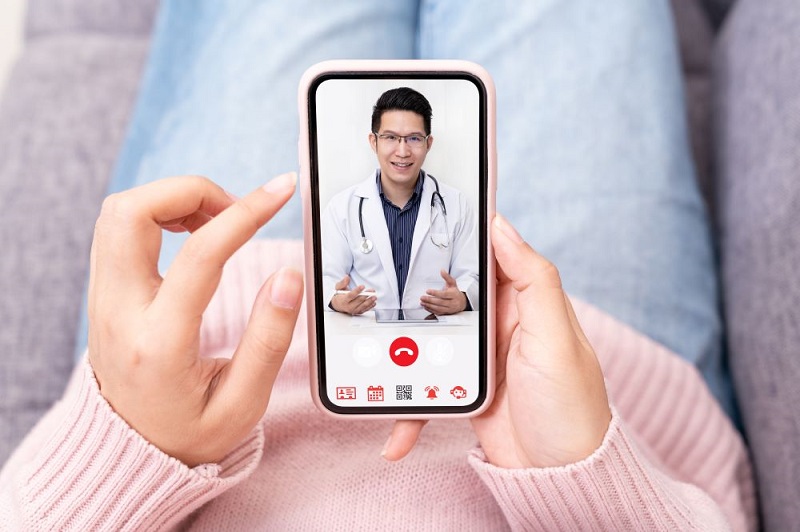
Technologies that relate to commonly used health management can be divided into two main categories, telemedicine(electronic or distant consultation service) and telehealth(electronic or distant health service). The American Academy of Family Physicians has clear definitions for the two. Telemedicine is about using technology to provide clinical services, which allows doctors to use communication technology to overcome restrictions as a result of geographical distance. Telehealth is not limited to clinical consultations, it also covers care, support and non-clinical health management services.
Local electronic health record goes back years
Electronic health records in Hong Kong are nothing new. In fact, its use can be traced as far back as the early 1990s in Hong Kong’s public healthcare sector. In 2009, the Legislative Council’s Finance Committee approved a funding of HK$702 million to develop a comprehensive electronic health record programme. By the end of March in 2021, more than 1.7 million patients had voluntarily registered for the Electronic Health Record Sharing System, facilitating the coordination of patient care among different healthcare units.
Besides the electronic health record system, local health authorities have kept up with the momentum of leveraging technology to provide care. For instance, the Hong Kong Hospital Authority launched the “HA Go” mobile app, which is a one-stop mobile platform promoting distant health services that range from appointment management, mobile payment, personalised health management, facilitation in rehabilitation journey, and multimedia cognitive training. The app was particularly popular during the Covid-19 pandemic in promoting continuous care and brought about convenience to both patients and care-givers.
Some non-governmental organisations also have eHealth initiatives, making use of technology to improve healthcare management for the general public. In 2016, for example, the Hong Kong Jockey Club used more than HK$100 million to fund the implementation of a three-year “Jockey Club Community eHealth Care Project” to promote preventive healthcare and personal empowerment among the elderly population. Now in its second phase, the plan aims to establish electronic health stations in 80 elderly homes, while encouraging the elderly to measure health indicators (blood pressure, blood sugar level and weight) on a regular basis. The elderly are also invited to fill out health questionnaires. All information collected is analysed to identify potential health risks by multidisciplinary healthcare professionals tasked to follow up and provide care remotely. More than 5,500 senior citizens have benefited from the scheme since its inception and have been encouraged to proactively manage their health.
In March this year, the Hong Kong government published a report on the manpower forecast of the health sector, which estimated that the city will face a shortage of some 1,610 doctors by 2030 and 1,949 by 2040. Our Hong Kong Foundation estimates that Hong Kong will need an addition of about 3,500 doctors if the city is to catch up with the doctor-to-population ratio observed in Singapore. The Hong Kong government is picking up its pace in resolving Hong Kong’s longstanding doctor shortage crisis. It is expected to officially table its recently announced proposal on creating a new legislated path to admit non-locally trained doctors in the current Legislative session. But in considering a multifaceted approach to tackle fundamental issues related to resource restrictions in the public healthcare system and importantly, shorten the waiting time for public healthcare services so that patients are able to receive timely care, more could, and should be done to encourage patient self-care and personal health management. We anticipate eHealth management to become increasingly popular in the digital age as organisations in both the public and private sectors look to incorporate technology into their service provision aimed to address the most pressing health needs in a timely manner.


Author: Dr Pamela TIN, Head of Healthcare and Social Development Research at Our Hong Kong Foundation
The increasing use of technology will help to improve the management of healthcare under resource restrictions.
The use of futuristic technology in medicine is a familiar theme in science fiction movies, whether in surreal scenes using Artificial Intelligence to conduct an operation or having a chip implanted inside a character. In reality, the application of technology in medicine is not limited to cutting-edge technologies like AI and biotechnology. Everyday applications such as mobile apps tracking the number of steps people walk in a day and electronic medical records are all examples of how technology can help to improve the quality of healthcare, thereby helping to create a healthier community.
Technologies that relate to commonly used health management can be divided into two main categories, telemedicine(electronic or distant consultation service) and telehealth(electronic or distant health service). The American Academy of Family Physicians has clear definitions for the two. Telemedicine is about using technology to provide clinical services, which allows doctors to use communication technology to overcome restrictions as a result of geographical distance. Telehealth is not limited to clinical consultations, it also covers care, support and non-clinical health management services.
Local electronic health record goes back years
Electronic health records in Hong Kong are nothing new. In fact, its use can be traced as far back as the early 1990s in Hong Kong’s public healthcare sector. In 2009, the Legislative Council’s Finance Committee approved a funding of HK$702 million to develop a comprehensive electronic health record programme. By the end of March in 2021, more than 1.7 million patients had voluntarily registered for the Electronic Health Record Sharing System, facilitating the coordination of patient care among different healthcare units.
Besides the electronic health record system, local health authorities have kept up with the momentum of leveraging technology to provide care. For instance, the Hong Kong Hospital Authority launched the “HA Go” mobile app, which is a one-stop mobile platform promoting distant health services that range from appointment management, mobile payment, personalised health management, facilitation in rehabilitation journey, and multimedia cognitive training. The app was particularly popular during the Covid-19 pandemic in promoting continuous care and brought about convenience to both patients and care-givers.
Some non-governmental organisations also have eHealth initiatives, making use of technology to improve healthcare management for the general public. In 2016, for example, the Hong Kong Jockey Club used more than HK$100 million to fund the implementation of a three-year “Jockey Club Community eHealth Care Project” to promote preventive healthcare and personal empowerment among the elderly population. Now in its second phase, the plan aims to establish electronic health stations in 80 elderly homes, while encouraging the elderly to measure health indicators (blood pressure, blood sugar level and weight) on a regular basis. The elderly are also invited to fill out health questionnaires. All information collected is analysed to identify potential health risks by multidisciplinary healthcare professionals tasked to follow up and provide care remotely. More than 5,500 senior citizens have benefited from the scheme since its inception and have been encouraged to proactively manage their health.
In March this year, the Hong Kong government published a report on the manpower forecast of the health sector, which estimated that the city will face a shortage of some 1,610 doctors by 2030 and 1,949 by 2040. Our Hong Kong Foundation estimates that Hong Kong will need an addition of about 3,500 doctors if the city is to catch up with the doctor-to-population ratio observed in Singapore. The Hong Kong government is picking up its pace in resolving Hong Kong’s longstanding doctor shortage crisis. It is expected to officially table its recently announced proposal on creating a new legislated path to admit non-locally trained doctors in the current Legislative session. But in considering a multifaceted approach to tackle fundamental issues related to resource restrictions in the public healthcare system and importantly, shorten the waiting time for public healthcare services so that patients are able to receive timely care, more could, and should be done to encourage patient self-care and personal health management. We anticipate eHealth management to become increasingly popular in the digital age as organisations in both the public and private sectors look to incorporate technology into their service provision aimed to address the most pressing health needs in a timely manner.