









Expediting Breakthroughs in 3 Bottlenecks to Boost GBA Collaboration




Expediting Breakthroughs in 3 Bottlenecks to Boost GBA Collaboration

The source text is in Chinese. This English version is for reference only. In case of any discrepancy between this English version and the Chinese version, the Chinese version shall prevail.
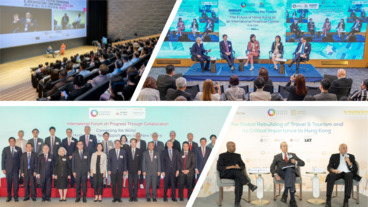
At the earlier Asian Financial Forum held in Hong Kong, several speakers emphasised the strategic importance of the Guangdong–Hong Kong–Macao Greater Bay Area (GBA) in national strategies. Pan Gongsheng, Governor of the People's Bank of China, announced measures including deepening market connectivity between the Mainland and Hong Kong, increasing the proportion of foreign exchange reserves allocated to Hong Kong, and fully supporting Hong Kong's development as an international financial centre.

Diversified Division of Labour and Clearer Positioning
The year 2025, marking the conclusion of the 14th Five-Year Plan (2021–2025), will serve as a crucial juncture for the GBA to review achievements and chart future plans. Comprising 9 Mainland cities, Hong Kong, and Macao, the GBA has made significant achievements in the fields of economy, technology, and urban development in recent years. For example, Guangdong Province has maintained a steady annual GDP growth of around 5%, and its permanent resident urbanisation rate has risen further to over 75%. The success of the GBA is largely attributable to the clearer positioning of each city and the regional advantages of its diversified division of labour.
According to the "Our Hong Kong Foundation–Dah Sing Bank Greater Bay Area Industry Development Index", which analysed over 130 statistical indicators and 1,400 data points, and surveyed more than 3,000 GBA enterprises, Hong Kong has become a pivotal hub for the convergence of regional and international capital and factors due to its internationalised financial services and trade and logistics system. Shenzhen, meanwhile, has positioned itself as a frontline base for the transformation of research outcomes and innovation-driven entrepreneurial ecosystems with a focus on the innovation and technology industry. Moreover, Guangzhou has shown outstanding performance in construction, trade, and green finance through its ongoing promotion of the upgrading of traditional industries, and Macao has demonstrated potential for synergy development across multiple sectors through its vital role in cultural and tourism, entertainment, and convention and exhibition economies.
The division of labour and collaboration among the cities has driven the efficient integration of resources within the GBA, gradually establishing a cross-regional collaborative development model.
The collaborative model along the entire industrial chain of innovation and technology, and manufacturing industries is a particularly representative one. Specifically, Hong Kong has led in basic research and frontier technology exploration with its world-class research teams and academic institutions, whereas Shenzhen has managed to rapidly transform research outcomes into productivity with its intensive technology investment and clusters of high-tech enterprises. In the manufacturing segment, Zhongshan, Foshan, Guangzhou, and Shenzhen have formed the world’s leading of "lighthouse factories" clusters, significantly enhancing efficiency through digitalisation and smart technologies. At the marketing segment, Hong Kong has assisted products in the GBA to swiftly and securely enter the global market by leveraging its strengths in international certification capabilities, and experience in legal proceedings and arbitration. This linkage of the whole industry chain, from upstream to downstream, has enhanced the efficiency of regional resource integration and the competitiveness of the GBA as a whole.
Promoting e-CNY to Prevent Misappropriation of Funds
Despite its remarkable achievements, the GBA is encountering certain challenges particularly in the circulation of 3 critical element flows, namely talent, capital, and data. Firstly, due to differences in professional qualification recognition, cross-border mobility of top talents is not smooth enough, restricting the depth and breadth of innovation cooperation. Secondly, cross-border capital flow among the Mainland, Hong Kong, and Macao remains relatively costly. Additionally, due to the potential for data circulation and sharing is constrained by varying standards in data privacy protection and local regulations across the Mainland, Hong Kong, and Macao.
Regarding people and logistics flows, infrastructure development in the GBA has laid a solid foundation. Remarkable projects, such as the Hong Kong–Zhuhai–Macao Bridge and the Shenzhen-Zhongshan Link, have significantly reduced inter-city travel times and greatly facilitated efficiency in people and logistics flows. Nevertheless, further promotion of mutual recognition in professional qualifications and streamlining of tax policies are needed to unleash the full potential of cross-border talent mobility. Drawing on the experiences of the Tokyo Bay Area and the San Francisco Bay Area, making it more convenient for foreign technology and professional talents to choose their workplaces in the region without having to consider the administrative barriers between the cities can enhance the GBA’s attractiveness to top global talents.
Statistically, around one-quarter of startup founders in the San Francisco Bay Area are from China or India, and about one-third of scientists and engineers were born outside the United States. In addition, in the European cross-border region, the successful practices include standardising mechanisms for professional qualification and mutual recognition. For example, the European Qualifications Framework (EQF), which provides a standardised reference framework for various professional qualifications within the European Union (EU), have demonstrated that similar measures can effectively lower cross-border employment barriers.
Institutional innovation in capital flow is equally important. Despite the breakthroughs in the current cross-border capital market, practical applications in commercial activities still face restrictions. The future promotion of e-CNY and blockchain technology is expected to become an essential tool for resolving bottlenecks in capital flow. Leveraging blockchain technology for real-time tracking of capital flows, e-CNY ensures funds are used for designated commercial purposes and prevents the risk of misappropriation. Additionally, the security and transparency of blockchain technology significantly reduce cross-border transaction costs. It is recommended that the Government promote a cross-border application pilot scheme of e-CNY, particularly in specific investment products and commercial areas, to explore more flexible regulatory mechanisms and enhance capital circulation efficiency.
The GBA has made positive progress in information circulation. For instance, to facilitate cross-border cooperation, the GBA Standard Contract has been extended to all sectors in 9 Mainland cities and Hong Kong on a voluntary basis, and the Shenzhen-Hong Kong cross-boundary data validation platform has initiated a pilot launch.
Data Standardisation to Facilitate Collaborative Innovation
The GBA will promote classification management and orderly sharing of non-sensitive industrial data, covering supply chains, logistics, energy usage, etc. It will also explore pilot models for secure cross-border application of biological samples and other data in the Shenzhen–Hong Kong Lok Ma Chau Loop area. By referring to the EU's General Data Protection Regulation (GDPR), which consolidates member states' data protection regulations to standardise the protection of personal data for enterprises, Hong Kong can leverage its international legal system and data governance capability to formulate a data protection framework that is globally compatible. This will provide institutional guarantees for cross-border data flows and further enhance the digital economy competitiveness of the GBA.
In short, GBA has achieved notable outcomes in infrastructure and economic collaboration. However, to achieve higher-level regional integration and global competitiveness, continuous breakthroughs in the 3 critical elements, namely people flow, capital circulation, and data circulation, are needed.
At this critical juncture marking the conclusion of the 14th Five-Year Plan, the GBA should expedite the mutual recognition of professional qualifications and cross-border policy coordination, fully leverage the potential of e-CNY and blockchain technology to significantly enhance capital circulation efficiency, and standardise a secure data-sharing mechanism to facilitate efficient regional data flows. By overcoming the current development bottlenecks, the GBA can holistically foster its strategic position within the global economic landscape, achieving higher levels of regional prosperity and global competitiveness.


The source text is in Chinese. This English version is for reference only. In case of any discrepancy between this English version and the Chinese version, the Chinese version shall prevail.
At the earlier Asian Financial Forum held in Hong Kong, several speakers emphasised the strategic importance of the Guangdong–Hong Kong–Macao Greater Bay Area (GBA) in national strategies. Pan Gongsheng, Governor of the People's Bank of China, announced measures including deepening market connectivity between the Mainland and Hong Kong, increasing the proportion of foreign exchange reserves allocated to Hong Kong, and fully supporting Hong Kong's development as an international financial centre.
Diversified Division of Labour and Clearer Positioning
The year 2025, marking the conclusion of the 14th Five-Year Plan (2021–2025), will serve as a crucial juncture for the GBA to review achievements and chart future plans. Comprising 9 Mainland cities, Hong Kong, and Macao, the GBA has made significant achievements in the fields of economy, technology, and urban development in recent years. For example, Guangdong Province has maintained a steady annual GDP growth of around 5%, and its permanent resident urbanisation rate has risen further to over 75%. The success of the GBA is largely attributable to the clearer positioning of each city and the regional advantages of its diversified division of labour.
According to the "Our Hong Kong Foundation–Dah Sing Bank Greater Bay Area Industry Development Index", which analysed over 130 statistical indicators and 1,400 data points, and surveyed more than 3,000 GBA enterprises, Hong Kong has become a pivotal hub for the convergence of regional and international capital and factors due to its internationalised financial services and trade and logistics system. Shenzhen, meanwhile, has positioned itself as a frontline base for the transformation of research outcomes and innovation-driven entrepreneurial ecosystems with a focus on the innovation and technology industry. Moreover, Guangzhou has shown outstanding performance in construction, trade, and green finance through its ongoing promotion of the upgrading of traditional industries, and Macao has demonstrated potential for synergy development across multiple sectors through its vital role in cultural and tourism, entertainment, and convention and exhibition economies.
The division of labour and collaboration among the cities has driven the efficient integration of resources within the GBA, gradually establishing a cross-regional collaborative development model.
The collaborative model along the entire industrial chain of innovation and technology, and manufacturing industries is a particularly representative one. Specifically, Hong Kong has led in basic research and frontier technology exploration with its world-class research teams and academic institutions, whereas Shenzhen has managed to rapidly transform research outcomes into productivity with its intensive technology investment and clusters of high-tech enterprises. In the manufacturing segment, Zhongshan, Foshan, Guangzhou, and Shenzhen have formed the world’s leading of "lighthouse factories" clusters, significantly enhancing efficiency through digitalisation and smart technologies. At the marketing segment, Hong Kong has assisted products in the GBA to swiftly and securely enter the global market by leveraging its strengths in international certification capabilities, and experience in legal proceedings and arbitration. This linkage of the whole industry chain, from upstream to downstream, has enhanced the efficiency of regional resource integration and the competitiveness of the GBA as a whole.
Promoting e-CNY to Prevent Misappropriation of Funds
Despite its remarkable achievements, the GBA is encountering certain challenges particularly in the circulation of 3 critical element flows, namely talent, capital, and data. Firstly, due to differences in professional qualification recognition, cross-border mobility of top talents is not smooth enough, restricting the depth and breadth of innovation cooperation. Secondly, cross-border capital flow among the Mainland, Hong Kong, and Macao remains relatively costly. Additionally, due to the potential for data circulation and sharing is constrained by varying standards in data privacy protection and local regulations across the Mainland, Hong Kong, and Macao.
Regarding people and logistics flows, infrastructure development in the GBA has laid a solid foundation. Remarkable projects, such as the Hong Kong–Zhuhai–Macao Bridge and the Shenzhen-Zhongshan Link, have significantly reduced inter-city travel times and greatly facilitated efficiency in people and logistics flows. Nevertheless, further promotion of mutual recognition in professional qualifications and streamlining of tax policies are needed to unleash the full potential of cross-border talent mobility. Drawing on the experiences of the Tokyo Bay Area and the San Francisco Bay Area, making it more convenient for foreign technology and professional talents to choose their workplaces in the region without having to consider the administrative barriers between the cities can enhance the GBA’s attractiveness to top global talents.
Statistically, around one-quarter of startup founders in the San Francisco Bay Area are from China or India, and about one-third of scientists and engineers were born outside the United States. In addition, in the European cross-border region, the successful practices include standardising mechanisms for professional qualification and mutual recognition. For example, the European Qualifications Framework (EQF), which provides a standardised reference framework for various professional qualifications within the European Union (EU), have demonstrated that similar measures can effectively lower cross-border employment barriers.
Institutional innovation in capital flow is equally important. Despite the breakthroughs in the current cross-border capital market, practical applications in commercial activities still face restrictions. The future promotion of e-CNY and blockchain technology is expected to become an essential tool for resolving bottlenecks in capital flow. Leveraging blockchain technology for real-time tracking of capital flows, e-CNY ensures funds are used for designated commercial purposes and prevents the risk of misappropriation. Additionally, the security and transparency of blockchain technology significantly reduce cross-border transaction costs. It is recommended that the Government promote a cross-border application pilot scheme of e-CNY, particularly in specific investment products and commercial areas, to explore more flexible regulatory mechanisms and enhance capital circulation efficiency.
The GBA has made positive progress in information circulation. For instance, to facilitate cross-border cooperation, the GBA Standard Contract has been extended to all sectors in 9 Mainland cities and Hong Kong on a voluntary basis, and the Shenzhen-Hong Kong cross-boundary data validation platform has initiated a pilot launch.
Data Standardisation to Facilitate Collaborative Innovation
The GBA will promote classification management and orderly sharing of non-sensitive industrial data, covering supply chains, logistics, energy usage, etc. It will also explore pilot models for secure cross-border application of biological samples and other data in the Shenzhen–Hong Kong Lok Ma Chau Loop area. By referring to the EU's General Data Protection Regulation (GDPR), which consolidates member states' data protection regulations to standardise the protection of personal data for enterprises, Hong Kong can leverage its international legal system and data governance capability to formulate a data protection framework that is globally compatible. This will provide institutional guarantees for cross-border data flows and further enhance the digital economy competitiveness of the GBA.
In short, GBA has achieved notable outcomes in infrastructure and economic collaboration. However, to achieve higher-level regional integration and global competitiveness, continuous breakthroughs in the 3 critical elements, namely people flow, capital circulation, and data circulation, are needed.
At this critical juncture marking the conclusion of the 14th Five-Year Plan, the GBA should expedite the mutual recognition of professional qualifications and cross-border policy coordination, fully leverage the potential of e-CNY and blockchain technology to significantly enhance capital circulation efficiency, and standardise a secure data-sharing mechanism to facilitate efficient regional data flows. By overcoming the current development bottlenecks, the GBA can holistically foster its strategic position within the global economic landscape, achieving higher levels of regional prosperity and global competitiveness.