







Realising a Heartfelt Journey Through People-Centred End-of-Life Care




Realising a Heartfelt Journey Through People-Centred End-of-Life Care

Our Hong Kong Foundation (OHKF) is launching its latest research report titled “Realising a Heartfelt Journey Through People-Centred End-of-Life Care.”
The report emphasises that the government’s recent legislative amendments to advance end-of-life care (EoLC) should encompass individuals across all age groups and address not only medical needs but also extend to include psychological, social, and spiritual dimensions, thereby ensuring holistic care for individuals in their final stages of life.
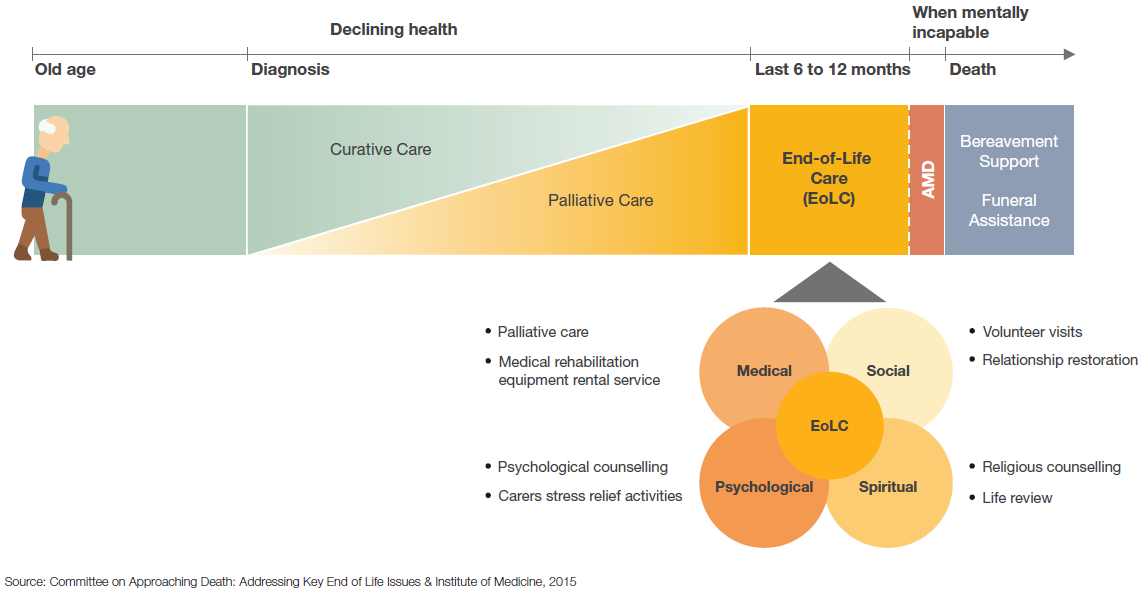
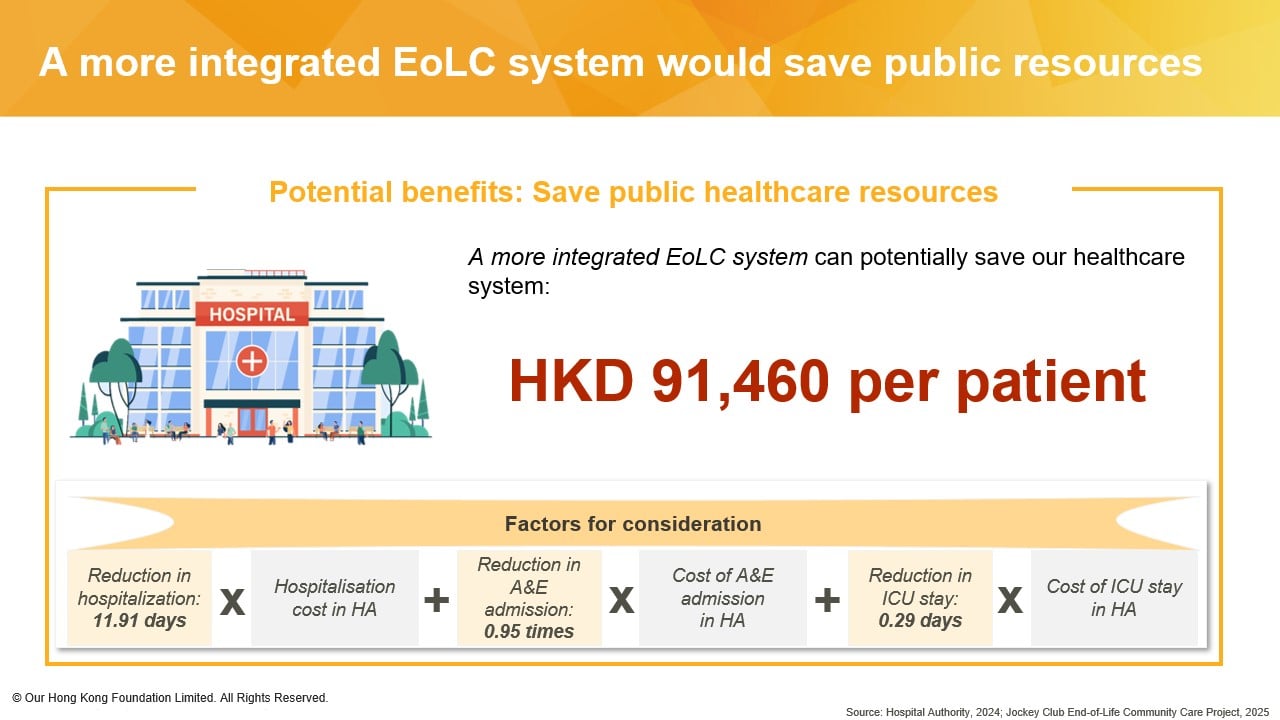
OHKF believes that effective EoLC policies not only benefit patients and their families, but also alleviate the pressure on hospitals, especially since medical service demand surges in patients’ final months. Shifting care from hospitals to community settings aligns with the preference of about 90% of Hong Kong citizens to remain in familiar environments in the final stages of life while offering potential cost savings estimated at over HK$ 91,000 per patient for healthcare system.
Since 2019, the Our Hong Kong Foundation (OHKF) has been dedicated to researching and advocating for advancements in EoLC, having previously published Fostering Medical-Social Collaboration in Achieving Quality End-of-life Care survey and Adding Life to Years: Comprehensive End-of-Life Care for All advocacy report in 2019 and 2024 respectively. Our survey conducted in 2019 highlighted a low level of public awareness and limited experience with EoLC services, emphasising the urgent need for enhanced public education and advocacy. Building on these premises, our 2024 report focused on the establishment of a territory-wide Advance Care Planning (ACP) framework, the development of a comprehensive EoLC service strategy, as well as the enhancement of life and death education and professional training to better meet the needs of patients and carers.
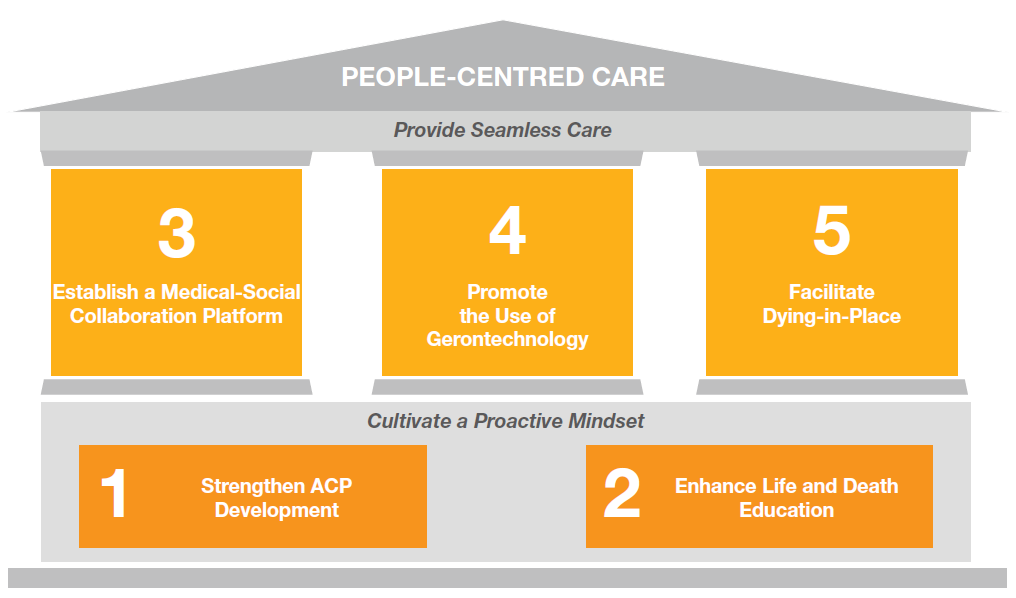
Building on these efforts, OHKF puts forward 5 policy recommendations centred on cultivating a proactive mindset and providing seamless care combining stakeholders’ insights and international case studies. These aim to advance a more comprehensive and person-centred EoLC system in Hong Kong that meets the diverse needs arising from ageing population. The recommendations are as follows:
Cultivate a Proactive Mindset
Strengthen Advance Care Planning (ACP) Development: Establish a standardised ACP framework and create upload and sharing pathway within eHealth.
Enhance Life and Death Education: Establish an online lesson plan sharing platform, promote cross-sector public education in the community, and enhance training to health and social care professionals, for better understanding and acceptance towards death and end-of-life issues in the society.
Provide Seamless Care
Establish a Medical-Social Collaboration Platform: Develop a medical-social collaboration platform to facilitate cross-sector record sharing and service referrals, as well as to support data-driven policy-making, thereby enhancing service efficiency and quality.
Promote the use of Gerontechnology: Implement targeted promotion strategies in hospitals and communities to shift the promotional model from passive to proactive, making it easier for potential users to access products needed.
Facilitate Dying-in-Place: Create a tiered service model in the community, improve care home facilities, expand public mortuary services, and simplify death registration procedures, thereby creating favourable conditions for dying-in-place.




Our Hong Kong Foundation (OHKF) is launching its latest research report titled “Realising a Heartfelt Journey Through People-Centred End-of-Life Care.”
The report emphasises that the government’s recent legislative amendments to advance end-of-life care (EoLC) should encompass individuals across all age groups and address not only medical needs but also extend to include psychological, social, and spiritual dimensions, thereby ensuring holistic care for individuals in their final stages of life.
OHKF believes that effective EoLC policies not only benefit patients and their families, but also alleviate the pressure on hospitals, especially since medical service demand surges in patients’ final months. Shifting care from hospitals to community settings aligns with the preference of about 90% of Hong Kong citizens to remain in familiar environments in the final stages of life while offering potential cost savings estimated at over HK$ 91,000 per patient for healthcare system.
Since 2019, the Our Hong Kong Foundation (OHKF) has been dedicated to researching and advocating for advancements in EoLC, having previously published Fostering Medical-Social Collaboration in Achieving Quality End-of-life Care survey and Adding Life to Years: Comprehensive End-of-Life Care for All advocacy report in 2019 and 2024 respectively. Our survey conducted in 2019 highlighted a low level of public awareness and limited experience with EoLC services, emphasising the urgent need for enhanced public education and advocacy. Building on these premises, our 2024 report focused on the establishment of a territory-wide Advance Care Planning (ACP) framework, the development of a comprehensive EoLC service strategy, as well as the enhancement of life and death education and professional training to better meet the needs of patients and carers.
Building on these efforts, OHKF puts forward 5 policy recommendations centred on cultivating a proactive mindset and providing seamless care combining stakeholders’ insights and international case studies. These aim to advance a more comprehensive and person-centred EoLC system in Hong Kong that meets the diverse needs arising from ageing population. The recommendations are as follows:
Cultivate a Proactive Mindset
Strengthen Advance Care Planning (ACP) Development: Establish a standardised ACP framework and create upload and sharing pathway within eHealth.
Enhance Life and Death Education: Establish an online lesson plan sharing platform, promote cross-sector public education in the community, and enhance training to health and social care professionals, for better understanding and acceptance towards death and end-of-life issues in the society.
Provide Seamless Care
Establish a Medical-Social Collaboration Platform: Develop a medical-social collaboration platform to facilitate cross-sector record sharing and service referrals, as well as to support data-driven policy-making, thereby enhancing service efficiency and quality.
Promote the use of Gerontechnology: Implement targeted promotion strategies in hospitals and communities to shift the promotional model from passive to proactive, making it easier for potential users to access products needed.
Facilitate Dying-in-Place: Create a tiered service model in the community, improve care home facilities, expand public mortuary services, and simplify death registration procedures, thereby creating favourable conditions for dying-in-place.