









Policy Path to Ageing in Place for Hong Kong: Shaping an Inclusive Housing and Community Landscape




Policy Path to Ageing in Place for Hong Kong: Shaping an Inclusive Housing and Community Landscape

Our Hong Kong Foundation (OHKF) is launching its latest eldercare policy research report titled “Policy Path to Ageing in Place for Hong Kong: Shaping an Inclusive Housing and Community Landscape”. As the number of seniors in Hong Kong increases, there will likely be a corresponding rise in healthcare and social welfare expenditure. To prepare for these changes, the Report comprehensively outlines the improvements needed for Hong Kong’s senior living landscape to further enhance Ageing in Place for long-term utilisation of fiscal resources. OHKF estimates that implementing recommendations like home modifications and Inclusive Design to remove home hazards could reduce annual hospitalisation expenses by at least HK$5.67 billion in 2046, when the senior population is anticipated to account for 36% of the total population.
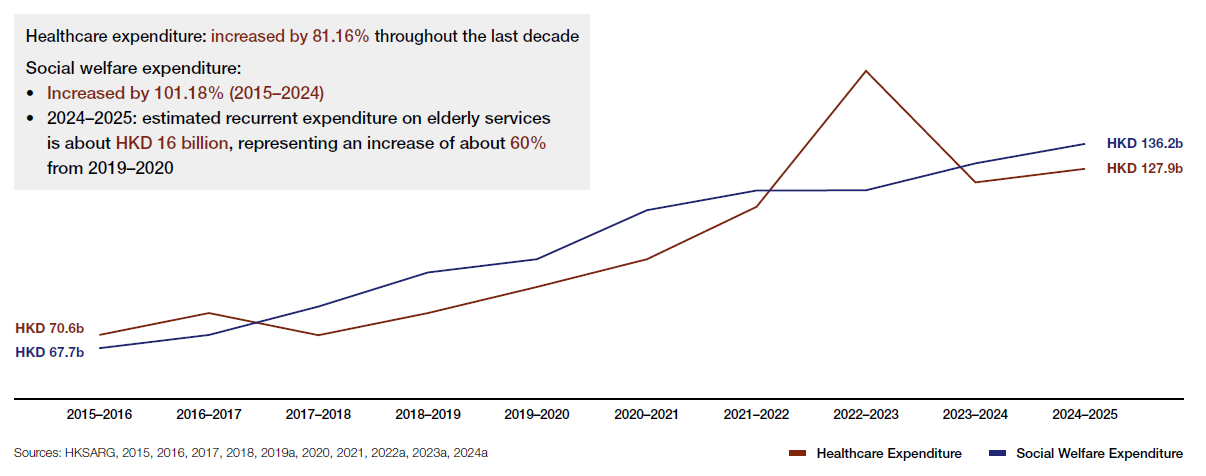
Hong Kong’s senior living environment should comprise diverse housing options and a continuum of health and social support services, to enable seniors to maintain healthy lifestyles and maintain connections with others in the community. Therefore, OHKF proposed the following 6 policy recommendations.
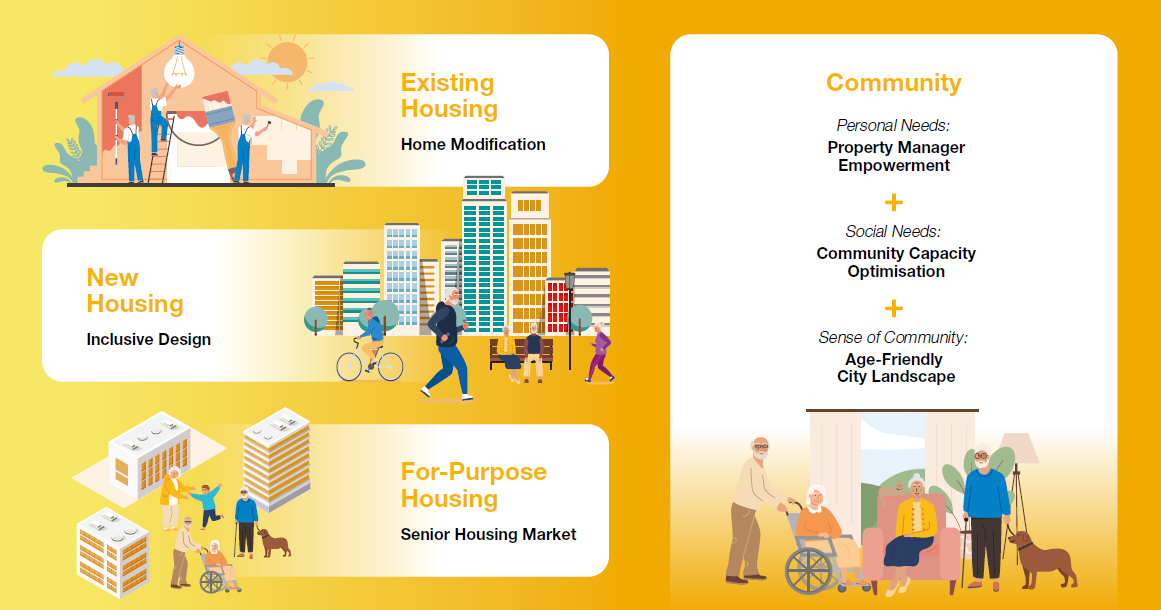
Enhance seniors’ access to home modification services: conduct home modifications in existing housing to enhance safety and accessibility for community-dwelling seniors by reducing physical barriers and safety hazards.
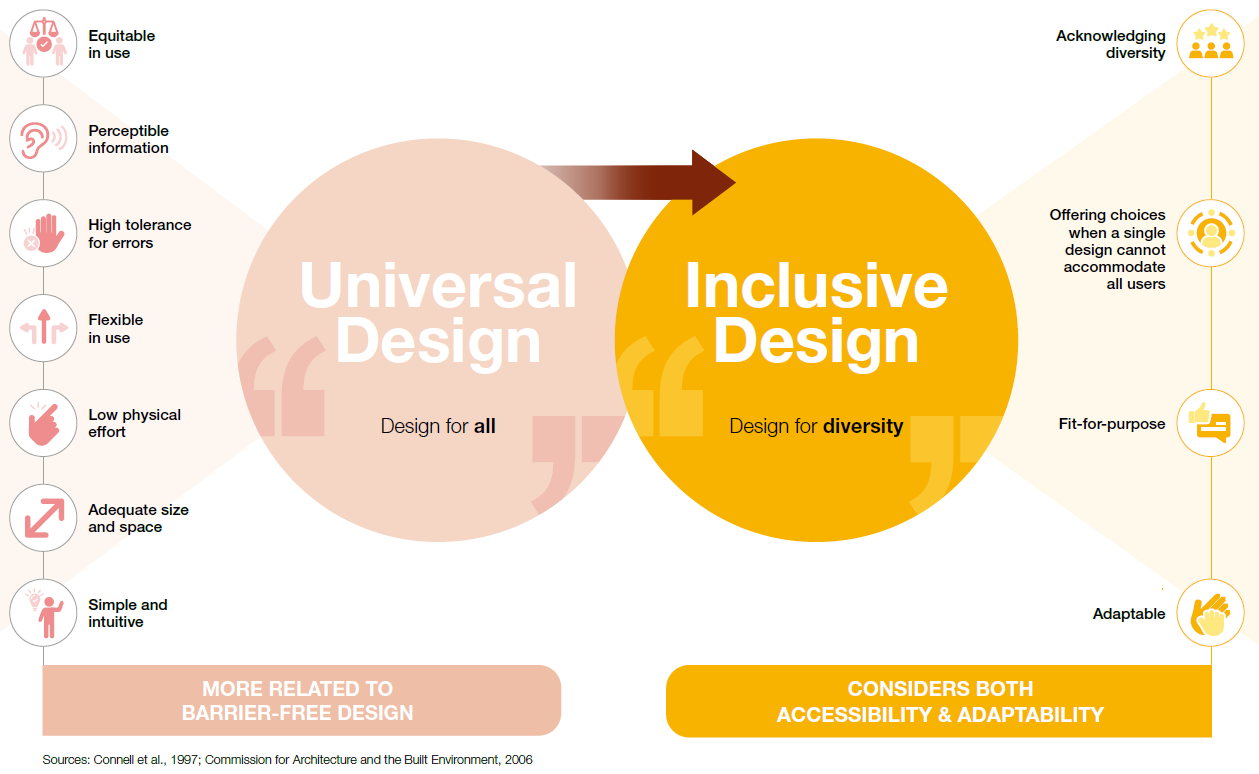
Ensure Hong Kong’s housing can adapt to future needs through Inclusive Design: raise standards in Design Manual, mandate adoption of safety-related designs through Buildings Ordinance, and provide incentives to developers to adopt relevant designs.
Establish favourable conditions for private senior housing development: offer policy support and incentives, enhance the availability of land for senior housing developments, encourage formation of diverse institutional funding tools, and help seniors achieve financial stability, aiming to facilitate senior housing development.
Empower property management to enhance the quality of life for community-dwelling seniors: empower property management staff through training programmes and capacity bridging to act as a frontline support system to streamline seniors’ access to health and social services.
Promote sharing of community resources and facilities: review existing allocations of community resources and promote flexible space usage that can adapt to seniors’ evolving needs through intergenerational activities.
Enhance the age-friendliness of public spaces: regularly evaluate the inclusivity of public spaces and adopt “Lighter, Quicker, Cheaper” (LQC) solutions to enhance their age-friendliness.




Our Hong Kong Foundation (OHKF) is launching its latest eldercare policy research report titled “Policy Path to Ageing in Place for Hong Kong: Shaping an Inclusive Housing and Community Landscape”. As the number of seniors in Hong Kong increases, there will likely be a corresponding rise in healthcare and social welfare expenditure. To prepare for these changes, the Report comprehensively outlines the improvements needed for Hong Kong’s senior living landscape to further enhance Ageing in Place for long-term utilisation of fiscal resources. OHKF estimates that implementing recommendations like home modifications and Inclusive Design to remove home hazards could reduce annual hospitalisation expenses by at least HK$5.67 billion in 2046, when the senior population is anticipated to account for 36% of the total population.
Hong Kong’s senior living environment should comprise diverse housing options and a continuum of health and social support services, to enable seniors to maintain healthy lifestyles and maintain connections with others in the community. Therefore, OHKF proposed the following 6 policy recommendations.
Enhance seniors’ access to home modification services: conduct home modifications in existing housing to enhance safety and accessibility for community-dwelling seniors by reducing physical barriers and safety hazards.
Ensure Hong Kong’s housing can adapt to future needs through Inclusive Design: raise standards in Design Manual, mandate adoption of safety-related designs through Buildings Ordinance, and provide incentives to developers to adopt relevant designs.
Establish favourable conditions for private senior housing development: offer policy support and incentives, enhance the availability of land for senior housing developments, encourage formation of diverse institutional funding tools, and help seniors achieve financial stability, aiming to facilitate senior housing development.
Empower property management to enhance the quality of life for community-dwelling seniors: empower property management staff through training programmes and capacity bridging to act as a frontline support system to streamline seniors’ access to health and social services.
Promote sharing of community resources and facilities: review existing allocations of community resources and promote flexible space usage that can adapt to seniors’ evolving needs through intergenerational activities.
Enhance the age-friendliness of public spaces: regularly evaluate the inclusivity of public spaces and adopt “Lighter, Quicker, Cheaper” (LQC) solutions to enhance their age-friendliness.