






Be Virtually Ready: Strategy for Future Cultural Creative Industries




Be Virtually Ready: Strategy for Future Cultural Creative Industries

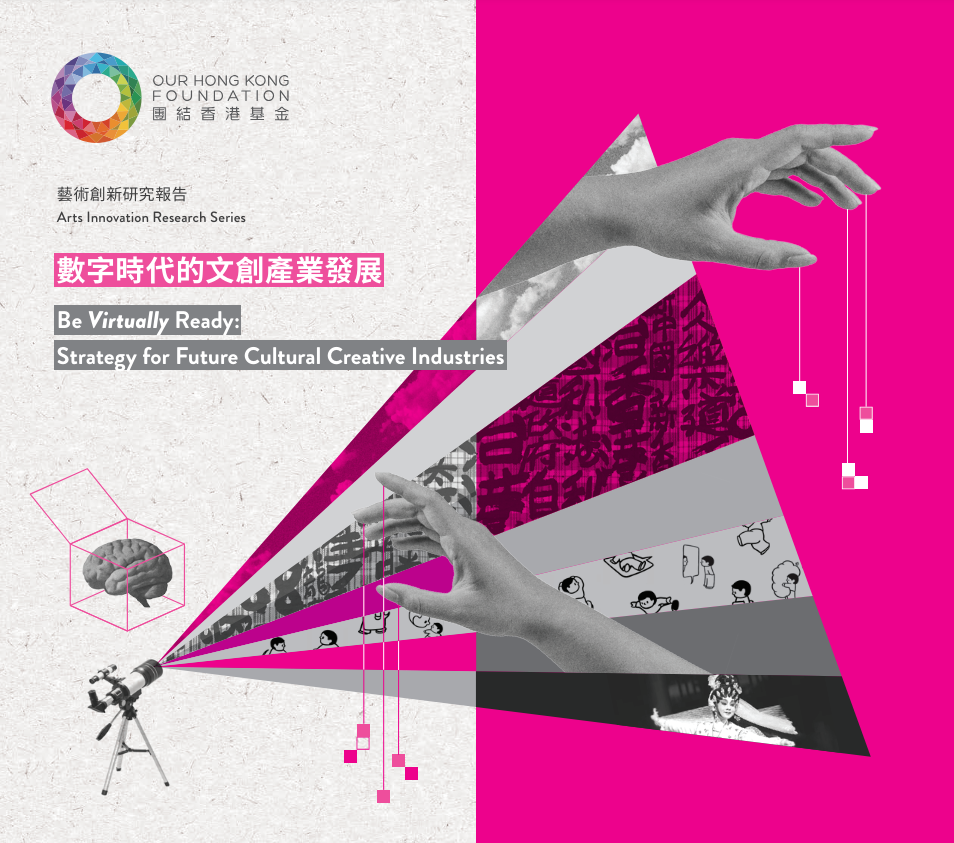
Our Hong Kong Foundation has published its latest Arts Innovation research report, titled “Be Virtually Ready: Strategy for Future Cultural Creative Industries”.
From streaming platforms to digital art, the digital transformation of the cultural and creative industries is in full swing, giving rise to new opportunities for cultural content creation, exchange and trade. Accelerated by the pandemic, governments around the world are recognising the drastic changes brought about by technology, and are revising cultural policies to keep pace with tecnological developments and emerging industries, with policies that support integrating traditional culture with new technologies, metaverse content development, trading platforms for cultural products, and future creative R&D talents training.
The stars have also aligned for new cultural policymaking in Hong Kong. This year marks a government restructuring, and the possibility of a new Culture, Sports and Tourism Bureau. This is accompanied by visions set out in the national 14th Five-Year Plan, which promulgated the support for Hong Kong become a “hub of arts and cultural exchanges between China and the rest of the world” and a “regional IP trading centre”. These two positionings have direct implications for Hong Kong’s cultural and creative industries.
This report took 1.5 years to complete, which analyses key cultural policies in mainland China's 14th Five-Year Plan, as well as the latest initiatives in Taiwan, South Korea and the United Kingdom. It is also a result of in-depth exchanges with local cultural and creative practitioners to identify the most suitable policy directions for Hong Kong.
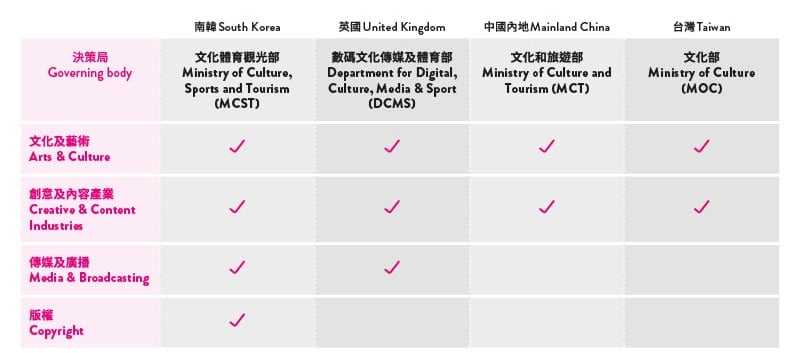
Structural components of cultural ministries in South Korea, the UK, mainland China, and Taiwan
OHKF presents eight recommendations from four policy arenas, which spans the new bureau’s structure and strategy (pertaining to its cultural portion only), content creation and development, digital infrastructures for cultural data and cultural IP, and long-term talents-nurturing. We implore the Government to formulate a Digital Culture Strategy for these areas to stay relevant with the times, respond to the needs of the industry and enhance Hong Kong's cultural soft power. For details, please refer to the full report.
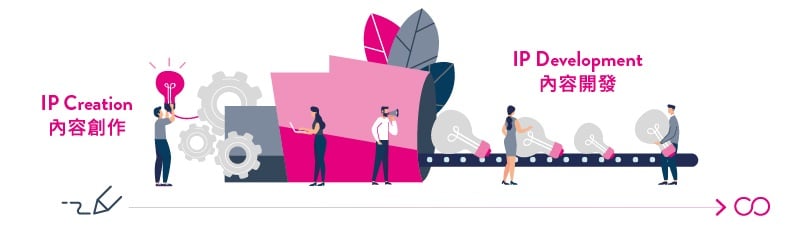
IP creation and IP development
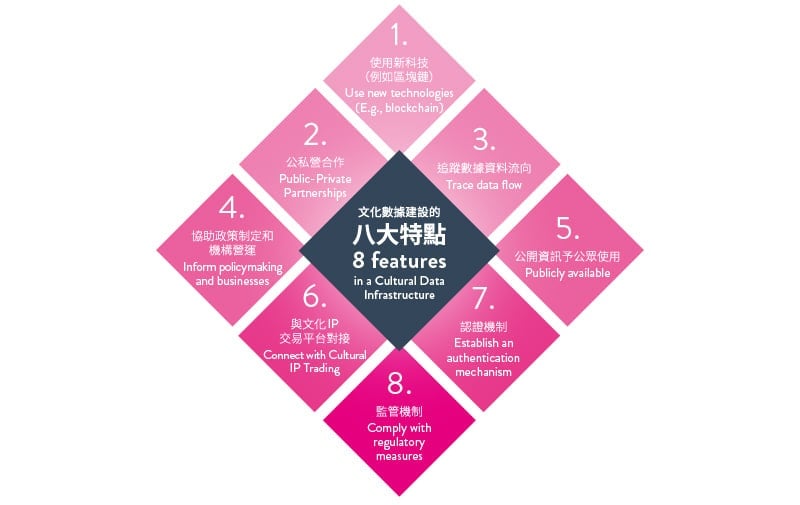
Eight features in a Cultural Data Infrastructure
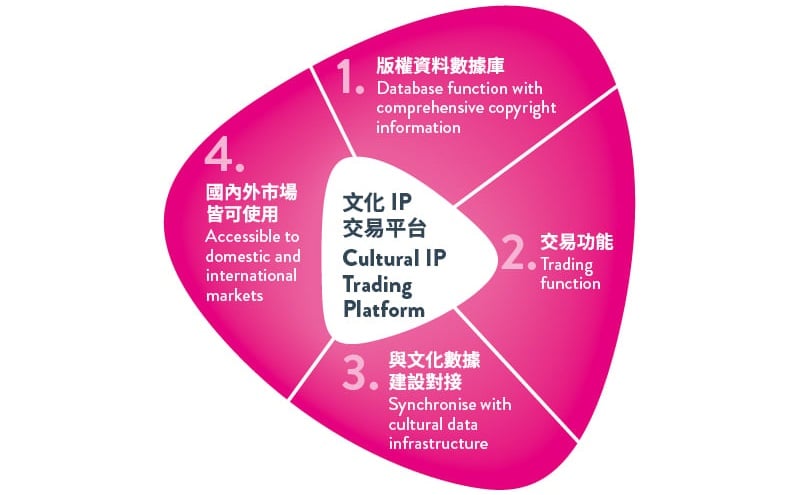
Four features in a Cultural IP Trading Platform
In the digital age, the potentials for the cultural and creative industries to innovate are countless. With a new, upcoming and dedicated policy bureau, we hope that cultural policymakers will keep abreast of the times and build the cultural and creative ecosystem through both "software" and "hardware", so that Hong Kong can truly become a vibrant hub of international cultural exchanges.




Our Hong Kong Foundation has published its latest Arts Innovation research report, titled “Be Virtually Ready: Strategy for Future Cultural Creative Industries”.
From streaming platforms to digital art, the digital transformation of the cultural and creative industries is in full swing, giving rise to new opportunities for cultural content creation, exchange and trade. Accelerated by the pandemic, governments around the world are recognising the drastic changes brought about by technology, and are revising cultural policies to keep pace with tecnological developments and emerging industries, with policies that support integrating traditional culture with new technologies, metaverse content development, trading platforms for cultural products, and future creative R&D talents training.
The stars have also aligned for new cultural policymaking in Hong Kong. This year marks a government restructuring, and the possibility of a new Culture, Sports and Tourism Bureau. This is accompanied by visions set out in the national 14th Five-Year Plan, which promulgated the support for Hong Kong become a “hub of arts and cultural exchanges between China and the rest of the world” and a “regional IP trading centre”. These two positionings have direct implications for Hong Kong’s cultural and creative industries.
This report took 1.5 years to complete, which analyses key cultural policies in mainland China's 14th Five-Year Plan, as well as the latest initiatives in Taiwan, South Korea and the United Kingdom. It is also a result of in-depth exchanges with local cultural and creative practitioners to identify the most suitable policy directions for Hong Kong.
Structural components of cultural ministries in South Korea, the UK, mainland China, and Taiwan
OHKF presents eight recommendations from four policy arenas, which spans the new bureau’s structure and strategy (pertaining to its cultural portion only), content creation and development, digital infrastructures for cultural data and cultural IP, and long-term talents-nurturing. We implore the Government to formulate a Digital Culture Strategy for these areas to stay relevant with the times, respond to the needs of the industry and enhance Hong Kong's cultural soft power. For details, please refer to the full report.
IP creation and IP development
Eight features in a Cultural Data Infrastructure
Four features in a Cultural IP Trading Platform
In the digital age, the potentials for the cultural and creative industries to innovate are countless. With a new, upcoming and dedicated policy bureau, we hope that cultural policymakers will keep abreast of the times and build the cultural and creative ecosystem through both "software" and "hardware", so that Hong Kong can truly become a vibrant hub of international cultural exchanges.