








OHKF Insight Forum New Economy Series Mature regulatory frameworks and well-developed insurance sector Carry Hong Kong to commercialised passenger-carrying flight services




OHKF Insight Forum New Economy Series Mature regulatory frameworks and well-developed insurance sector Carry Hong Kong to commercialised passenger-carrying flight services

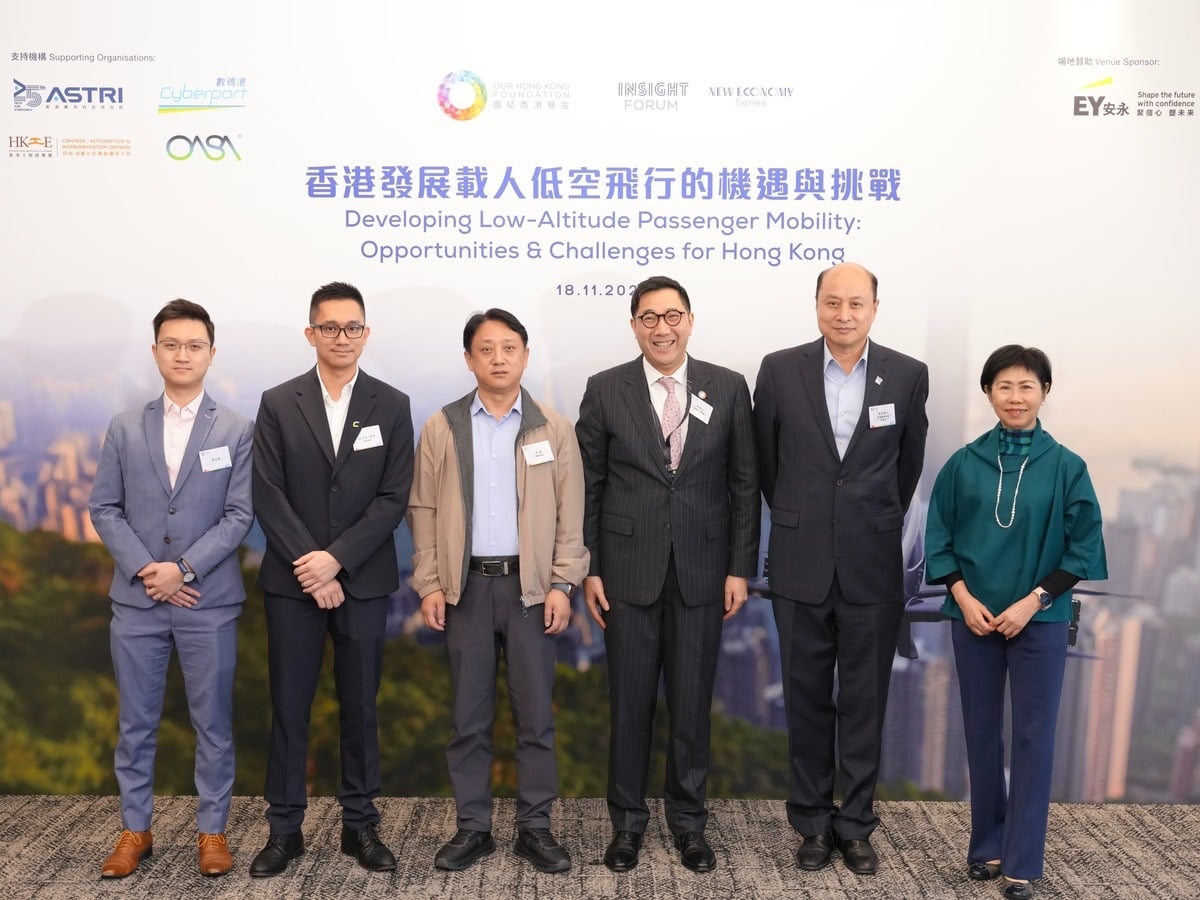
(18 Nov 2025, Hong Kong) Our Hong Kong Foundation held the New Economy Series of the Insight Forum, entitled “Developing Low-Altitude Passenger Mobility: Opportunities & Challenges for Hong Kong”, on 18 November. The forum discussed the technology, regulations, and policy supports needed to pilot such innovative low-altitude flight activities while ensuring high-level of safety.
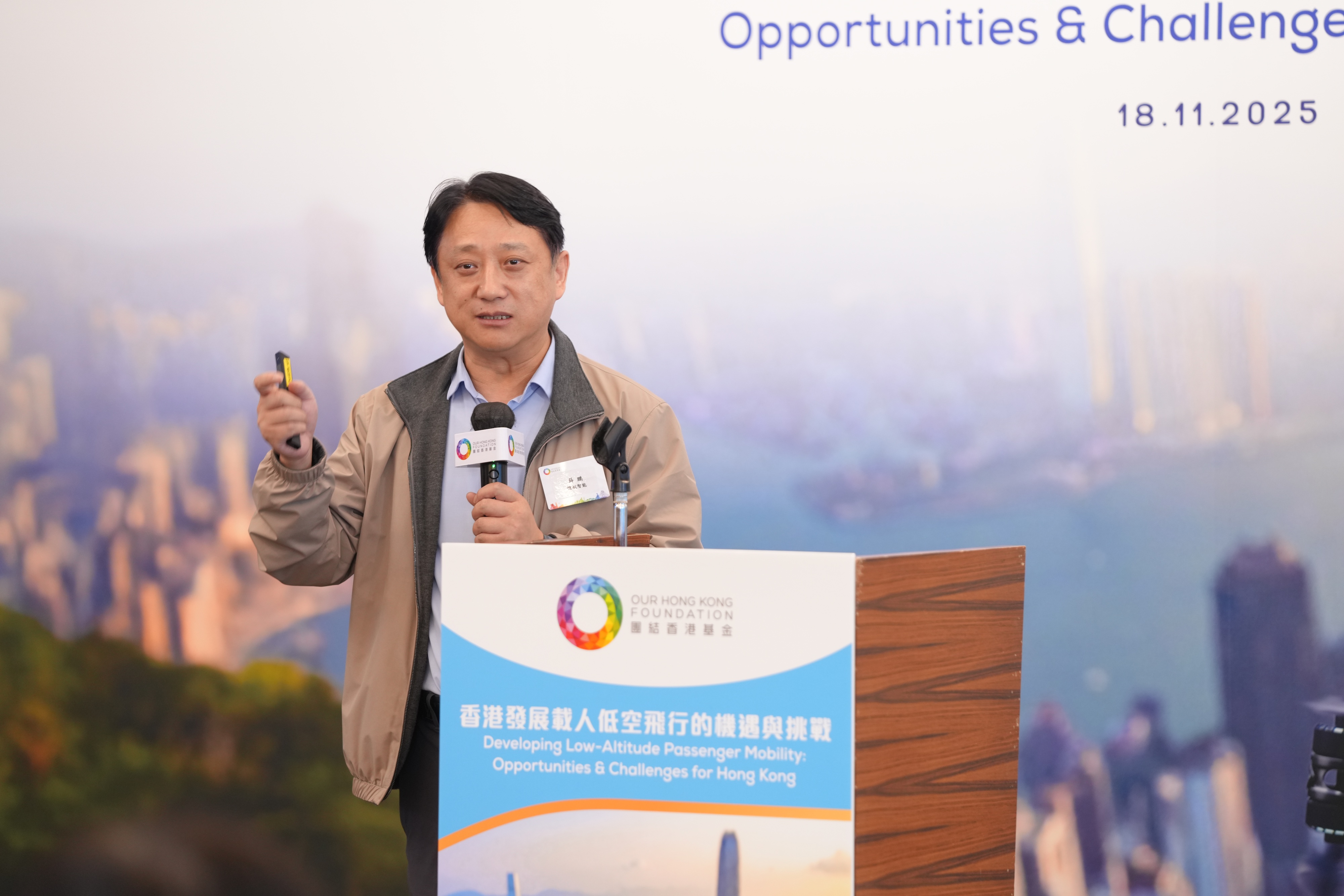
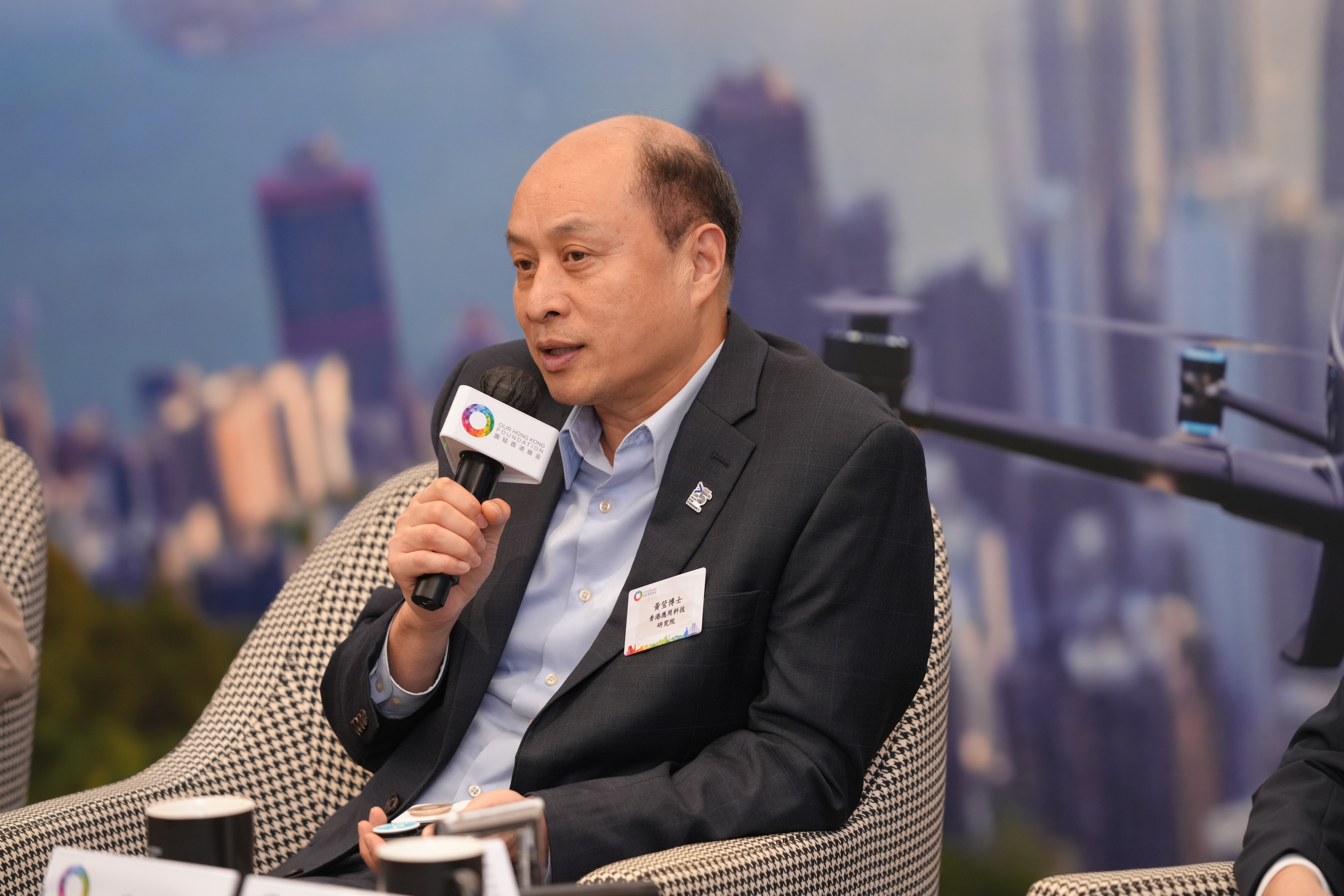
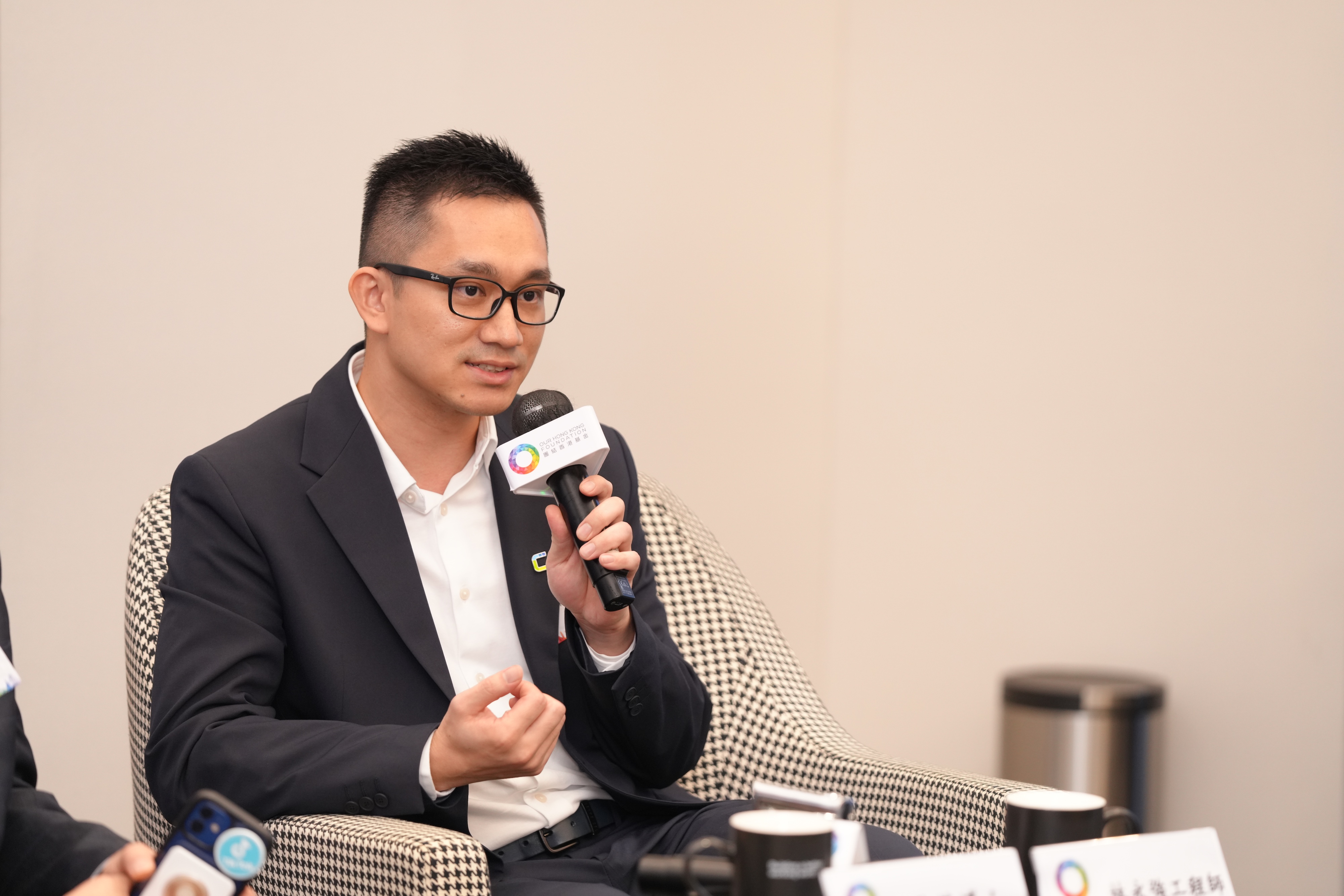
The Forum was honoured to have Mr Xue Peng, Vice President of EHang Intelligent Equipment Co., Ltd. as the keynote speaker; Dr Huang Ying, Chief Technology Officer at Hong Kong Applied Science and Technology Research Institute; Ir Kent Lam, Senior Manager of Engineering Services of Hong Kong Cyberport Management Company Limited as panellists; Mr Ryan Ip, Vice President of OHKF and Executive Director of Public Policy Institute as moderator.
Mr Xue Peng said, “With the acceleration of global urbanisation, it is projected that the urban population will account for 68% of the total by 2050. At the same time, the number of motor vehicles continues to rise while road surface area expands only marginally. This fundamental imbalance between supply and demand is one of the root causes of urban traffic congestion. Taking Beijing and Shanghai as examples, economic losses caused by traffic congestion exceed RMB 100 billion annually in each city, with average commuting times reaching 42 minutes. This not only adversely affects residents’ quality of life but also constrains the economic development of cities.”
He pointed out “Given current tech and legal limits, growing the low-altitude economy calls for a fresh mindset. We should leverage other industries to empower and channel resources into it. For now, manned Low-Altitude Passenger Mobility might not be viable as standalone businesses, but they can be integrated into tourism as a unique experience—blending leisure, commerce, and immersive activities to create a distinct development path.”
Dr Huang Ying said, “Hong Kong may face more restrictions than Chinese mainland in developing the low-altitude economy that including geographical constraints, but it enjoys significant advantages in mature regulatory frameworks and a well-developed insurance sector, both of which are closely intertwined with the low-altitude economy. Therefore, Hong Kong is well-positioned to commercialised passenger-carrying flight services.”
Ir Kent Lam said, “The low latency of 5G-A allows control centres to manage each drone precisely, enhancing operational efficiency across the entire airspace and supporting the development of the air traffic management system for the low-altitude economy.”
The Forum attracted a full house of attendees, including entrepreneurs, C-suite executives and industry pioneers and strong support from a wide range of sectors, including Hong Kong Applied Science and Technology Research Institute; Hong Kong Cyberport Management Limited; The Hong Kong Institution of Engineers as the supporting organisation, Ernst & Young (‘EY’) as the venue sponsor.
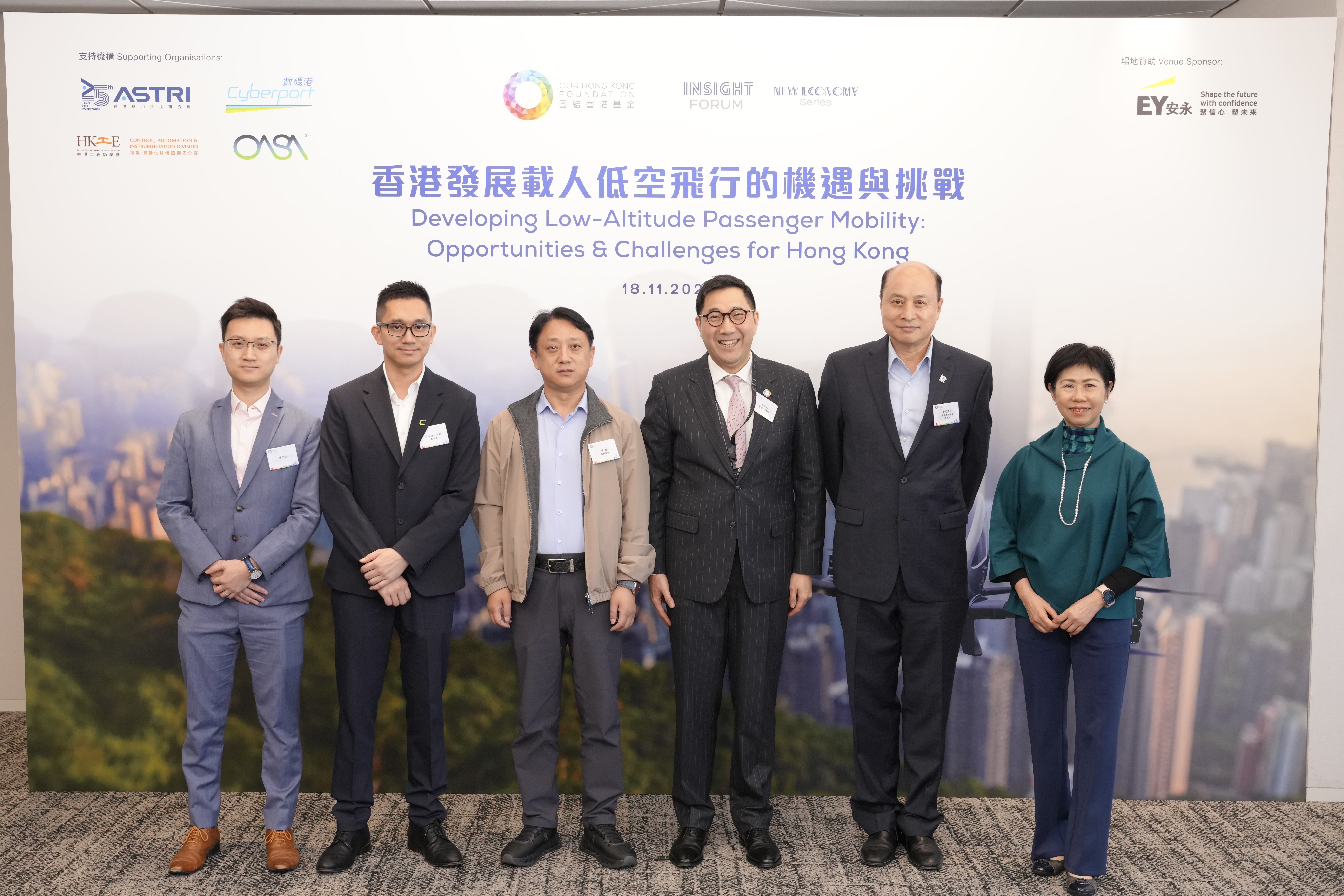
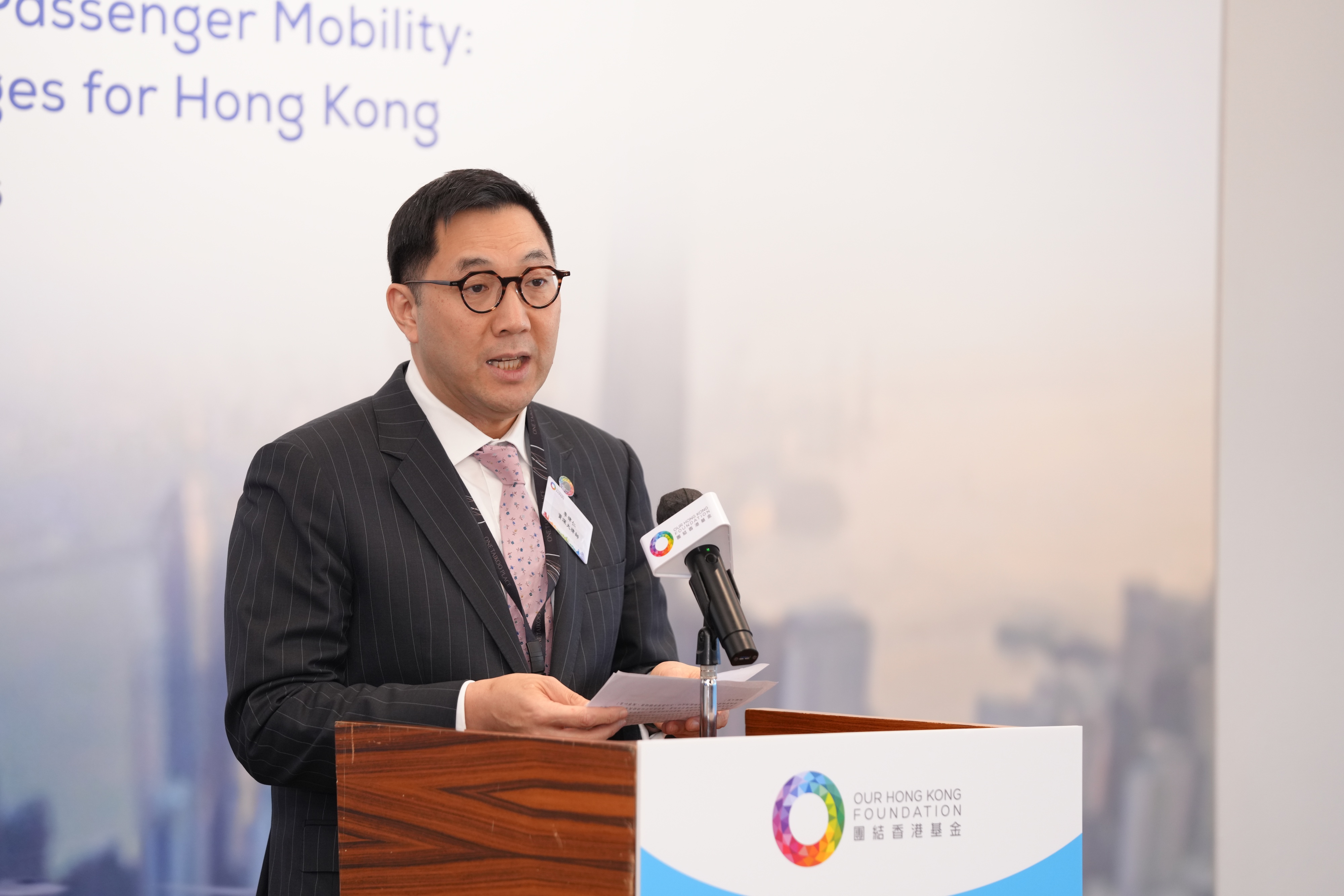
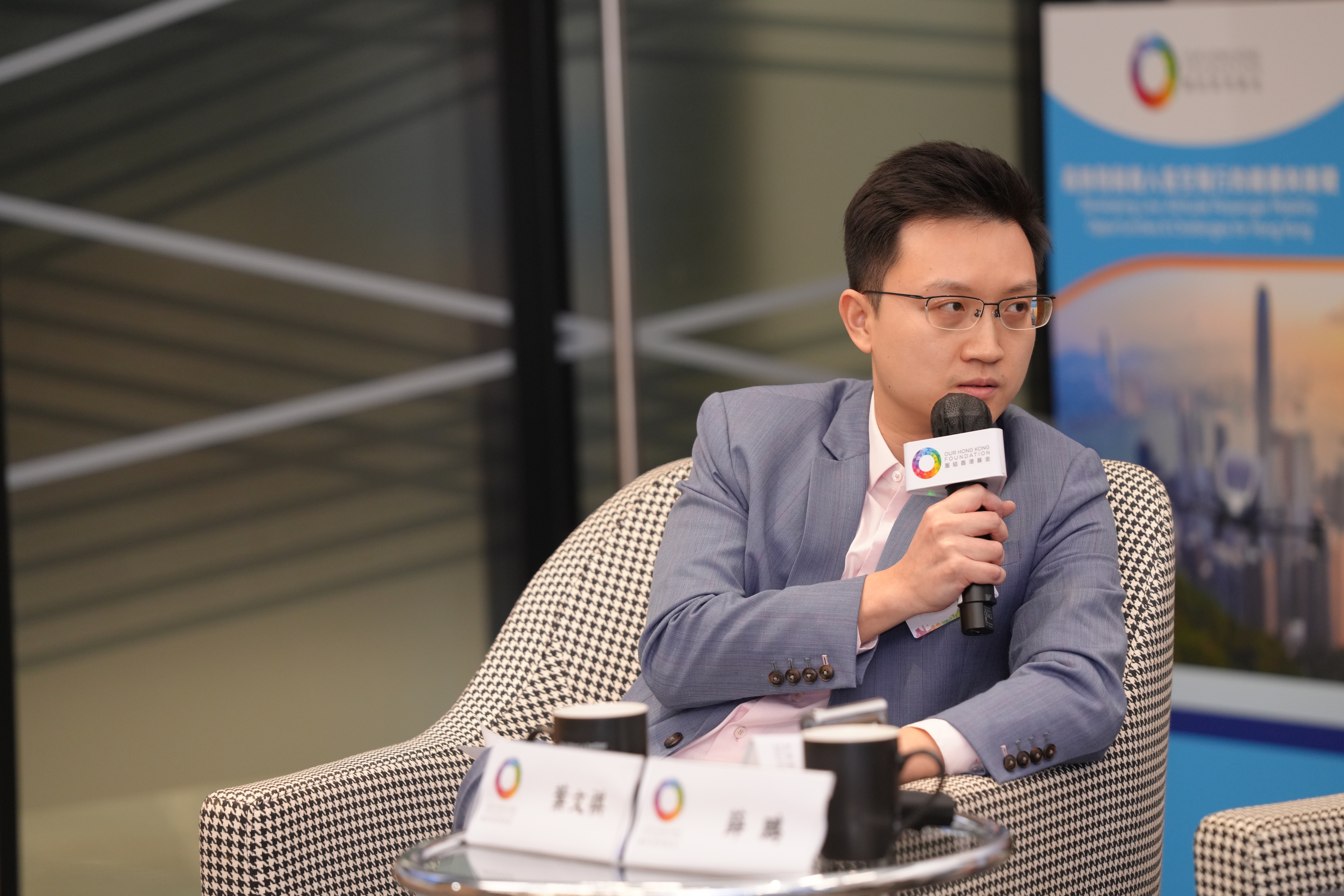


(18 Nov 2025, Hong Kong) Our Hong Kong Foundation held the New Economy Series of the Insight Forum, entitled “Developing Low-Altitude Passenger Mobility: Opportunities & Challenges for Hong Kong”, on 18 November. The forum discussed the technology, regulations, and policy supports needed to pilot such innovative low-altitude flight activities while ensuring high-level of safety.
The Forum was honoured to have Mr Xue Peng, Vice President of EHang Intelligent Equipment Co., Ltd. as the keynote speaker; Dr Huang Ying, Chief Technology Officer at Hong Kong Applied Science and Technology Research Institute; Ir Kent Lam, Senior Manager of Engineering Services of Hong Kong Cyberport Management Company Limited as panellists; Mr Ryan Ip, Vice President of OHKF and Executive Director of Public Policy Institute as moderator.
Mr Xue Peng said, “With the acceleration of global urbanisation, it is projected that the urban population will account for 68% of the total by 2050. At the same time, the number of motor vehicles continues to rise while road surface area expands only marginally. This fundamental imbalance between supply and demand is one of the root causes of urban traffic congestion. Taking Beijing and Shanghai as examples, economic losses caused by traffic congestion exceed RMB 100 billion annually in each city, with average commuting times reaching 42 minutes. This not only adversely affects residents’ quality of life but also constrains the economic development of cities.”
He pointed out “Given current tech and legal limits, growing the low-altitude economy calls for a fresh mindset. We should leverage other industries to empower and channel resources into it. For now, manned Low-Altitude Passenger Mobility might not be viable as standalone businesses, but they can be integrated into tourism as a unique experience—blending leisure, commerce, and immersive activities to create a distinct development path.”
Dr Huang Ying said, “Hong Kong may face more restrictions than Chinese mainland in developing the low-altitude economy that including geographical constraints, but it enjoys significant advantages in mature regulatory frameworks and a well-developed insurance sector, both of which are closely intertwined with the low-altitude economy. Therefore, Hong Kong is well-positioned to commercialised passenger-carrying flight services.”
Ir Kent Lam said, “The low latency of 5G-A allows control centres to manage each drone precisely, enhancing operational efficiency across the entire airspace and supporting the development of the air traffic management system for the low-altitude economy.”
The Forum attracted a full house of attendees, including entrepreneurs, C-suite executives and industry pioneers and strong support from a wide range of sectors, including Hong Kong Applied Science and Technology Research Institute; Hong Kong Cyberport Management Limited; The Hong Kong Institution of Engineers as the supporting organisation, Ernst & Young (‘EY’) as the venue sponsor.