






Prof Lap-Chee Tsui Calls for Government and Public Support for Innovation and Technology




Prof Lap-Chee Tsui Calls for Government and Public Support for Innovation and Technology

Prof Lap-Chee Tsui, Founding President of the Academy of Sciences of Hong Kong and former President and Vice-Chancellor of The University of Hong Kong, has urged the Government and the public to join hands to establish a holistic ecological chain for Innovation and Technology.
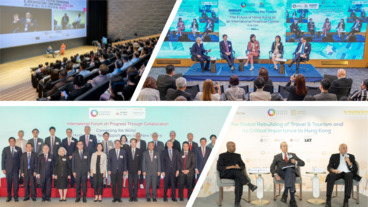
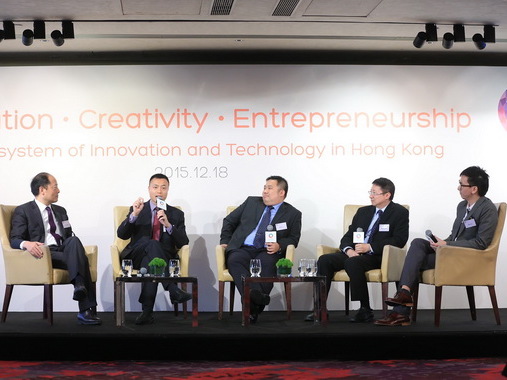
Prof Tsui was speaking at the Innovation and Technology Policy Summit following the release of a research report entitled The Ecosystem of Innovation and Technology in Hong Kong, conducted by Our Hong Kong Foundation (OHKF). Prof Tsui led the research team that produced this report.
He said, “Apart on basic research on the upstream of research activities, translational research on the midstream and applied research on the downstream are also critical.”
“In Hong Kong, we need government support to maintain the continuity of this ecological chain, by setting and implementing holistic and long-term policies,” he added.
At the summit, Prof Zexiang Li of the Department of Electronic and Computer Engineering, Hong Kong University of Science and Technology, said that Hong Kong’s tertiary institutions should become the major driving force for the innovative industry. He also advocated the reform of engineering education and assessment criteria at universities, so as to achieve the consolidation of education, scientific research, and industry.
Prof Li added that the current system based mainly on research publication or basic research is insufficient for Hong Kong and needs more support. He believed that ‘Made in China 2025’ will bring unprecedented opportunities for Hong Kong’s innovative and technology industry.
Another speaker at the Summit, John Zhao, Chairman & CEO of Hony Capital and Executive Vice President of Legend Holdings Corporation, stated that Hong Kong has a competitive advantage in the use of the Internet, as well as in innovative industries related to the mobile Internet. He said that the innovation and software development should be situated in Hong Kong, and the Government should not only increase funds for scientific research, but it should make sure that the funds are spent in the right place.
OHKF Executive Director Mrs Eva Cheng said, “Hong Kong must drive Innovation, Creativity and Entrepreneurship without delay. This is a matter of great importance and urgency, because Hong Kong’s neighbours are already on fast track, and Hong Kong cannot afford to lag behind.”
Mrs Cheng said, “In the mid-1990s, the per capita GDP of Hong Kong and Singapore were both at around US$24,000. In 2014, Singapore has reached about US$56,000, while Hong Kong is still about US$40,000. Across the border, Shenzhen is fast emerging as the ‘Silicon Valley of China’, and its GDP per capita may soon overtake Hong Kong. Meanwhile, Shanghai has also launched policies aimed to develop the city into a ‘hub of innovation and technology with global impact’.”
Mrs Cheng said, “Innovation and technology has become the mega trend, and scientific invention and innovative capacity will become the arena of global competition. The little Silicon Valley accounts for 10% of the GDP of California, and Zhong Guan Cun in Beijing also takes up 20% of Beijing’s GDP.”
Mrs Cheng pointed out that the biggest characteristic of Social Innovation is that it originates in the grassroots, where people solve social problems by using new ideas and new methods. She said that there is a belief that thanks to innovation and technology, 65% of our jobs in the next decade have not even existed – we need to create them on our initiative. She added that when the social pattern is rewritten, the importance of Social Innovation will soar.
Mrs Cheng continued, “Art Innovation is also of undisputed importance. Turin in Italy, Seoul in Korea, as well as Helsinki in Finland, are classical examples of how Art Innovation can change the fate of a city. Back in Hong Kong, we had seen the blossoming of films, pop music and cartoons, rising to the top of Asia. We are promoting Art Innovation to resurrect the charm of Hong Kong as a great city.”
She concluded, “Hong Kong is a cradle for talents, and we have the foundation and capability to do better. We have Mainland China at our back, and the world on the horizon.”


Prof Lap-Chee Tsui, Founding President of the Academy of Sciences of Hong Kong and former President and Vice-Chancellor of The University of Hong Kong, has urged the Government and the public to join hands to establish a holistic ecological chain for Innovation and Technology.
Prof Tsui was speaking at the Innovation and Technology Policy Summit following the release of a research report entitled The Ecosystem of Innovation and Technology in Hong Kong, conducted by Our Hong Kong Foundation (OHKF). Prof Tsui led the research team that produced this report.
He said, “Apart on basic research on the upstream of research activities, translational research on the midstream and applied research on the downstream are also critical.”
“In Hong Kong, we need government support to maintain the continuity of this ecological chain, by setting and implementing holistic and long-term policies,” he added.
At the summit, Prof Zexiang Li of the Department of Electronic and Computer Engineering, Hong Kong University of Science and Technology, said that Hong Kong’s tertiary institutions should become the major driving force for the innovative industry. He also advocated the reform of engineering education and assessment criteria at universities, so as to achieve the consolidation of education, scientific research, and industry.
Prof Li added that the current system based mainly on research publication or basic research is insufficient for Hong Kong and needs more support. He believed that ‘Made in China 2025’ will bring unprecedented opportunities for Hong Kong’s innovative and technology industry.
Another speaker at the Summit, John Zhao, Chairman & CEO of Hony Capital and Executive Vice President of Legend Holdings Corporation, stated that Hong Kong has a competitive advantage in the use of the Internet, as well as in innovative industries related to the mobile Internet. He said that the innovation and software development should be situated in Hong Kong, and the Government should not only increase funds for scientific research, but it should make sure that the funds are spent in the right place.
OHKF Executive Director Mrs Eva Cheng said, “Hong Kong must drive Innovation, Creativity and Entrepreneurship without delay. This is a matter of great importance and urgency, because Hong Kong’s neighbours are already on fast track, and Hong Kong cannot afford to lag behind.”
Mrs Cheng said, “In the mid-1990s, the per capita GDP of Hong Kong and Singapore were both at around US$24,000. In 2014, Singapore has reached about US$56,000, while Hong Kong is still about US$40,000. Across the border, Shenzhen is fast emerging as the ‘Silicon Valley of China’, and its GDP per capita may soon overtake Hong Kong. Meanwhile, Shanghai has also launched policies aimed to develop the city into a ‘hub of innovation and technology with global impact’.”
Mrs Cheng said, “Innovation and technology has become the mega trend, and scientific invention and innovative capacity will become the arena of global competition. The little Silicon Valley accounts for 10% of the GDP of California, and Zhong Guan Cun in Beijing also takes up 20% of Beijing’s GDP.”
Mrs Cheng pointed out that the biggest characteristic of Social Innovation is that it originates in the grassroots, where people solve social problems by using new ideas and new methods. She said that there is a belief that thanks to innovation and technology, 65% of our jobs in the next decade have not even existed – we need to create them on our initiative. She added that when the social pattern is rewritten, the importance of Social Innovation will soar.
Mrs Cheng continued, “Art Innovation is also of undisputed importance. Turin in Italy, Seoul in Korea, as well as Helsinki in Finland, are classical examples of how Art Innovation can change the fate of a city. Back in Hong Kong, we had seen the blossoming of films, pop music and cartoons, rising to the top of Asia. We are promoting Art Innovation to resurrect the charm of Hong Kong as a great city.”
She concluded, “Hong Kong is a cradle for talents, and we have the foundation and capability to do better. We have Mainland China at our back, and the world on the horizon.”