





Re-imagining Hong Kong with a Game-Changer: Enhanced East Lantau Metropolis




Re-imagining Hong Kong with a Game-Changer: Enhanced East Lantau Metropolis

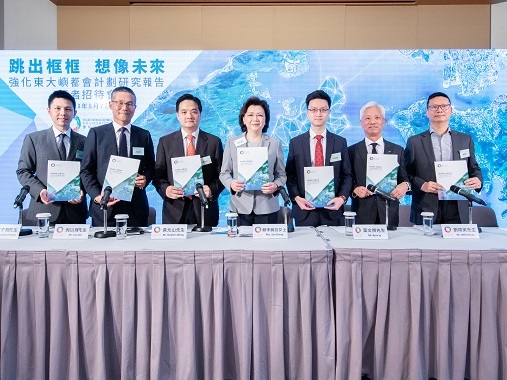
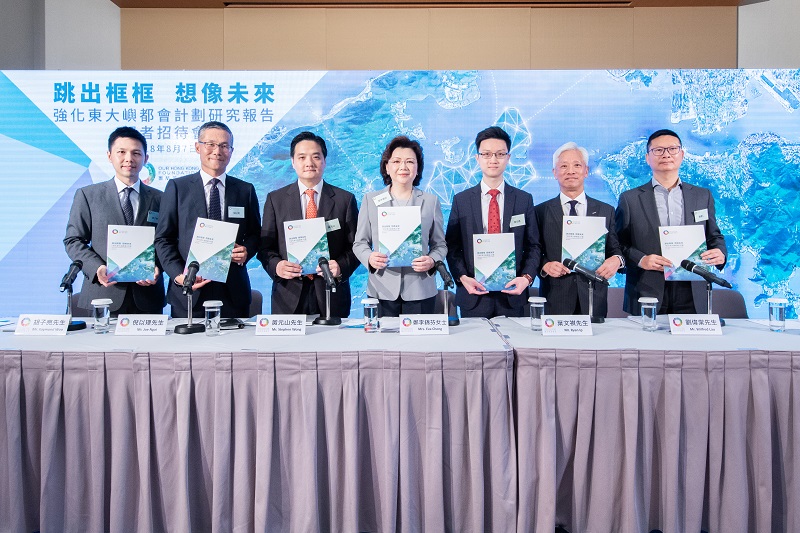
(August 7, 2018, Hong Kong) Our Hong Kong Foundation (OHKF) releases one of its most significant research reports since its inception three and a half years ago. It outlines both a viable solution to the city’s housing and land shortages as well as a long-term development strategy by way of an artificial island in reclaimed waters off Lantau Island’s eastern coast. This lays the foundation for a next-generation urban centre that can accommodate up to approximately one million people as proposed in the “Re-imagining Hong Kong with a Game-Changer: Enhanced East Lantau Metropolis" Report.
An Artificial Island for a Liveable Town
The report recalls how Hong Kong, with its hilly terrain, used reclamation to solve its land shortage problems and was thus able to transform a small fishing village into a bustling metropolis comprised of newly created urban centres in a matter of decades, referencing the city’s experiences in developing the townships of Sha Tin, Tuen Mun, Tseung Kwan O, and Tung Chung. However, the city has since lagged behind Singapore, Macau, Shenzhen and South Korea’s Saemangeum in terms of large-scale reclamation initiatives in the past decade — a period of near inactivity despite growing urgent social and economic needs.
The OHKF proposal builds on the government’s strategic plan for the East Lantau Metropolis previously mentioned in the “Hong Kong 2030+” paper to envision a progressive, innovative and considerably larger-scale reclamation project called “Enhanced East Lantau Metropolis” (EELM, or simply, “The Island”).
The proposed Island will lie in the waters between Hong Kong Island and Lantau and will encompass a total land area of 2,200 hectares (equivalent to half the size of Kowloon) with 250,000 to 400,000 residential units to house 700,000 to 1.1 million people. The Island will have three main roads: one connecting to Kennedy Town on Hong Kong Island, a second to The Lantau Link, and a third stretching to Mui Wo, Tuen Mun and the Hong Kong-Zhuhai-Macau Bridge. It will also include three proposed railway lines, each connecting the Island to Kennedy Town, Mei Foo and Tuen Mun South.
Thoughtful Planning: Balancing Development with Conservation
The OHKF proposal responds to Hong Kong’s acute land and housing shortages, which not only have resulted from only developing 24% of the city’s 1,100 square kilometres of land but also have led to a multitude of social and economic issues: Hong Kong’s population density has reached 27,400 persons per square kilometre of developed land, 2.7 times of Singapore and out-ranking Mumbai, India; the median multiple - a ratio which measures median property price against median income - in 2017 indicated that the average household needs to spend the entirety of 19 years’ worth of income to purchase a flat; the average waiting time for public housing has risen to 5.1 years, an 18-year peak; finally, Hong Kong’s per capita living space has dropped below 170 square feet, or the equivalent of around 1.3 car parking spaces.
In short, OHKF observes in its report that the severe land shortage has simultaneously caused property prices to skyrocket and homeownership to plummet, reduced the liveable area for the city’s residents, hindered economic development and undermined Hong Kong’s long-term competitiveness. After considering all relevant criteria of cost-effectiveness, conservation, holistic planning and protection of private property rights, large-scale reclamation remains the only “game-changer” among the 18 options listed by the government’s Task Force on Land Supply.
To balance environmental protection/ecological conservation and economic development, OHKF partnered with internationally renowned management consultant McKinsey & Company, engineering consultant Arup, environmental consultant Environmental Resources Management (ERM), and traffic management consultant OZZO Technology (HK) Ltd. to conduct joint preliminary studies on water depth, hydrodynamics, marine traffic and operations, engineering work, costs, land restrictions, and submarine utilities, among other factors. The proposed EELM was found to be technically, financially and geographically feasible, with the first phase estimated for completion and ready for habitation within 11 years in the best-case scenario.
Environmental experts have also reported that the planned reclamation site lies a safe distance away from the main habitats of the Chinese White Dolphin and the Finless Porpoise. In addition, several contingencies have been drafted to enhance ecological protection and preserve natural coastlines. These include using non-dredging reclamation methods to reduce the potential impact on surrounding water quality and marine ecology as well as maintaining a buffer of at least 200 metres between the Island and existing natural coastlines of Kau Yi Chau, Hei Ling Chau, Peng Chau and Sunny Island to protect indigenous species such as Bogadek’s Burrowing Lizard.
The Five “Re-imaginations” for the Future of Hong Kong
The successful implementation of EELM will bring crucial benefits to Hong Kong, enabling it to achieve five pillars of a re-imagined Hong Kong:
1. Re-imagining affordable housing
The proposed Island offers a large area of flat land for residential use, with OHKF suggesting that at least 70% of the residential units be allocated for public housing. By increasing the supply of affordable housing, the housing gap can be filled, making homeownership that much more of a reality for grassroots and middle-class communities.
2. Re-imagining urban design and quality of living
The EELM will reduce Hong Kong’s high population density while providing chances to introduce many next-generation green solutions such as solar energy, seawater cooling systems, smart waste management systems and eco-friendly coastlines.
3. Re-imagining the re-development of old Hong Kong
By 2046, over 320,000 housing units in Hong Kong will reach or exceed 70 years of age. With such a large batch of ageing properties in need of redevelopment, the government can facilitate comprehensive urban planning initiatives whereby expanses of reclaimed land can serve as decanting sites for residents relocated from urban areas undergoing revitalization. This has the added benefits of reducing population density and improved living situations in the older urban centres affected.
4. Re-imagining industry development
As mentioned in the government’s “Hong Kong 2030+” paper, East Lantau Metropolis was poised to become Hong Kong’s third central business district. Likewise, the EELM will serve in this capacity by developing a number of industries and hosting educational institutions, medical facilities, international research and development centres, a new exhibition MICE venue, new sports facilities, and so forth.
5. Re-imagining transportation and connectivity
The proposed new roads linking the EELM to western N.T., Lantau Island and West of Hong Kong Island will allow a closed-loop to form within Hong Kong’s railway network, which will increase capacity and relieve traffic congestion. The EELM is also slated to become a key location at the core of the “one-hour living circle,” forming a transportation hub in the region within the Greater Bay Area due to its proximity to the Hong Kong-Zhuhai-Macao Bridge.
Moving Ahead for Consensus
In the report, OHKF concludes that a land bank is not only a valuable asset to Hong Kong but also the cornerstone of industry development and urban renewal. Continued delays will cause Hong Kong to fall further behind, making prompt public consensus key to timely execution.
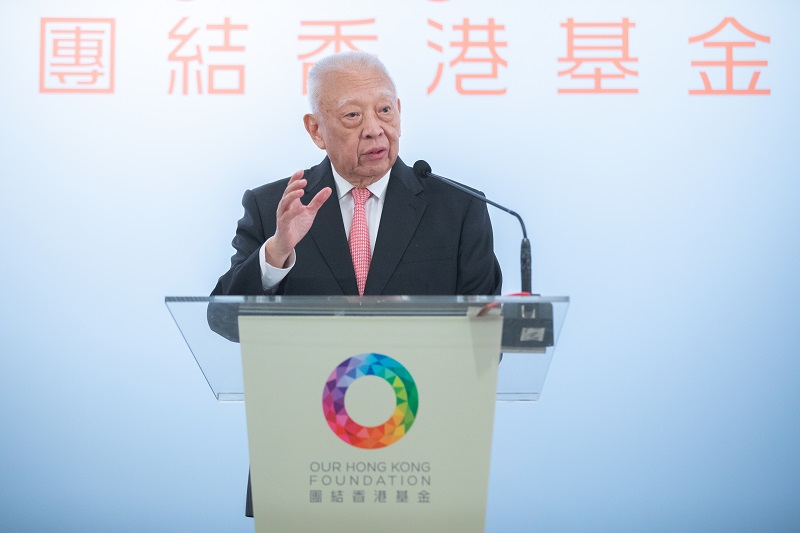
Mr. Tung Chee-hwa, OHKF Chairman, expressed, “Many of the challenges facing Hong Kong today stem from a severe land shortage. We have a responsibility to map out long-term solutions so that our next generation of young people has more options, more space, greater job stability and a higher standard of living.”
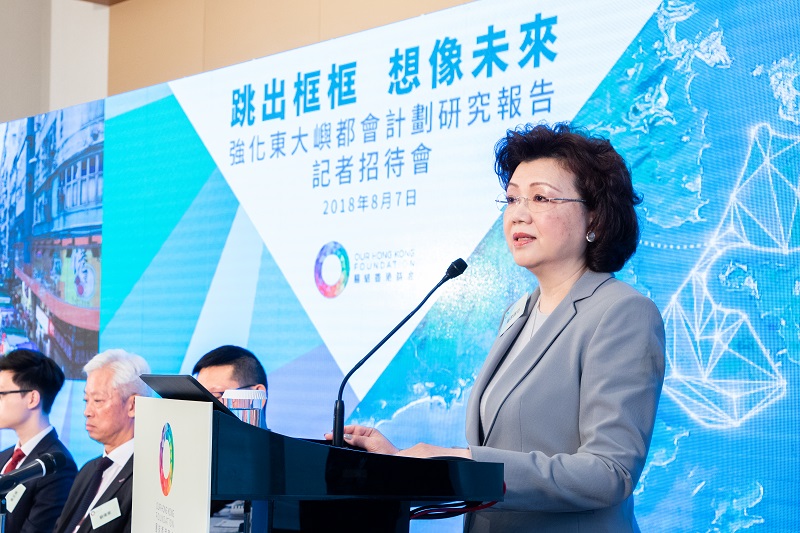
Mrs. Eva Cheng, OHKF Executive Director, stated that through this research report, OHKF hopes to lead the community to re-imagine Hong Kong with positive and hopeful spirit. She said, “We believe that large-scale land reclamation is the best and most effective long term solution for our city. Although the time needed to complete the Enhanced East Lantau Metropolis is decade long, it allows us to trade time for space to the benefits of our future generations. We believe this is a most worthwhile investment and hope that our proposal will receive the support of both the government and the general public.”
Mr. Stephen Wong, OHKF Deputy Executive Director and Head of Public Policy Institute, added that large-scale reclamation outside Victoria Harbour has always been a core theme of OHKF’s policy recommendations and advocacy. Since November 2015, OHKF has published six research reports on land and housing policies. He said: “For the past decade or so, Hong Kong has stopped creating new land and this is the root cause of the current land and housing problems we face. The situation is critical and we need to have a multi-pronged approach, not only to focus on the short and medium-term options but on long-term developments for Hong Kong's future where over 9,000 hectares of new land will be necessary.” He emphasised that “large-scale reclamation outside Victoria Harbour is the most scalable and practical solution, and it should start today.”
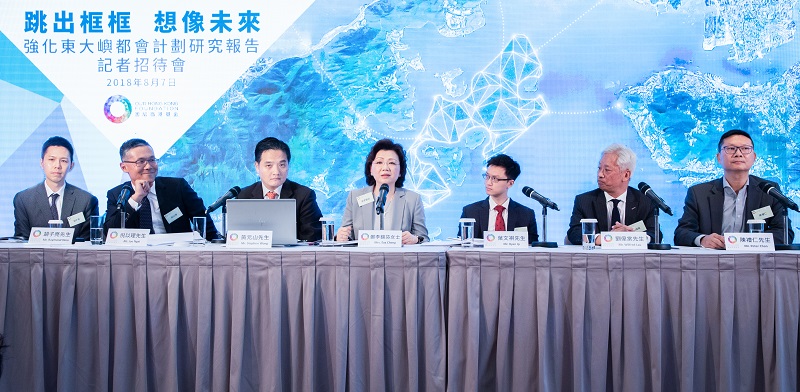


(August 7, 2018, Hong Kong) Our Hong Kong Foundation (OHKF) releases one of its most significant research reports since its inception three and a half years ago. It outlines both a viable solution to the city’s housing and land shortages as well as a long-term development strategy by way of an artificial island in reclaimed waters off Lantau Island’s eastern coast. This lays the foundation for a next-generation urban centre that can accommodate up to approximately one million people as proposed in the “Re-imagining Hong Kong with a Game-Changer: Enhanced East Lantau Metropolis" Report.
An Artificial Island for a Liveable Town
The report recalls how Hong Kong, with its hilly terrain, used reclamation to solve its land shortage problems and was thus able to transform a small fishing village into a bustling metropolis comprised of newly created urban centres in a matter of decades, referencing the city’s experiences in developing the townships of Sha Tin, Tuen Mun, Tseung Kwan O, and Tung Chung. However, the city has since lagged behind Singapore, Macau, Shenzhen and South Korea’s Saemangeum in terms of large-scale reclamation initiatives in the past decade — a period of near inactivity despite growing urgent social and economic needs.
The OHKF proposal builds on the government’s strategic plan for the East Lantau Metropolis previously mentioned in the “Hong Kong 2030+” paper to envision a progressive, innovative and considerably larger-scale reclamation project called “Enhanced East Lantau Metropolis” (EELM, or simply, “The Island”).
The proposed Island will lie in the waters between Hong Kong Island and Lantau and will encompass a total land area of 2,200 hectares (equivalent to half the size of Kowloon) with 250,000 to 400,000 residential units to house 700,000 to 1.1 million people. The Island will have three main roads: one connecting to Kennedy Town on Hong Kong Island, a second to The Lantau Link, and a third stretching to Mui Wo, Tuen Mun and the Hong Kong-Zhuhai-Macau Bridge. It will also include three proposed railway lines, each connecting the Island to Kennedy Town, Mei Foo and Tuen Mun South.
Thoughtful Planning: Balancing Development with Conservation
The OHKF proposal responds to Hong Kong’s acute land and housing shortages, which not only have resulted from only developing 24% of the city’s 1,100 square kilometres of land but also have led to a multitude of social and economic issues: Hong Kong’s population density has reached 27,400 persons per square kilometre of developed land, 2.7 times of Singapore and out-ranking Mumbai, India; the median multiple - a ratio which measures median property price against median income - in 2017 indicated that the average household needs to spend the entirety of 19 years’ worth of income to purchase a flat; the average waiting time for public housing has risen to 5.1 years, an 18-year peak; finally, Hong Kong’s per capita living space has dropped below 170 square feet, or the equivalent of around 1.3 car parking spaces.
In short, OHKF observes in its report that the severe land shortage has simultaneously caused property prices to skyrocket and homeownership to plummet, reduced the liveable area for the city’s residents, hindered economic development and undermined Hong Kong’s long-term competitiveness. After considering all relevant criteria of cost-effectiveness, conservation, holistic planning and protection of private property rights, large-scale reclamation remains the only “game-changer” among the 18 options listed by the government’s Task Force on Land Supply.
To balance environmental protection/ecological conservation and economic development, OHKF partnered with internationally renowned management consultant McKinsey & Company, engineering consultant Arup, environmental consultant Environmental Resources Management (ERM), and traffic management consultant OZZO Technology (HK) Ltd. to conduct joint preliminary studies on water depth, hydrodynamics, marine traffic and operations, engineering work, costs, land restrictions, and submarine utilities, among other factors. The proposed EELM was found to be technically, financially and geographically feasible, with the first phase estimated for completion and ready for habitation within 11 years in the best-case scenario.
Environmental experts have also reported that the planned reclamation site lies a safe distance away from the main habitats of the Chinese White Dolphin and the Finless Porpoise. In addition, several contingencies have been drafted to enhance ecological protection and preserve natural coastlines. These include using non-dredging reclamation methods to reduce the potential impact on surrounding water quality and marine ecology as well as maintaining a buffer of at least 200 metres between the Island and existing natural coastlines of Kau Yi Chau, Hei Ling Chau, Peng Chau and Sunny Island to protect indigenous species such as Bogadek’s Burrowing Lizard.
The Five “Re-imaginations” for the Future of Hong Kong
The successful implementation of EELM will bring crucial benefits to Hong Kong, enabling it to achieve five pillars of a re-imagined Hong Kong:
1. Re-imagining affordable housing
The proposed Island offers a large area of flat land for residential use, with OHKF suggesting that at least 70% of the residential units be allocated for public housing. By increasing the supply of affordable housing, the housing gap can be filled, making homeownership that much more of a reality for grassroots and middle-class communities.
2. Re-imagining urban design and quality of living
The EELM will reduce Hong Kong’s high population density while providing chances to introduce many next-generation green solutions such as solar energy, seawater cooling systems, smart waste management systems and eco-friendly coastlines.
3. Re-imagining the re-development of old Hong Kong
By 2046, over 320,000 housing units in Hong Kong will reach or exceed 70 years of age. With such a large batch of ageing properties in need of redevelopment, the government can facilitate comprehensive urban planning initiatives whereby expanses of reclaimed land can serve as decanting sites for residents relocated from urban areas undergoing revitalization. This has the added benefits of reducing population density and improved living situations in the older urban centres affected.
4. Re-imagining industry development
As mentioned in the government’s “Hong Kong 2030+” paper, East Lantau Metropolis was poised to become Hong Kong’s third central business district. Likewise, the EELM will serve in this capacity by developing a number of industries and hosting educational institutions, medical facilities, international research and development centres, a new exhibition MICE venue, new sports facilities, and so forth.
5. Re-imagining transportation and connectivity
The proposed new roads linking the EELM to western N.T., Lantau Island and West of Hong Kong Island will allow a closed-loop to form within Hong Kong’s railway network, which will increase capacity and relieve traffic congestion. The EELM is also slated to become a key location at the core of the “one-hour living circle,” forming a transportation hub in the region within the Greater Bay Area due to its proximity to the Hong Kong-Zhuhai-Macao Bridge.
Moving Ahead for Consensus
In the report, OHKF concludes that a land bank is not only a valuable asset to Hong Kong but also the cornerstone of industry development and urban renewal. Continued delays will cause Hong Kong to fall further behind, making prompt public consensus key to timely execution.
Mr. Tung Chee-hwa, OHKF Chairman, expressed, “Many of the challenges facing Hong Kong today stem from a severe land shortage. We have a responsibility to map out long-term solutions so that our next generation of young people has more options, more space, greater job stability and a higher standard of living.”
Mrs. Eva Cheng, OHKF Executive Director, stated that through this research report, OHKF hopes to lead the community to re-imagine Hong Kong with positive and hopeful spirit. She said, “We believe that large-scale land reclamation is the best and most effective long term solution for our city. Although the time needed to complete the Enhanced East Lantau Metropolis is decade long, it allows us to trade time for space to the benefits of our future generations. We believe this is a most worthwhile investment and hope that our proposal will receive the support of both the government and the general public.”
Mr. Stephen Wong, OHKF Deputy Executive Director and Head of Public Policy Institute, added that large-scale reclamation outside Victoria Harbour has always been a core theme of OHKF’s policy recommendations and advocacy. Since November 2015, OHKF has published six research reports on land and housing policies. He said: “For the past decade or so, Hong Kong has stopped creating new land and this is the root cause of the current land and housing problems we face. The situation is critical and we need to have a multi-pronged approach, not only to focus on the short and medium-term options but on long-term developments for Hong Kong's future where over 9,000 hectares of new land will be necessary.” He emphasised that “large-scale reclamation outside Victoria Harbour is the most scalable and practical solution, and it should start today.”