







OHKF Insight Forum - What is Hong Kong's Position in China 2050 Space Blueprint: Leveraging Capital and Technological Advantages to Unlock $1.8 Trillion Potential in the Space Economy




OHKF Insight Forum - What is Hong Kong's Position in China 2050 Space Blueprint: Leveraging Capital and Technological Advantages to Unlock $1.8 Trillion Potential in the Space Economy

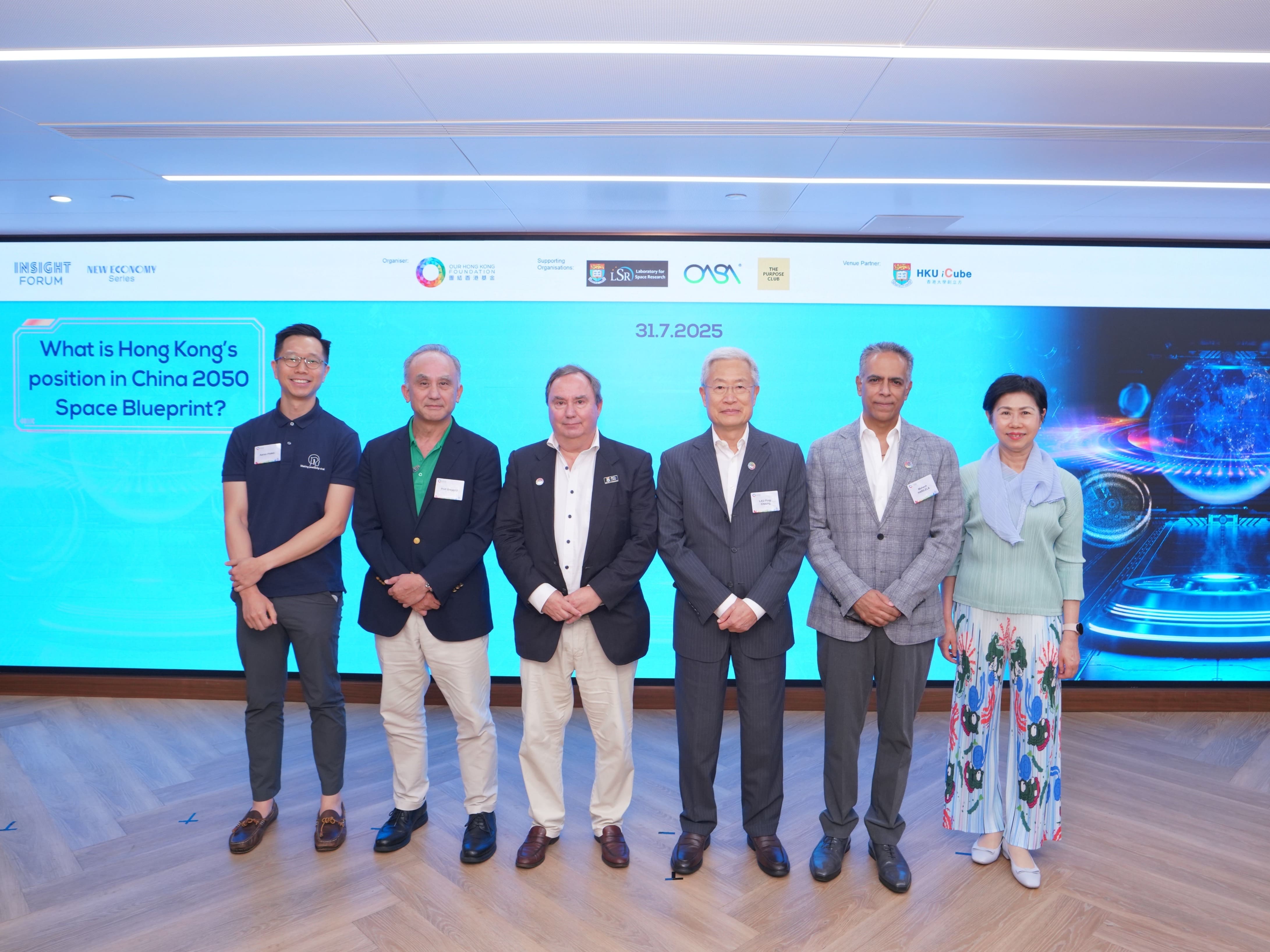
(31 July 2025, Hong Kong) Our Hong Kong Foundation (OHKF) Insight Forum presented an inspiring session titled “What is Hong Kong's Position in China 2050 Space Blueprint”. The Forum explored how Hong Kong’s strengths in finance, tech and compliance can help it become a global hub for space innovation and sustainability, and how embracing these opportunities could boost our GDP by up to 5%.
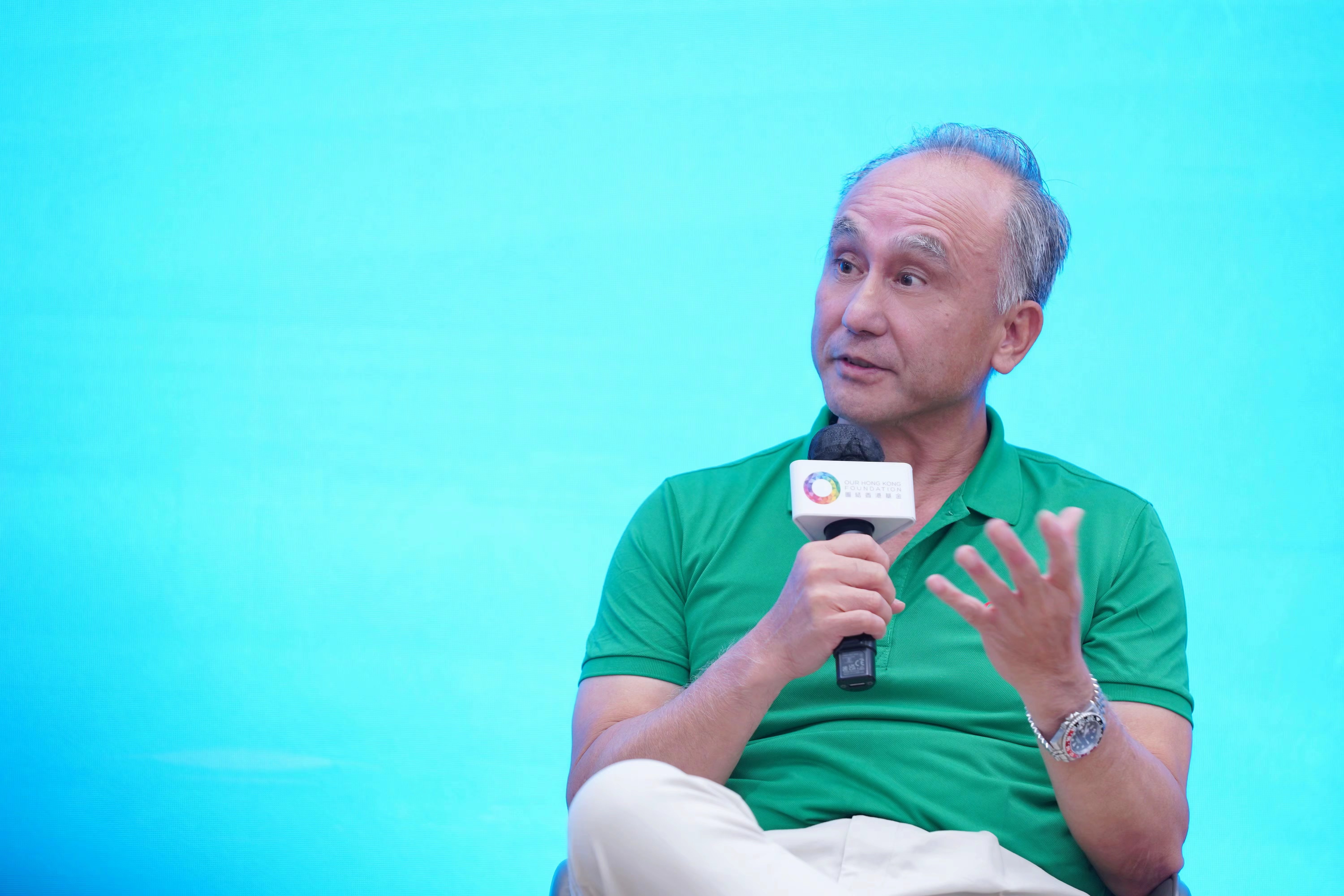
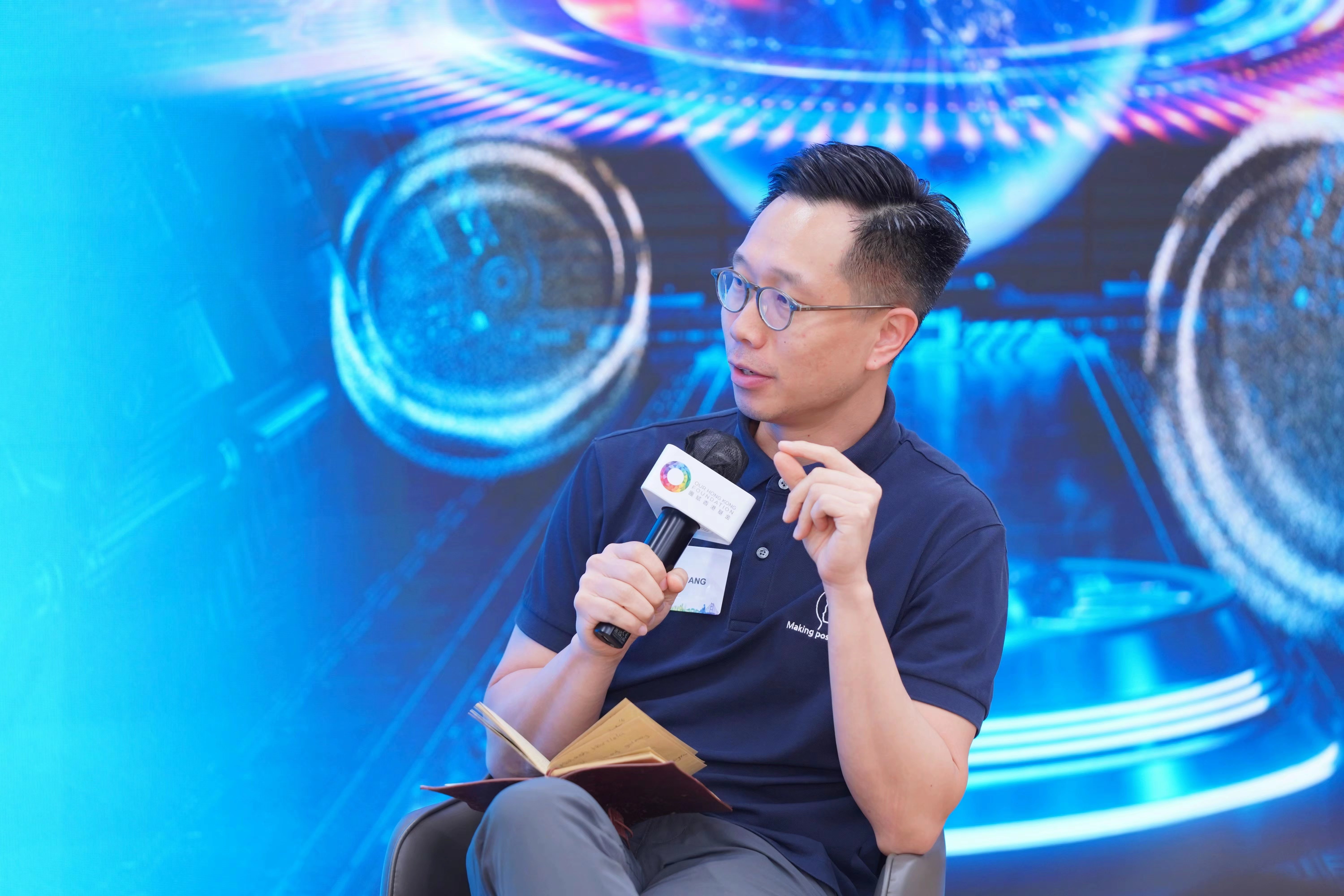
The Forum was honoured to have the gracious presence of Professor Quentin A Parker, Head and Director of Lab for Space Research, HKU (LSR), Executive Vice Chairman of OASA, and Founder and CEO of Feilong AEROSPACE and Technology Ltd, as the keynote speaker; and Mr Mahesh Harilela, Advisor of Our Hong Kong Foundation and Family Council Convenor of Harilela Group Ltd., who welcomed the audience as the opening speaker together with Professor Gregg Li, Advisor of Our Hong Kong Foundation, Governance and Management Consultant, Astropreneur and Comprador of NewSpace at the OASA, and Professor and Ambassador of NewSpace for Laboratory for Space Research (LSR), , as the panellists. The panel session was moderated by Mr Aaron Pang, Founder of the Purpose Club, and Penguin Author of “Give me a moment”.
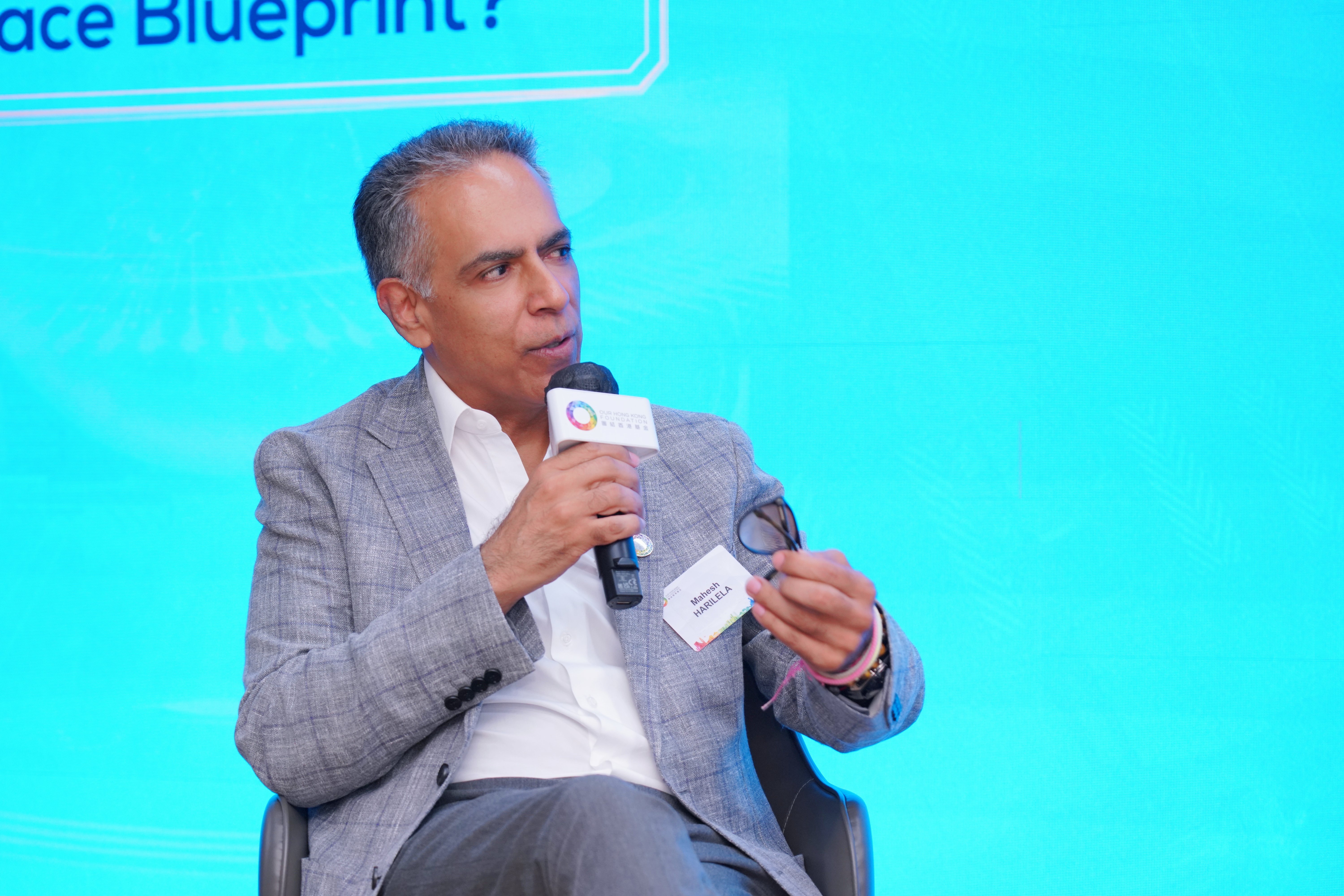
Addressing the audience with an opening speech, Mr Mahesh Harilela said, “Together, we are here to assemble something truly transformative: Hong Kong's leadership in the new space and low-altitude economy. And this matters. We stand at the threshold of a $1.8 trillion ‘evolution’.”
He pointed out that the new space economy spanned satellites, space tourism. technology and outside-the-box thinking. It is no longer science fiction but a seismic economic force with the power to reshape GDPs. Create high-tech jobs and redefine global industry leadership. Furthermore, the low-altitude economy, drones, urban mobility, and smart logistics are sectors poised to unlock untold efficiencies and opportunities right here in our city.”
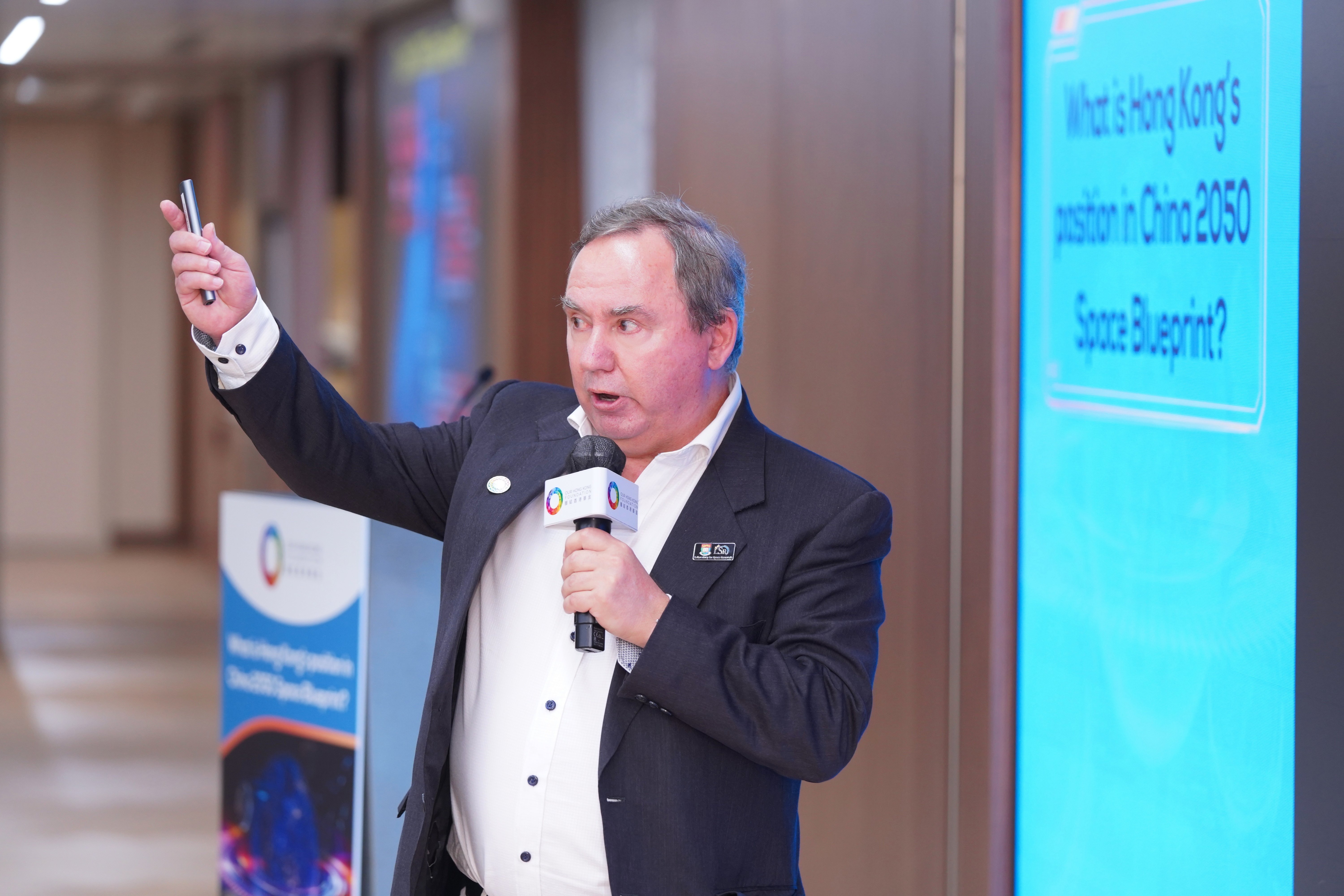
Professor Quentin A Parker, expressed in his speech, “Hong Kong is becoming important. Because China is important as a major space science power, where a large fraction of these activities of strong public interest. These activities have driven technology innovation at the highest levels at our top universities. Coupled with this, the mainland governments keep sending Hong Kong green lights.”
He further expressed that, “To some degree, we shall come from a new space economy. They underdeveloped these things in Hong Kong, but we have huge potential, including for the creation of high-tech jobs. Why is it Hong Kong? Because we are the top 3 global financial centres in the world with international trade and business, and ranked top 10 globally in business efficiency and top 3 in government efficiency. We have all these things that are already lined up if we can emerge as a global hub for new space and space sustainability.”
In the panel discussion session, Professor Gregg Li expected that there would be a pioneer for the space economy in Hong Kong. He quoted that in the US, there are 380,000 jobs in the space industry, which have been growing at 18% per year for the last 10 years. In Europe, it is only 66%. In the UK, the space industry contributed 18% of the GDP, he said, “Things are moving so fast, and we have an opportunity.” And the moderator, Mr Aaron Pang, expressed that “The discussion and speeches shared all the wisdom on invention, adaptation and the leadership role that Hong Kong should be taking. It is not a question about whether we can do it, but whether Hong Kong dares to do.”
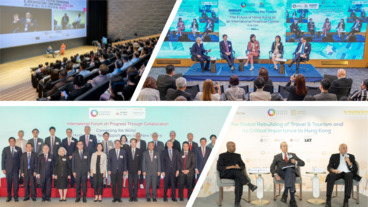
The Forum attracted a full house of attendees, including entrepreneurs, C-suite executives and industry pioneers and strong support from a wide range of sectors, including the Laboratory for Space Research of HKU, the Orion Astropreneur Space Academy and The Purpose Club as the supporting organisations, and HKU iCube as the venue sponsor.
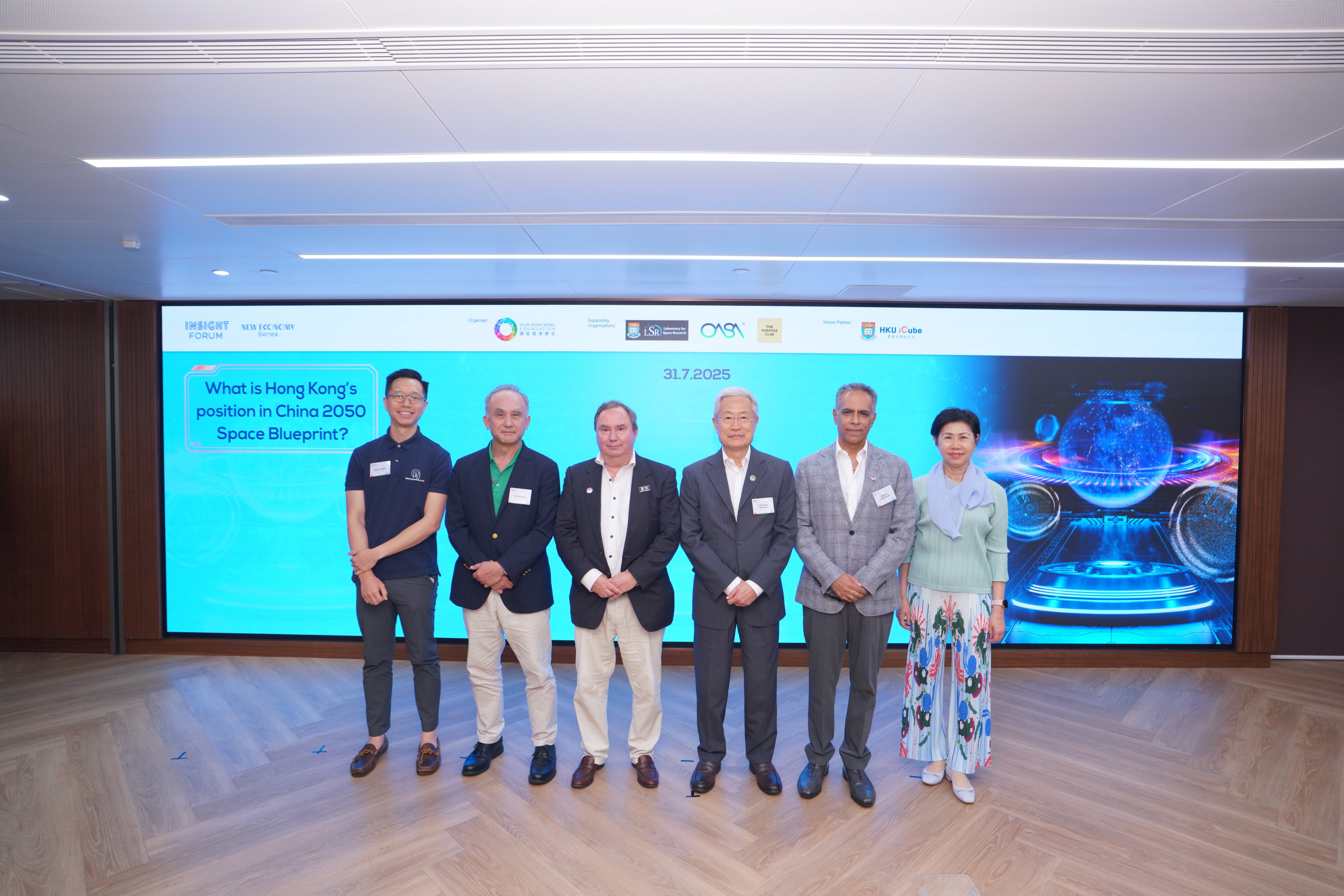


(31 July 2025, Hong Kong) Our Hong Kong Foundation (OHKF) Insight Forum presented an inspiring session titled “What is Hong Kong's Position in China 2050 Space Blueprint”. The Forum explored how Hong Kong’s strengths in finance, tech and compliance can help it become a global hub for space innovation and sustainability, and how embracing these opportunities could boost our GDP by up to 5%.
The Forum was honoured to have the gracious presence of Professor Quentin A Parker, Head and Director of Lab for Space Research, HKU (LSR), Executive Vice Chairman of OASA, and Founder and CEO of Feilong AEROSPACE and Technology Ltd, as the keynote speaker; and Mr Mahesh Harilela, Advisor of Our Hong Kong Foundation and Family Council Convenor of Harilela Group Ltd., who welcomed the audience as the opening speaker together with Professor Gregg Li, Advisor of Our Hong Kong Foundation, Governance and Management Consultant, Astropreneur and Comprador of NewSpace at the OASA, and Professor and Ambassador of NewSpace for Laboratory for Space Research (LSR), , as the panellists. The panel session was moderated by Mr Aaron Pang, Founder of the Purpose Club, and Penguin Author of “Give me a moment”.
Addressing the audience with an opening speech, Mr Mahesh Harilela said, “Together, we are here to assemble something truly transformative: Hong Kong's leadership in the new space and low-altitude economy. And this matters. We stand at the threshold of a $1.8 trillion ‘evolution’.”
He pointed out that the new space economy spanned satellites, space tourism. technology and outside-the-box thinking. It is no longer science fiction but a seismic economic force with the power to reshape GDPs. Create high-tech jobs and redefine global industry leadership. Furthermore, the low-altitude economy, drones, urban mobility, and smart logistics are sectors poised to unlock untold efficiencies and opportunities right here in our city.”
Professor Quentin A Parker, expressed in his speech, “Hong Kong is becoming important. Because China is important as a major space science power, where a large fraction of these activities of strong public interest. These activities have driven technology innovation at the highest levels at our top universities. Coupled with this, the mainland governments keep sending Hong Kong green lights.”
He further expressed that, “To some degree, we shall come from a new space economy. They underdeveloped these things in Hong Kong, but we have huge potential, including for the creation of high-tech jobs. Why is it Hong Kong? Because we are the top 3 global financial centres in the world with international trade and business, and ranked top 10 globally in business efficiency and top 3 in government efficiency. We have all these things that are already lined up if we can emerge as a global hub for new space and space sustainability.”
In the panel discussion session, Professor Gregg Li expected that there would be a pioneer for the space economy in Hong Kong. He quoted that in the US, there are 380,000 jobs in the space industry, which have been growing at 18% per year for the last 10 years. In Europe, it is only 66%. In the UK, the space industry contributed 18% of the GDP, he said, “Things are moving so fast, and we have an opportunity.” And the moderator, Mr Aaron Pang, expressed that “The discussion and speeches shared all the wisdom on invention, adaptation and the leadership role that Hong Kong should be taking. It is not a question about whether we can do it, but whether Hong Kong dares to do.”
The Forum attracted a full house of attendees, including entrepreneurs, C-suite executives and industry pioneers and strong support from a wide range of sectors, including the Laboratory for Space Research of HKU, the Orion Astropreneur Space Academy and The Purpose Club as the supporting organisations, and HKU iCube as the venue sponsor.