






Why Hong Kong needs to invest more into careers education in schools




Why Hong Kong needs to invest more into careers education in schools

Authors: Renee Ho, Researcher of Education and Youth, and Serena Chow, Researcher at Our Hong Kong Foundation

As technology disrupts the traditional workplace and creates new jobs, education is expected to prepare young people to enter a dynamic digital workplace. Careers education has therefore taken on unprecedented importance. Is Hong Kong doing enough? And what is the key to a quality careers education?
Last month, the Education Bureau unveiled a Life Planning Information website to provide students, teachers and parents with “comprehensive information on life planning information and career guidance”. The platform is a good first step but much more remains to be done.
Hong Kong’s government has placed great emphasis on careers education by pumping financial resources into schools since the 2014/15 school year. At around HK$600,000 (US$76,660) per school for 2019/2020, the Career and Life Planning Grant amounts to a hefty sum, compared to the one-off grant of HK$200,000 to support science, technology, engineering and mathematics (STEM) education and activities in secondary schools.
However, abundant financial resources do not necessarily translate into quality careers education. Local studies show that many young people do not find their schools’ career guidance helpful in making the leap from school to work. Hong Kong is missing a key piece of the puzzle: time. Teachers and students in examination-centric Hong Kong already have a lot on their plate.
One solution is to trim the curriculum to create capacity for careers education. In a recent report published by Our Hong Kong Foundation, we suggested it is time to review the curriculum and lessen students’ academic burden. Like our international counterparts, careers education in Hong Kong should be provided as a compulsory teaching component with designated school hours.
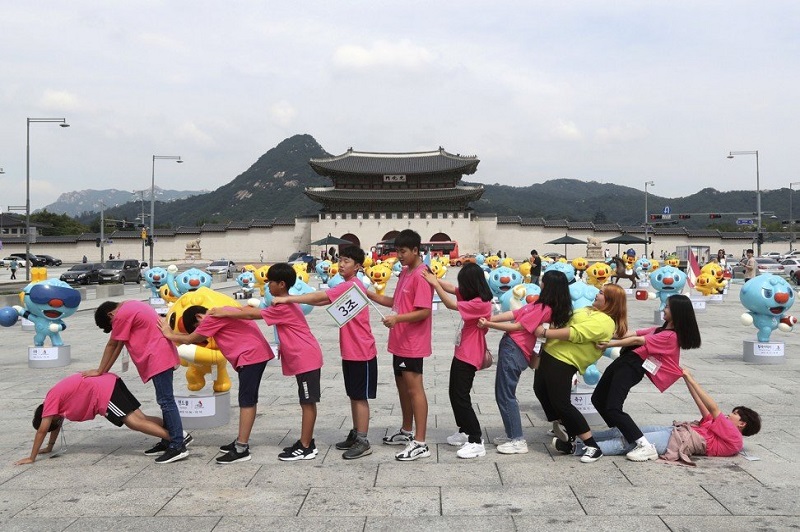
In South Korea, for instance, middle-school students are exempted from exams for one semester – for some, a whole year – so that time is freed up for career exploration activities, art and physical education. Scores are not given during the period. What students receive instead is feedback on their strengths and potential, which helps develop career goals.
Another alternative is to establish statutory frameworks with clear career-education provision standards. In Denmark, Finland, Austria and Singapore, career education programmes are a mandatory part of national curriculums, with Finland and Austria mandating more than 30 hours of career education each year for all students in grades 7-9.
Another problem in Hong Kong is the lack of expertise in careers education. Teachers are rarely specialists on the job market and it is challenging for them to acquire up-to-date information. The government should help schools to link up with different industry experts and career professionals.
In the fast-changing world of animation production, for example, technology in recent years (such as augmented reality, virtual reality and 360-degree video technology) have created new jobs and changed the production pipeline. Keeping up with the latest industry trends is crucial for teachers and students to understand how technology advancements are shaping society.
When should career education begin? While most countries concentrate on offering career education programmes in lower secondary education, more are including primary schools. Studies show that doing so not only raises career aspirations, but also motivates young students and sharpens their focus.
In Singapore, Britain, Denmark and Canada, for example, career education begins in primary school with different emphasis at various stages of children’s development. In Hong Kong, the Career and Life Planning Grant is only received by secondary schools. It is worth considering initiating a programme of career education at an earlier age, too.
How to ensure our kids stay one step ahead of the machines
While other education systems around the world are experimenting with the best ways to deliver such career education programmes – either integrated or as a stand-alone subject – it seems that the Hong Kong government is neither providing the necessary learning capacity nor the professional expertise. Moreover, it is failing to provide career education to our children at an early developmental stage.
This leaves our youth disoriented about their future. With their ability to make informed career decisions crippled, our next generation is struggling to be ready for the future. Launching the Life Planning Information website was a good start, but officials should not stop there.
The government still has some serious thinking to do about giving space back to our young people to reimagine their future in a world that is fast evolving.


Authors: Renee Ho, Researcher of Education and Youth, and Serena Chow, Researcher at Our Hong Kong Foundation
As technology disrupts the traditional workplace and creates new jobs, education is expected to prepare young people to enter a dynamic digital workplace. Careers education has therefore taken on unprecedented importance. Is Hong Kong doing enough? And what is the key to a quality careers education?
Last month, the Education Bureau unveiled a Life Planning Information website to provide students, teachers and parents with “comprehensive information on life planning information and career guidance”. The platform is a good first step but much more remains to be done.
Hong Kong’s government has placed great emphasis on careers education by pumping financial resources into schools since the 2014/15 school year. At around HK$600,000 (US$76,660) per school for 2019/2020, the Career and Life Planning Grant amounts to a hefty sum, compared to the one-off grant of HK$200,000 to support science, technology, engineering and mathematics (STEM) education and activities in secondary schools.
However, abundant financial resources do not necessarily translate into quality careers education. Local studies show that many young people do not find their schools’ career guidance helpful in making the leap from school to work. Hong Kong is missing a key piece of the puzzle: time. Teachers and students in examination-centric Hong Kong already have a lot on their plate.
One solution is to trim the curriculum to create capacity for careers education. In a recent report published by Our Hong Kong Foundation, we suggested it is time to review the curriculum and lessen students’ academic burden. Like our international counterparts, careers education in Hong Kong should be provided as a compulsory teaching component with designated school hours.
In South Korea, for instance, middle-school students are exempted from exams for one semester – for some, a whole year – so that time is freed up for career exploration activities, art and physical education. Scores are not given during the period. What students receive instead is feedback on their strengths and potential, which helps develop career goals.
Another alternative is to establish statutory frameworks with clear career-education provision standards. In Denmark, Finland, Austria and Singapore, career education programmes are a mandatory part of national curriculums, with Finland and Austria mandating more than 30 hours of career education each year for all students in grades 7-9.
Another problem in Hong Kong is the lack of expertise in careers education. Teachers are rarely specialists on the job market and it is challenging for them to acquire up-to-date information. The government should help schools to link up with different industry experts and career professionals.
In the fast-changing world of animation production, for example, technology in recent years (such as augmented reality, virtual reality and 360-degree video technology) have created new jobs and changed the production pipeline. Keeping up with the latest industry trends is crucial for teachers and students to understand how technology advancements are shaping society.
When should career education begin? While most countries concentrate on offering career education programmes in lower secondary education, more are including primary schools. Studies show that doing so not only raises career aspirations, but also motivates young students and sharpens their focus.
In Singapore, Britain, Denmark and Canada, for example, career education begins in primary school with different emphasis at various stages of children’s development. In Hong Kong, the Career and Life Planning Grant is only received by secondary schools. It is worth considering initiating a programme of career education at an earlier age, too.
How to ensure our kids stay one step ahead of the machines
While other education systems around the world are experimenting with the best ways to deliver such career education programmes – either integrated or as a stand-alone subject – it seems that the Hong Kong government is neither providing the necessary learning capacity nor the professional expertise. Moreover, it is failing to provide career education to our children at an early developmental stage.
This leaves our youth disoriented about their future. With their ability to make informed career decisions crippled, our next generation is struggling to be ready for the future. Launching the Life Planning Information website was a good start, but officials should not stop there.
The government still has some serious thinking to do about giving space back to our young people to reimagine their future in a world that is fast evolving.