










Solving Hong Kong’s chronic housing shortage requires a broad approach




Solving Hong Kong’s chronic housing shortage requires a broad approach

Authors: Ryan Ip, Head of land and housing research ; Monte Mu, Assistant Researcher at the Public Policy Institute of Our Hong Kong Foundation
.jpg)
Two of the most important sources for Hong Kong’s medium to long-term housing supply are the Kwu Tung North and Fanling North New Development Areas (NDAs) in the northeast New Territories, especially for public housing. These areas are also key to the government’s multi-pronged approach to increasing land supply.
The Development Bureau recently submitted an application to the Legislative Council’s panel on development for HK$46.9 billion (US$6 billion) of funding for the main work, detailed design and special ex gratia cash allowance for the development of Kwu Tung North and Fanling North. As most panel members expressed support, the application entered the next stage of discussion at the public works subcommittee. This would signal concrete progress for this project which has already taken more than three decades.
The road to developing Kwu Tung North and Fanling North has been bumpy. Although the government’s “The Planning and Development Study on North East New Territories” in 1998 set out the early framework, the development process was interrupted when Hong Kong was hit by the financial crisis and then Sars.
In 2007, the government’s “Hong Kong 2030: Planning Vision and Strategy” document proposed developing the New Territories to help meet long-term housing needs. In 2008, the “North East New Territories New Development Areas Planning and Engineering Study” finally put the development of Kwu Tung North and Fanling North on the agenda. After some 10 years of research, planning, consultation and discussion, the project is ready to take off.
But the road ahead is still long. The Development Bureau estimated that if the project could get underway in the second half of this year, the main work would take 12 years, until 2031, to complete. The prolonged time frame will lead to uncertainties, so the government should redouble its effort to manage the project.
The bureau’s documents showed the project could supply a total of 71,800 units for more than 180,000 residents. The first phase will have 21,000 units, of which 86 per cent, or nearly 18,000, will be for public housing. This makes up 6 per cent of the 10-year supply target of 315,000 public housing units. The first homes are expected to be ready in 2023 at the soonest.
There are views meanwhile that the government should increase the land supply by resuming private land. It has in fact been doing just that. In the Kwu Tung North and Fanling North NDAs, 182 hectares of private land will be resumed, including 50 hectares of brownfield sites. Past experience suggests resistance from stakeholders should not be underestimated.
It is also important to realise that the cost of resuming private land is not lower than other options. Based on the HK$13.34 billion needed for acquisition and allowances, the cost of land in the NDAs is HK$1,824 per square foot, which is 30 per cent more expensive than the cost of reclamation for the proposed artificial islands off the east of Lantau Island – estimated to be HK$1,360 per square foot. Based on the 68 hectares of the first phase, the difference is HK$3.4 billion, enough to build 4,245 public housing units.
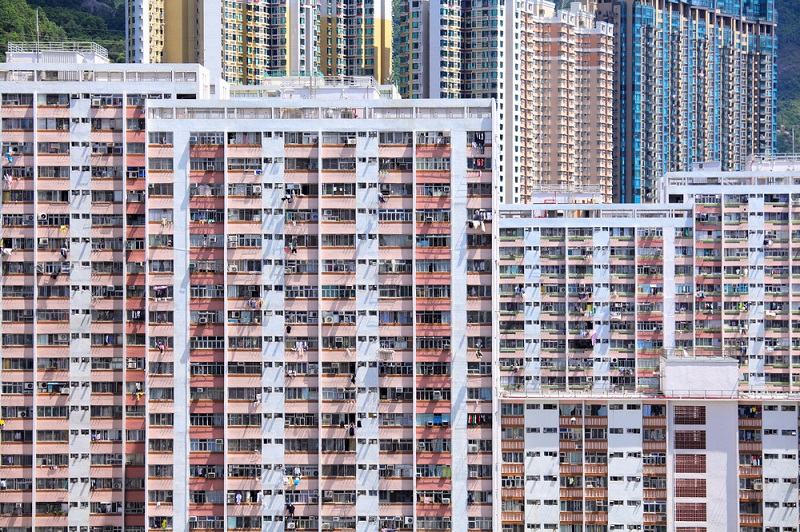
The shortage of public housing is a matter of urgency, now that the waiting time for public housing has reached an all-time high of 5.5 years on average. With nearly 50,000 units, the Kwu Tung North and Fanling North NDAs are essential to housing supply. But as a result of the lengthy development process, high costs, as well as the considerable amount of stakeholders involved, uncertainties exist in both planning and project work.
That is why relying on one measure to resolve our city’s housing and land shortage is not just inadequate, but also risky. The right way is for the government to adopt a multi-pronged approach to increasing the land supply, including reclamation off the east of Lantau Island, if it is to succeed in resolving the housing problem.


Authors: Ryan Ip, Head of land and housing research ; Monte Mu, Assistant Researcher at the Public Policy Institute of Our Hong Kong Foundation
Two of the most important sources for Hong Kong’s medium to long-term housing supply are the Kwu Tung North and Fanling North New Development Areas (NDAs) in the northeast New Territories, especially for public housing. These areas are also key to the government’s multi-pronged approach to increasing land supply.
The Development Bureau recently submitted an application to the Legislative Council’s panel on development for HK$46.9 billion (US$6 billion) of funding for the main work, detailed design and special ex gratia cash allowance for the development of Kwu Tung North and Fanling North. As most panel members expressed support, the application entered the next stage of discussion at the public works subcommittee. This would signal concrete progress for this project which has already taken more than three decades.
The road to developing Kwu Tung North and Fanling North has been bumpy. Although the government’s “The Planning and Development Study on North East New Territories” in 1998 set out the early framework, the development process was interrupted when Hong Kong was hit by the financial crisis and then Sars.
In 2007, the government’s “Hong Kong 2030: Planning Vision and Strategy” document proposed developing the New Territories to help meet long-term housing needs. In 2008, the “North East New Territories New Development Areas Planning and Engineering Study” finally put the development of Kwu Tung North and Fanling North on the agenda. After some 10 years of research, planning, consultation and discussion, the project is ready to take off.
But the road ahead is still long. The Development Bureau estimated that if the project could get underway in the second half of this year, the main work would take 12 years, until 2031, to complete. The prolonged time frame will lead to uncertainties, so the government should redouble its effort to manage the project.
The bureau’s documents showed the project could supply a total of 71,800 units for more than 180,000 residents. The first phase will have 21,000 units, of which 86 per cent, or nearly 18,000, will be for public housing. This makes up 6 per cent of the 10-year supply target of 315,000 public housing units. The first homes are expected to be ready in 2023 at the soonest.
There are views meanwhile that the government should increase the land supply by resuming private land. It has in fact been doing just that. In the Kwu Tung North and Fanling North NDAs, 182 hectares of private land will be resumed, including 50 hectares of brownfield sites. Past experience suggests resistance from stakeholders should not be underestimated.
It is also important to realise that the cost of resuming private land is not lower than other options. Based on the HK$13.34 billion needed for acquisition and allowances, the cost of land in the NDAs is HK$1,824 per square foot, which is 30 per cent more expensive than the cost of reclamation for the proposed artificial islands off the east of Lantau Island – estimated to be HK$1,360 per square foot. Based on the 68 hectares of the first phase, the difference is HK$3.4 billion, enough to build 4,245 public housing units.
The shortage of public housing is a matter of urgency, now that the waiting time for public housing has reached an all-time high of 5.5 years on average. With nearly 50,000 units, the Kwu Tung North and Fanling North NDAs are essential to housing supply. But as a result of the lengthy development process, high costs, as well as the considerable amount of stakeholders involved, uncertainties exist in both planning and project work.
That is why relying on one measure to resolve our city’s housing and land shortage is not just inadequate, but also risky. The right way is for the government to adopt a multi-pronged approach to increasing the land supply, including reclamation off the east of Lantau Island, if it is to succeed in resolving the housing problem.