









Far from perfect take for HK film industry




Far from perfect take for HK film industry

Authors: Kenny Shui, Assistant Research Director ; Katniss Chow, Assistant Researcher at the Public Policy Institute of Our Hong Kong Foundation.

Taking advantage of Greater Bay Area opportunities, whether they are by using movie studios, accessing funding or reaching out to a larger market, will be crucial to revitalizing our film industry.
In these challenging times for the industry, the Lunar New Year provided an interesting diversity of choices at cinemas, with a mixture of family, crime, drama, musical films, even a Stephen Chow classic remake.
His The New King of Comedy, as well as Integrity, a thriller about the ICAC, grossed more than HK$10 million, and are in fact mainland-Hong Kong coproductions.
Ironically, some critics feel the success of such coproductions signals our decline.
From another perspective, they are good opportunities to promote our film culture.
In fact, many Hong Kong classics with strong local sensibilities, such as Cold War (starring Aaron Kwok and Tony Leung Ka-fai) and A Simple Life (Andy Lau and Deanie Ip), were coproductions.
Operation Red Sea, the top mainland hit of 2018, is a fine example of how an expert local director can flourish in the mainland.
In recent years, our coproductions have thrived across the border, taking four spots among the all-time top 10 biggest box office hits, even ahead of US blockbusters.
The Closer Economic Partnership Arrangement sets two main criteria for coproductions: no less than a third of main actors must be mainlanders; and plots or main characters must be mainland-related.
Not only do these deprive our young actors of opportunities, but the quota system makes casting for some roles unsuitable.
Both of these are counterproductive to the making of good movies in the long run.
To address these issues, Our Hong Kong Foundation has published "Re-emergence of Glittering Stars," an advocacy report on the Hong Kong film industry.
It points out the ratio of creative personnel, mainland elements in the film, and the investment ratio have been relaxed for mainland-Taiwan coproductions.
It recommends our government propose that we should enjoy similar treatment.
In her policy address, Chief Executive Carrie Lam Cheng Yuet-ngor stated that she was willing to do just that and help our movies enter the mainland market.
Guangdong has also indicated it would seek to remove curbs on ratios for investment and creative personnel from the mainland, Hong Kong and Macau.
Some people fear that Hong Kong may face a brain drain with the further relaxation of coproduction restrictions, but this is not a determining factor for talent retention.
What is most important is whether we or south China has supportive policies and good overall packages for the film industry.
While our strength lies in our talent pool, we have a shortage of land and large studios.
It is difficult to have large productions if we rely solely on our small market.
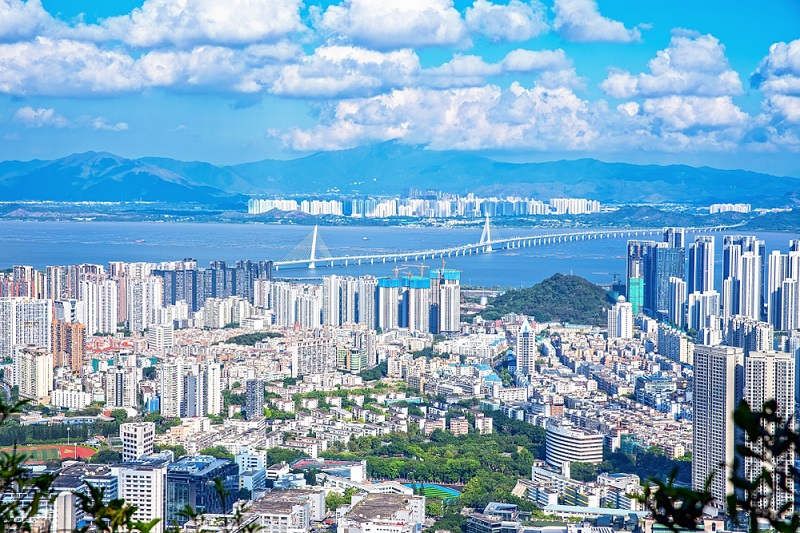
Guangdong has proposed we jointly build a Greater Bay Area film and television industry cooperation pilot zone.
Considering that we share similarities in culture and language with, and is close to cities in the bay area, movie professionals should grasp this opportunity.
Guangdong has ample funding, a good market size, as well as large production studios, which are what our film sector needs.
It has many huge filmmaking bases like CCTV Nanhai Movie and TV Town, Xiqiao National Arts Studio in Foshan, so there is a lot of scope for cooperation.
In fact, we can work together and build a "South China Film Production Centre," which can also serve as a springboard to enter the mainland market.
Many of our pros already work in the mainland, like at Hengdian World Studios in Zhejiang, but it is too far from here.
If a south China center can be created, it will be much more convenient for them, thus helping mitigate brain drain.
There will be real synergy if our talent scan capitalize on the Greater Bay Area's huge market and production facilities.
With supportive policies, fewer curbs, and such a production center, the bay area will be a magnet for talent, and the glory days of Hong Kong movies will return.


Authors: Kenny Shui, Assistant Research Director ; Katniss Chow, Assistant Researcher at the Public Policy Institute of Our Hong Kong Foundation.
Taking advantage of Greater Bay Area opportunities, whether they are by using movie studios, accessing funding or reaching out to a larger market, will be crucial to revitalizing our film industry.
In these challenging times for the industry, the Lunar New Year provided an interesting diversity of choices at cinemas, with a mixture of family, crime, drama, musical films, even a Stephen Chow classic remake.
His The New King of Comedy, as well as Integrity, a thriller about the ICAC, grossed more than HK$10 million, and are in fact mainland-Hong Kong coproductions.
Ironically, some critics feel the success of such coproductions signals our decline.
From another perspective, they are good opportunities to promote our film culture.
In fact, many Hong Kong classics with strong local sensibilities, such as Cold War (starring Aaron Kwok and Tony Leung Ka-fai) and A Simple Life (Andy Lau and Deanie Ip), were coproductions.
Operation Red Sea, the top mainland hit of 2018, is a fine example of how an expert local director can flourish in the mainland.
In recent years, our coproductions have thrived across the border, taking four spots among the all-time top 10 biggest box office hits, even ahead of US blockbusters.
The Closer Economic Partnership Arrangement sets two main criteria for coproductions: no less than a third of main actors must be mainlanders; and plots or main characters must be mainland-related.
Not only do these deprive our young actors of opportunities, but the quota system makes casting for some roles unsuitable.
Both of these are counterproductive to the making of good movies in the long run.
To address these issues, Our Hong Kong Foundation has published "Re-emergence of Glittering Stars," an advocacy report on the Hong Kong film industry.
It points out the ratio of creative personnel, mainland elements in the film, and the investment ratio have been relaxed for mainland-Taiwan coproductions.
It recommends our government propose that we should enjoy similar treatment.
In her policy address, Chief Executive Carrie Lam Cheng Yuet-ngor stated that she was willing to do just that and help our movies enter the mainland market.
Guangdong has also indicated it would seek to remove curbs on ratios for investment and creative personnel from the mainland, Hong Kong and Macau.
Some people fear that Hong Kong may face a brain drain with the further relaxation of coproduction restrictions, but this is not a determining factor for talent retention.
What is most important is whether we or south China has supportive policies and good overall packages for the film industry.
While our strength lies in our talent pool, we have a shortage of land and large studios.
It is difficult to have large productions if we rely solely on our small market.
Guangdong has proposed we jointly build a Greater Bay Area film and television industry cooperation pilot zone.
Considering that we share similarities in culture and language with, and is close to cities in the bay area, movie professionals should grasp this opportunity.
Guangdong has ample funding, a good market size, as well as large production studios, which are what our film sector needs.
It has many huge filmmaking bases like CCTV Nanhai Movie and TV Town, Xiqiao National Arts Studio in Foshan, so there is a lot of scope for cooperation.
In fact, we can work together and build a "South China Film Production Centre," which can also serve as a springboard to enter the mainland market.
Many of our pros already work in the mainland, like at Hengdian World Studios in Zhejiang, but it is too far from here.
If a south China center can be created, it will be much more convenient for them, thus helping mitigate brain drain.
There will be real synergy if our talent scan capitalize on the Greater Bay Area's huge market and production facilities.
With supportive policies, fewer curbs, and such a production center, the bay area will be a magnet for talent, and the glory days of Hong Kong movies will return.