









Enhanced telemedicine will be a big health boon to residents




Enhanced telemedicine will be a big health boon to residents

Authors: Mika Chan, researcher, and Bill Chan, intern at Our Hong Kong Foundation
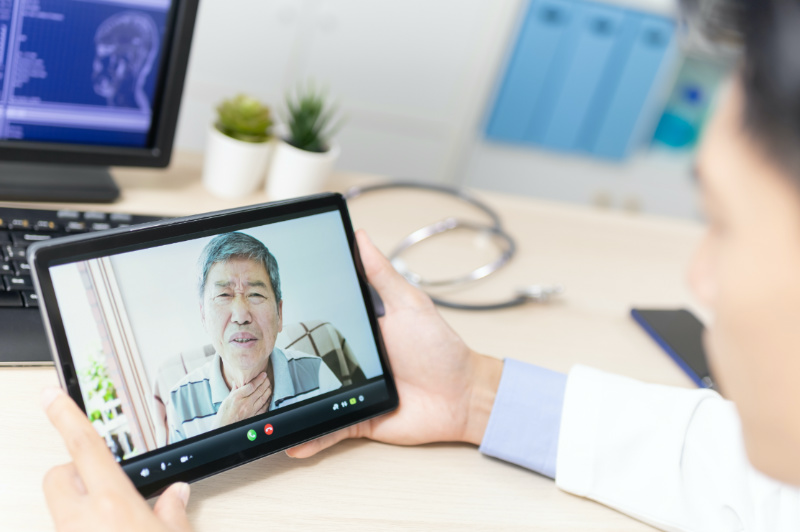
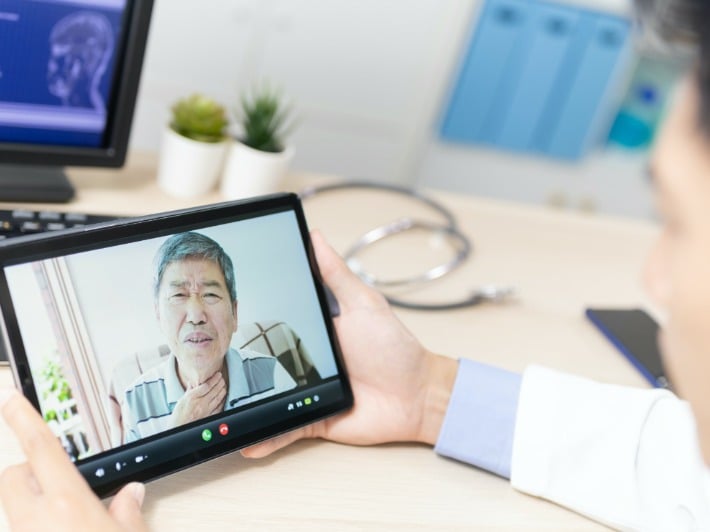
Telemedicine has seen unprecedented growth since the start of the COVID-19 pandemic. Greater access to healthcare services, especially primary care, is now available to complement in-person consultations in the face of social-distancing measures in many countries. Once struggling to adapt to unfamiliar consultation settings, patients and healthcare professionals have now discovered additional benefits of telemedicine that include enhanced convenience and reduced risk of healthcare-facility-acquired infections.
Telemedicine services should be further developed and expanded to increase Hong Kong residents’ access to healthcare services, and now is conceivably the right time to move forward in this arena. It is promising to see initial steps for telemedicine development in Hong Kong, although much needs to be done for successful integration into the local health system.
The first record of telemedicine usage dates to 1879, when renowned medical journal The Lancet reported a physician ruling out croup, a common respiratory disease in children, by listening to coughs over the telephone. Over the past century, progress on the speed of data transmission has made video consultations increasingly real-time; and countries like Australia and China have successfully brought healthcare expertise in cities to countryside residents, bridging the rural-urban divide in healthcare provision. Today, COVID-19 has served as the catalyst for the exponential expansion of telemedicine, but what of telemedicine in the post-pandemic era?
The advantages of telemedicine are multifold. Decreased logistical delays and easy-to-use platforms for patients increase their accessibility to healthcare services. At the touch of a button, diabetic patients can now update doctors on their self-monitored blood sugar levels on an app interface. Concurrently, doctors can provide advice and prescribe medications anytime, anywhere. Notably, telemedicine will be particularly advantageous for groups challenged by limited mobility, such as the elderly, the chronically ill and those living in remote areas.
Just like diabetes, many other chronic diseases can also be managed by telemedicine. A survey of chronic autoimmune, neural and respiratory patients in the United States revealed that 79 percent cited “ongoing care and monitoring” as the top reason for teleconsulting with a specialist during COVID-19. The unique service offering of telemedicine that enables follow-up visits to be free from time and location constraints, enabling doctors to closely observe patients’ medication side effects, exercise habits and sleeping patterns, is perhaps a main contributory factor to this observation.
Such convenience, however, is not without drawbacks. A pertinent limitation of telemedicine is its restriction on the use of patient assessment tools that require physical application, such as swabs or certain blood tests. This inadequacy may lead to inaccurate clinical judgement, delayed treatment and other unfavorable outcomes. The effectiveness of telemedicine is also limited by the health literacy of the general population, since the public needs to be fully informed of the rapidly evolving technology for effective communication with healthcare professionals.
Since the beginning of the COVID-19 pandemic, the US has actively implemented various telemedicine policies targeted at lower socioeconomic populations to improve uptake and usage of this technology. As an example, the US Department of Veterans Affairs spent $39 million to procure electronic equipment to combat the digital divide for homeless or less-economically capable veterans. To further telemedicine development, US President Donald Trump announced investments in rural communications infrastructure in August. While telemedicine was already on a slow but steady rise before the start of the COVID-19 pandemic, these policy actions are thought to have at least partially contributed to the rapid rise in usage observed since the start of the pandemic. A staggering 85 percent of US healthcare practices now employ telemedicine services compared to 6 percent before the pandemic.
Hong Kong’s adoption of telemedicine has been relatively slow. While telemedicine usage gained some momentum in recent months throughout the COVID-19 pandemic, programs remained scant and scattered. For example, while some Hospital Authority patients in the Kowloon East Cluster were reported to experience teleconsultation services, a pilot program was launched in the Sai Kung district to increase the accessibility of individuals residing in rural villages to health services during the COVID-19 pandemic. Despite existing efforts, local experts estimated only a 10 percent increase in interest expressed through inquiries about telemedicine among doctors and patients.
As the world adapts to a new normal triggered by COVID-19 that is increasingly reliant on digitalization, Hong Kong would do well to step up its current efforts in promoting telemedicine and making sure necessary regulations are in place. While the ethical guidelines for telemedicine released by the Medical Council of Hong Kong in 2019 served as a good initial step for telemedicine development in Hong Kong, introduction of a comprehensive territorywide telemedicine development strategy has the potential to facilitate the successful integration of telemedicine into Hong Kong’s health system and expansion of existing services.
Lessons could be learned from across the Shenzhen River, where China’s “Healthy China 2030” blueprint issued in 2016 has set “internet-plus healthcare” as a priority, in which only a defined set of stable, common chronic diseases, such as hypertension and diabetes, can be managed via telemedicine. Bans on use of telemedicine for first visits are still in place to prevent misdiagnosis but have been lifted for pilot programs in some selected provinces due to surges in demand during the COVID-19 pandemic. Sound guidelines under a clear vision have facilitated the implementation and the uptake of telemedicine on the Chinese mainland, as evident in the 800 percent rise in online consultations on Ping An Good Doctor, the largest online health platform on the mainland, from December to January.
The COVID-19 pandemic has exposed insufficiencies and limitations in Hong Kong’s health system; and telemedicine has demonstrated its potential as a useful complement to in-person consultations. Telemedicine services should be further developed and expanded to increase Hong Kong residents’ access to healthcare services, and now is conceivably the right time to move forward in this arena. It is promising to see initial steps for telemedicine development in Hong Kong, although much needs to be done for successful integration into the local health system. With due consideration for local contextual factors, demographics and epidemiological trends, a comprehensive plan that outlines a clear road map and timeline for strategic implementation of telemedicine in the SAR’s health system is urgently needed. Perhaps then, the person-centered, community-based model that Hong Kong desperately needs will be within our reach soon.


Authors: Mika Chan, researcher, and Bill Chan, intern at Our Hong Kong Foundation
Telemedicine has seen unprecedented growth since the start of the COVID-19 pandemic. Greater access to healthcare services, especially primary care, is now available to complement in-person consultations in the face of social-distancing measures in many countries. Once struggling to adapt to unfamiliar consultation settings, patients and healthcare professionals have now discovered additional benefits of telemedicine that include enhanced convenience and reduced risk of healthcare-facility-acquired infections.
Telemedicine services should be further developed and expanded to increase Hong Kong residents’ access to healthcare services, and now is conceivably the right time to move forward in this arena. It is promising to see initial steps for telemedicine development in Hong Kong, although much needs to be done for successful integration into the local health system.
The first record of telemedicine usage dates to 1879, when renowned medical journal The Lancet reported a physician ruling out croup, a common respiratory disease in children, by listening to coughs over the telephone. Over the past century, progress on the speed of data transmission has made video consultations increasingly real-time; and countries like Australia and China have successfully brought healthcare expertise in cities to countryside residents, bridging the rural-urban divide in healthcare provision. Today, COVID-19 has served as the catalyst for the exponential expansion of telemedicine, but what of telemedicine in the post-pandemic era?
The advantages of telemedicine are multifold. Decreased logistical delays and easy-to-use platforms for patients increase their accessibility to healthcare services. At the touch of a button, diabetic patients can now update doctors on their self-monitored blood sugar levels on an app interface. Concurrently, doctors can provide advice and prescribe medications anytime, anywhere. Notably, telemedicine will be particularly advantageous for groups challenged by limited mobility, such as the elderly, the chronically ill and those living in remote areas.
Just like diabetes, many other chronic diseases can also be managed by telemedicine. A survey of chronic autoimmune, neural and respiratory patients in the United States revealed that 79 percent cited “ongoing care and monitoring” as the top reason for teleconsulting with a specialist during COVID-19. The unique service offering of telemedicine that enables follow-up visits to be free from time and location constraints, enabling doctors to closely observe patients’ medication side effects, exercise habits and sleeping patterns, is perhaps a main contributory factor to this observation.
Such convenience, however, is not without drawbacks. A pertinent limitation of telemedicine is its restriction on the use of patient assessment tools that require physical application, such as swabs or certain blood tests. This inadequacy may lead to inaccurate clinical judgement, delayed treatment and other unfavorable outcomes. The effectiveness of telemedicine is also limited by the health literacy of the general population, since the public needs to be fully informed of the rapidly evolving technology for effective communication with healthcare professionals.
Since the beginning of the COVID-19 pandemic, the US has actively implemented various telemedicine policies targeted at lower socioeconomic populations to improve uptake and usage of this technology. As an example, the US Department of Veterans Affairs spent $39 million to procure electronic equipment to combat the digital divide for homeless or less-economically capable veterans. To further telemedicine development, US President Donald Trump announced investments in rural communications infrastructure in August. While telemedicine was already on a slow but steady rise before the start of the COVID-19 pandemic, these policy actions are thought to have at least partially contributed to the rapid rise in usage observed since the start of the pandemic. A staggering 85 percent of US healthcare practices now employ telemedicine services compared to 6 percent before the pandemic.
Hong Kong’s adoption of telemedicine has been relatively slow. While telemedicine usage gained some momentum in recent months throughout the COVID-19 pandemic, programs remained scant and scattered. For example, while some Hospital Authority patients in the Kowloon East Cluster were reported to experience teleconsultation services, a pilot program was launched in the Sai Kung district to increase the accessibility of individuals residing in rural villages to health services during the COVID-19 pandemic. Despite existing efforts, local experts estimated only a 10 percent increase in interest expressed through inquiries about telemedicine among doctors and patients.
As the world adapts to a new normal triggered by COVID-19 that is increasingly reliant on digitalization, Hong Kong would do well to step up its current efforts in promoting telemedicine and making sure necessary regulations are in place. While the ethical guidelines for telemedicine released by the Medical Council of Hong Kong in 2019 served as a good initial step for telemedicine development in Hong Kong, introduction of a comprehensive territorywide telemedicine development strategy has the potential to facilitate the successful integration of telemedicine into Hong Kong’s health system and expansion of existing services.
Lessons could be learned from across the Shenzhen River, where China’s “Healthy China 2030” blueprint issued in 2016 has set “internet-plus healthcare” as a priority, in which only a defined set of stable, common chronic diseases, such as hypertension and diabetes, can be managed via telemedicine. Bans on use of telemedicine for first visits are still in place to prevent misdiagnosis but have been lifted for pilot programs in some selected provinces due to surges in demand during the COVID-19 pandemic. Sound guidelines under a clear vision have facilitated the implementation and the uptake of telemedicine on the Chinese mainland, as evident in the 800 percent rise in online consultations on Ping An Good Doctor, the largest online health platform on the mainland, from December to January.
The COVID-19 pandemic has exposed insufficiencies and limitations in Hong Kong’s health system; and telemedicine has demonstrated its potential as a useful complement to in-person consultations. Telemedicine services should be further developed and expanded to increase Hong Kong residents’ access to healthcare services, and now is conceivably the right time to move forward in this arena. It is promising to see initial steps for telemedicine development in Hong Kong, although much needs to be done for successful integration into the local health system. With due consideration for local contextual factors, demographics and epidemiological trends, a comprehensive plan that outlines a clear road map and timeline for strategic implementation of telemedicine in the SAR’s health system is urgently needed. Perhaps then, the person-centered, community-based model that Hong Kong desperately needs will be within our reach soon.