








City running out of options to fix housing deficit




City running out of options to fix housing deficit

Authors: Ryan Ip, Head of Land and Housing Research, Iris Poon, Senior Researcher at Our Hong Kong Foundation.
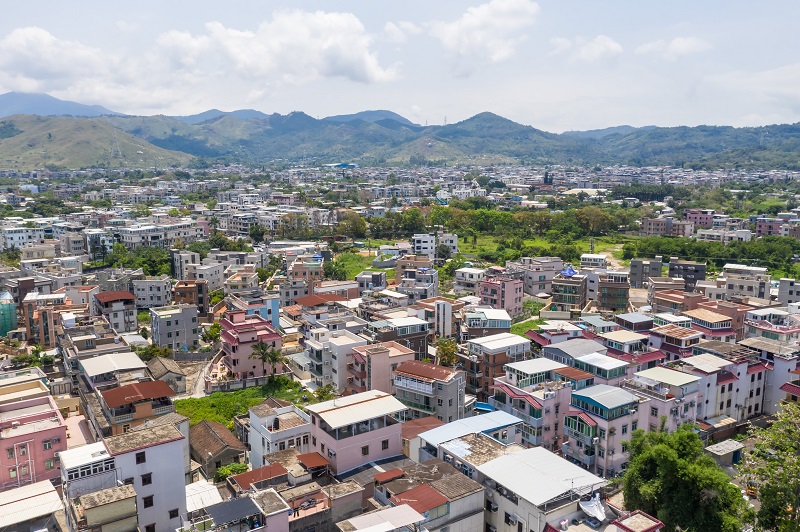
Ryan Ip and Iris Poon say the problem stems from a shortage of large-scale land development over the past 20 years, leaving government planners playing an endless game of catch-up.
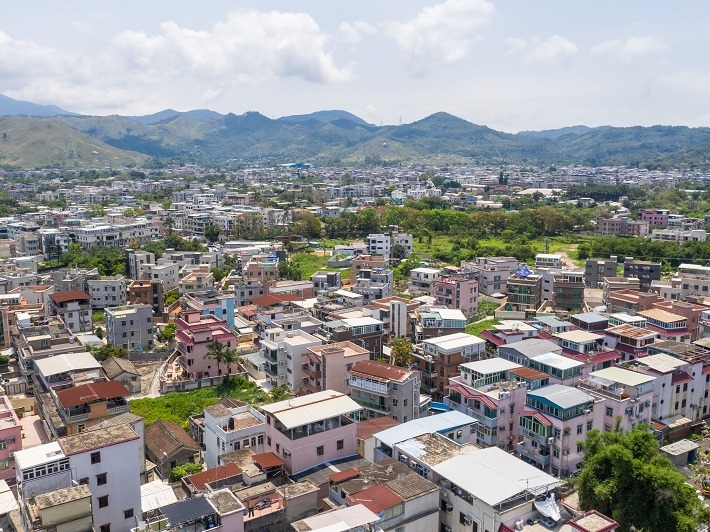
The land supply shortage has long been a major cause of Hong Kong's housing problems. And the government's latest land supply programme for private housing shows that the authorities seem to be running out of options. Of particular concern is the low proportion of government land, large sites and spade-ready sites in the line-up.
First, this year's programme lists only 15 government plots which can only supply 6,000 flats, the lowest in 11 years, and these units make up only 36 per cent of the total potential supply. This is hardly surprising, though, as the proportion of government sites has been declining over the years. Second, there are few large sites. Of the 15 government plots, only three can supply more than 500 units each. And, third, the proportion of spade-ready sites – those which have been properly zoned for residential use, and sites which have been resumed, cleared and prepared, with adequate provision of infrastructure – is also low.
An increasing number of sites in the programme are still subject to planning or other land administrative procedures and are thus not ready for construction to begin. Six sites that come under the government and railway property development categories have not completed the rezoning process, doubling from only three sites last year.
Many still need clearing, including the government site at Tai Lam (Castle Peak Road in Tuen Mun), which is the largest in the programme and is estimated to be able to supply 1,750 units. Currently, it is being rented to a non-profit organisation on a short-term lease.
Furthermore, there is the residential development to be located atop the future Tung Chung East station, which is still a construction site with reclamation and roadworks very much ongoing. The station itself is only expected to be completed in 2029. The fact the site has been launched for sale at this early stage reflects the government's serious lack of options.
The shortage of land supply in Hong Kong is the result of a lack of large-scale land development over the past 20 years. The current stock, including the Kai Tak New Development Area, was developed more than 20 years ago. However, apart from the five plots of rezoned commercial land announced this year, all the residential land in Kai Tak has now been sold.
While the supply of large-scale new development areas has been exhausted, the land reserve from railway development is also limited. The only remaining reserves are the Kam Sheung Road station Package 2, the MTR's Pat Heung Maintenance Centre and Siu Ho Wan Depot, which are all unlikely to be ready in the near term.
As such, before new development areas such as Kwu Tung North, Fanling North and Tung Chung East are ready to supply land on a large scale, the government can only rely on rezoning and developing existing land for residential purposes.
The government has been exploring all avenues to find land, from the proposal to rezone 210 plots seven years ago, to the focus on brownfield clusters and the rebuilding of urban squatter areas last year, to the implementation of the "single site, multiple use" model on "government, institution or community" sites this year.
However, since large-scale rezoning began in 2013, sites that could easily be rezoned have already been processed, and it would be challenging to rezone the rest. Hence, the process of finding land is getting harder in the short term, with diminishing results.
To break this vicious circle, we can only hope that long-term land development projects are delivered on time, or even ahead of schedule. In this regard, it is a pleasant surprise that the first plot of land for private housing at Kwu Tung North and Fanling North is about to be tendered on schedule.
As for the other major land development projects, the recent government budget highlighted that projects in Hung Shui Kiu, Yuen Long South and Tung Chung East are on schedule, which is an achievement. However, projects at these new development areas are mostly in the first phase, while housing supply mainly comes after the second or even third phase.
The government should therefore start preliminary work for second-phase funding well in advance so the bulk of new land supply will be delivered sooner rather than later.


Authors: Ryan Ip, Head of Land and Housing Research, Iris Poon, Senior Researcher at Our Hong Kong Foundation.
Ryan Ip and Iris Poon say the problem stems from a shortage of large-scale land development over the past 20 years, leaving government planners playing an endless game of catch-up.
The land supply shortage has long been a major cause of Hong Kong's housing problems. And the government's latest land supply programme for private housing shows that the authorities seem to be running out of options. Of particular concern is the low proportion of government land, large sites and spade-ready sites in the line-up.
First, this year's programme lists only 15 government plots which can only supply 6,000 flats, the lowest in 11 years, and these units make up only 36 per cent of the total potential supply. This is hardly surprising, though, as the proportion of government sites has been declining over the years. Second, there are few large sites. Of the 15 government plots, only three can supply more than 500 units each. And, third, the proportion of spade-ready sites – those which have been properly zoned for residential use, and sites which have been resumed, cleared and prepared, with adequate provision of infrastructure – is also low.
An increasing number of sites in the programme are still subject to planning or other land administrative procedures and are thus not ready for construction to begin. Six sites that come under the government and railway property development categories have not completed the rezoning process, doubling from only three sites last year.
Many still need clearing, including the government site at Tai Lam (Castle Peak Road in Tuen Mun), which is the largest in the programme and is estimated to be able to supply 1,750 units. Currently, it is being rented to a non-profit organisation on a short-term lease.
Furthermore, there is the residential development to be located atop the future Tung Chung East station, which is still a construction site with reclamation and roadworks very much ongoing. The station itself is only expected to be completed in 2029. The fact the site has been launched for sale at this early stage reflects the government's serious lack of options.
The shortage of land supply in Hong Kong is the result of a lack of large-scale land development over the past 20 years. The current stock, including the Kai Tak New Development Area, was developed more than 20 years ago. However, apart from the five plots of rezoned commercial land announced this year, all the residential land in Kai Tak has now been sold.
While the supply of large-scale new development areas has been exhausted, the land reserve from railway development is also limited. The only remaining reserves are the Kam Sheung Road station Package 2, the MTR's Pat Heung Maintenance Centre and Siu Ho Wan Depot, which are all unlikely to be ready in the near term.
As such, before new development areas such as Kwu Tung North, Fanling North and Tung Chung East are ready to supply land on a large scale, the government can only rely on rezoning and developing existing land for residential purposes.
The government has been exploring all avenues to find land, from the proposal to rezone 210 plots seven years ago, to the focus on brownfield clusters and the rebuilding of urban squatter areas last year, to the implementation of the "single site, multiple use" model on "government, institution or community" sites this year.
However, since large-scale rezoning began in 2013, sites that could easily be rezoned have already been processed, and it would be challenging to rezone the rest. Hence, the process of finding land is getting harder in the short term, with diminishing results.
To break this vicious circle, we can only hope that long-term land development projects are delivered on time, or even ahead of schedule. In this regard, it is a pleasant surprise that the first plot of land for private housing at Kwu Tung North and Fanling North is about to be tendered on schedule.
As for the other major land development projects, the recent government budget highlighted that projects in Hung Shui Kiu, Yuen Long South and Tung Chung East are on schedule, which is an achievement. However, projects at these new development areas are mostly in the first phase, while housing supply mainly comes after the second or even third phase.
The government should therefore start preliminary work for second-phase funding well in advance so the bulk of new land supply will be delivered sooner rather than later.