








“Nature-based” and Urban Development (I): Hong Kong Progression amidst Global Environmental Governance Challenges




“Nature-based” and Urban Development (I): Hong Kong Progression amidst Global Environmental Governance Challenges

The source text is in Chinese. This English version is for reference only. In case of any discrepancy between this English version and the Chinese version, the Chinese version shall prevail.
While most people undoubtedly support environmental protection, willingness to engage in further actions varies due to differences in interest groups and lifestyles. The global environmental governance is continuously facing similar challenges. For instance, regarding the 2024 United Nations Biodiversity Conference (CBD COP16) and the 2024 United Nations Climate Change Conference (COP29) held successively at the end of last year, a general opinion indicated that delegates had not yet reached a greater consensus or tangible progress on the most pressing issues, such as financing, monitoring, and evaluation, owing to developing countries had expressed dissatisfaction with the insufficient financial commitments from developed nations with a greater historical responsibility and developed countries had interpreted the responsibility differently. Moreover, global political and economic environments are changing rapidly. Immediately after taking office, Donald Trump, the President of the United State once again announced America’s withdrawal from the Paris Agreement, citing the need to reduce the economic burden. This would potentially trigger international ripple effects. All situations signify a deterioration in global environmental governance, which is especially worrying for environmentalists focused on global warming levels and intensifying natural disasters.
While most people undoubtedly support environmental protection, willingness to engage in further actions varies due to differences in interest groups and lifestyles. The global environmental governance is continuously facing similar challenges. For instance, regarding the 2024 United Nations Biodiversity Conference (CBD COP16) and the 2024 United Nations Climate Change Conference (COP29) held successively at the end of last year, a general opinion indicated that delegates had not yet reached a greater consensus or tangible progress on the most pressing issues, such as financing, monitoring, and evaluation, owing to developing countries had expressed dissatisfaction with the insufficient financial commitments from developed nations with a greater historical responsibility and developed countries had interpreted the responsibility differently. Moreover, global political and economic environments are changing rapidly. Immediately after taking office, Donald Trump, the President of the United State once again announced America’s withdrawal from the Paris Agreement, citing the need to reduce the economic burden. This would potentially trigger international ripple effects. All situations signify a deterioration in global environmental governance, which is especially worrying for environmentalists focused on global warming levels and intensifying natural disasters.
Nevertheless, excessively exuding negativity or sinking into climate anxiety could hinder motivation for action, impacting sustainability of environmental initiatives. Remarkably, both globally and locally, the past year saw notable breakthroughs worthy of recognition. For example, delegates from various countries have agreed to initiate several new cooperative mechanisms, including mutual sharing for digital genetic information, safeguarding an expanded role of locals in global biodiversity decision-making and engagement in the global carbon market. Meanwhile, China has been a proactive participant and a leader in the global climate and biodiversity agendas. For Hong Kong, following the announcement of development proposal of each New Development Area (NDA) in the Northern Metropolis, external parties have gained greater insight into the new environmental conservation measures.
Northern Metropolis Embraces "Nature-based Solutions"
Last year, the Government announced preliminary proposals for remaining NDAs in the Northern Metropolis, including the Lau Fau Shan/Tsim Bei Tsui/Pak Nai area, Ngau Tam Mei,
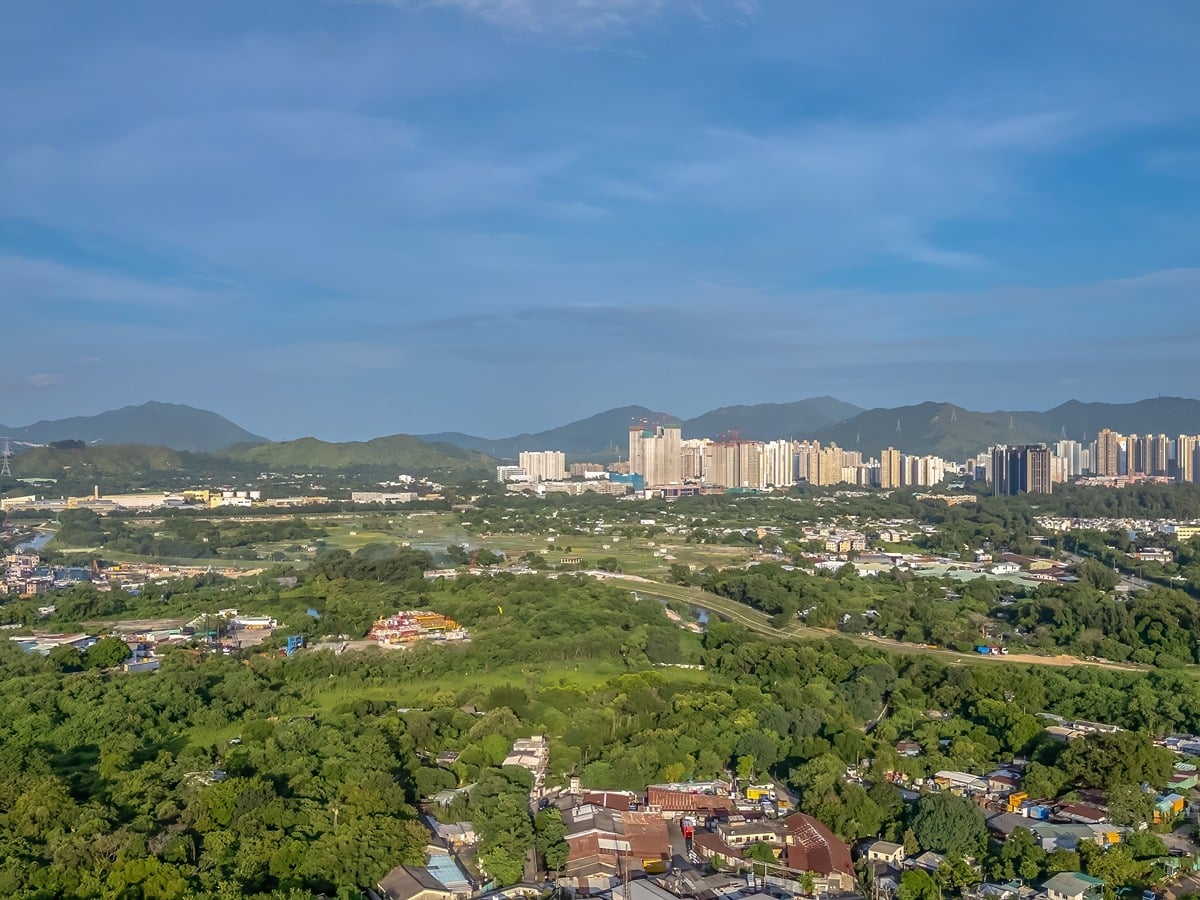
New Territories North New Town, and Ma Tso Lung. In the proposal for the New Territories North New Town, the Government particularly introduced the exploration on "nature-based solutions" (NbS) for the first time to establish a "Green River Valley", with the aim of enhancing biodiversity though extensive greening, construction of habitats and nature parks, and revitalision of rivers. In fact, "NbS" has been actively advocated by local environmental community over the past two years as innovative conservation means for urban development areas, including clearly targeted blue-green infrastructure and spatial greening initiatives, theoretically providing benefits for both human well-being and biodiversity.
Additionally, at the "2025 Nature-Based Solutions for Climate Conference" recently organised by local environmental conservation organisations, a representative from the Civil Engineering and Development Department shared the latest nature-based planning proposal of San Tin Technopole in the Northern Metropolis. The proposal outlined major planning principles, blue-green network layouts, landscape features, and 12 ecological designs in response to public representations received during the review of the Outline Zoning Plan for amendments in mid-2024.
While the proposal is subject to amendments and may not fully meet the ultimate expectations of different organisations, to a certain extent, it has embodied a cross-sector interactive and collaborative relationship, particularly the Government's adoption of new conservation concepts and environmental and professional organisations' persistent advocacy for ecological protection.
Noteworthily, the economic viability of "NbS" has raised concerns among environmental organisations, who have been wary of its potential misuse as a "greenwashing" tool. This will likely be a major concern throughout future progression of the proposal.
Key to Mainstreaming: Spatial Planning and Development Processes
At the city strategic level, the authority is formulating an updated Biodiversity Strategy and Action Plan (BSAP) for the period up to 2035. Believably, one of the primary objectives will be furthering mainstreaming of biodiversity and crafting city-scale strategies that in line with the "Kunming-Montreal Global Biodiversity Framework" (GBF).
Adopted by CBD COP15 during China's presidency, the GBF has been hailed as the Paris Agreement of nature conservation, with more aggressive strategic objectives than those of the Aichi Biodiversity Targets, and stronger emphasis on pragmatic implementation. It has proposed integrating biodiversity values into regulatory frameworks, policies, and development processes, and embedding them into urban spatial planning to further support effective financing and monitoring of related actions. It has also highlighted the importance of coordinating biodiversity conservation with climate action and explicitly identified the significant role of NbS.
As stated in the opening of this article, delegates at the CBD COP16 held last year had no consensus on the financing and monitoring mechanisms. The negotiations will commence again in Rome, Italy at the end of February. It is anticipated that the Hong Kong authority will incorporate the outcomes of the negotiation into the updated BSAP.
The arduous negotiation process is primarily attributable to substantial conflicts of interest among the involved countries. Many developing countries have voiced a desire to obtain more operational funding, yet they have refrained from subjecting themselves to increase external supervision, whereas developed countries, as major sources of conservation funding, potentially have had reservations about conservation investments due to political and economic uncertainties. Remarkably, analogous divergences prevail not only between nations worldwide, but also among stakeholders involved in Hong Kong's urban development.
Which development aspects and stakeholder groups can be involved in promoting biodiversity values in Hong Kong’s urban development process? What are the obstacles? How to address them? Stay tuned for the next article.


The source text is in Chinese. This English version is for reference only. In case of any discrepancy between this English version and the Chinese version, the Chinese version shall prevail.
While most people undoubtedly support environmental protection, willingness to engage in further actions varies due to differences in interest groups and lifestyles. The global environmental governance is continuously facing similar challenges. For instance, regarding the 2024 United Nations Biodiversity Conference (CBD COP16) and the 2024 United Nations Climate Change Conference (COP29) held successively at the end of last year, a general opinion indicated that delegates had not yet reached a greater consensus or tangible progress on the most pressing issues, such as financing, monitoring, and evaluation, owing to developing countries had expressed dissatisfaction with the insufficient financial commitments from developed nations with a greater historical responsibility and developed countries had interpreted the responsibility differently. Moreover, global political and economic environments are changing rapidly. Immediately after taking office, Donald Trump, the President of the United State once again announced America’s withdrawal from the Paris Agreement, citing the need to reduce the economic burden. This would potentially trigger international ripple effects. All situations signify a deterioration in global environmental governance, which is especially worrying for environmentalists focused on global warming levels and intensifying natural disasters.
While most people undoubtedly support environmental protection, willingness to engage in further actions varies due to differences in interest groups and lifestyles. The global environmental governance is continuously facing similar challenges. For instance, regarding the 2024 United Nations Biodiversity Conference (CBD COP16) and the 2024 United Nations Climate Change Conference (COP29) held successively at the end of last year, a general opinion indicated that delegates had not yet reached a greater consensus or tangible progress on the most pressing issues, such as financing, monitoring, and evaluation, owing to developing countries had expressed dissatisfaction with the insufficient financial commitments from developed nations with a greater historical responsibility and developed countries had interpreted the responsibility differently. Moreover, global political and economic environments are changing rapidly. Immediately after taking office, Donald Trump, the President of the United State once again announced America’s withdrawal from the Paris Agreement, citing the need to reduce the economic burden. This would potentially trigger international ripple effects. All situations signify a deterioration in global environmental governance, which is especially worrying for environmentalists focused on global warming levels and intensifying natural disasters.
Nevertheless, excessively exuding negativity or sinking into climate anxiety could hinder motivation for action, impacting sustainability of environmental initiatives. Remarkably, both globally and locally, the past year saw notable breakthroughs worthy of recognition. For example, delegates from various countries have agreed to initiate several new cooperative mechanisms, including mutual sharing for digital genetic information, safeguarding an expanded role of locals in global biodiversity decision-making and engagement in the global carbon market. Meanwhile, China has been a proactive participant and a leader in the global climate and biodiversity agendas. For Hong Kong, following the announcement of development proposal of each New Development Area (NDA) in the Northern Metropolis, external parties have gained greater insight into the new environmental conservation measures.
Northern Metropolis Embraces "Nature-based Solutions"
Last year, the Government announced preliminary proposals for remaining NDAs in the Northern Metropolis, including the Lau Fau Shan/Tsim Bei Tsui/Pak Nai area, Ngau Tam Mei,
New Territories North New Town, and Ma Tso Lung. In the proposal for the New Territories North New Town, the Government particularly introduced the exploration on "nature-based solutions" (NbS) for the first time to establish a "Green River Valley", with the aim of enhancing biodiversity though extensive greening, construction of habitats and nature parks, and revitalision of rivers. In fact, "NbS" has been actively advocated by local environmental community over the past two years as innovative conservation means for urban development areas, including clearly targeted blue-green infrastructure and spatial greening initiatives, theoretically providing benefits for both human well-being and biodiversity.
Additionally, at the "2025 Nature-Based Solutions for Climate Conference" recently organised by local environmental conservation organisations, a representative from the Civil Engineering and Development Department shared the latest nature-based planning proposal of San Tin Technopole in the Northern Metropolis. The proposal outlined major planning principles, blue-green network layouts, landscape features, and 12 ecological designs in response to public representations received during the review of the Outline Zoning Plan for amendments in mid-2024.
While the proposal is subject to amendments and may not fully meet the ultimate expectations of different organisations, to a certain extent, it has embodied a cross-sector interactive and collaborative relationship, particularly the Government's adoption of new conservation concepts and environmental and professional organisations' persistent advocacy for ecological protection.
Noteworthily, the economic viability of "NbS" has raised concerns among environmental organisations, who have been wary of its potential misuse as a "greenwashing" tool. This will likely be a major concern throughout future progression of the proposal.
Key to Mainstreaming: Spatial Planning and Development Processes
At the city strategic level, the authority is formulating an updated Biodiversity Strategy and Action Plan (BSAP) for the period up to 2035. Believably, one of the primary objectives will be furthering mainstreaming of biodiversity and crafting city-scale strategies that in line with the "Kunming-Montreal Global Biodiversity Framework" (GBF).
Adopted by CBD COP15 during China's presidency, the GBF has been hailed as the Paris Agreement of nature conservation, with more aggressive strategic objectives than those of the Aichi Biodiversity Targets, and stronger emphasis on pragmatic implementation. It has proposed integrating biodiversity values into regulatory frameworks, policies, and development processes, and embedding them into urban spatial planning to further support effective financing and monitoring of related actions. It has also highlighted the importance of coordinating biodiversity conservation with climate action and explicitly identified the significant role of NbS.
As stated in the opening of this article, delegates at the CBD COP16 held last year had no consensus on the financing and monitoring mechanisms. The negotiations will commence again in Rome, Italy at the end of February. It is anticipated that the Hong Kong authority will incorporate the outcomes of the negotiation into the updated BSAP.
The arduous negotiation process is primarily attributable to substantial conflicts of interest among the involved countries. Many developing countries have voiced a desire to obtain more operational funding, yet they have refrained from subjecting themselves to increase external supervision, whereas developed countries, as major sources of conservation funding, potentially have had reservations about conservation investments due to political and economic uncertainties. Remarkably, analogous divergences prevail not only between nations worldwide, but also among stakeholders involved in Hong Kong's urban development.
Which development aspects and stakeholder groups can be involved in promoting biodiversity values in Hong Kong’s urban development process? What are the obstacles? How to address them? Stay tuned for the next article.