











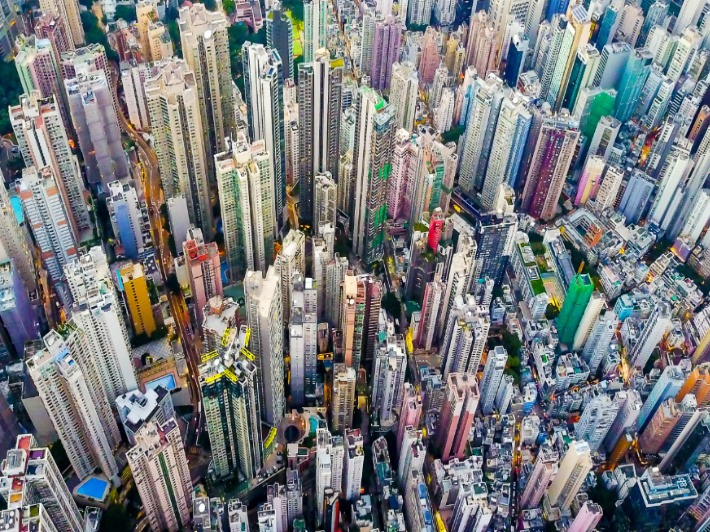
Hong Kong must cut the red tape and start churning out public housing to tackle the acute shortage of homes




Hong Kong must cut the red tape and start churning out public housing to tackle the acute shortage of homes

Authors: Ryan Ip, head of land and housing research, and Iris Poon, researcher at Our Hong Kong Foundation
At the crux of delays is a lack of transparency. An official one-stop platform disclosing the progress of each public housing project would allow government bureaus to be held accountable, and development timelines to be better respected.

Public housing is an important part of Hong Kong’s social welfare net. But development delays have taken a toll on the supply of public housing, pushing the queue for public rental housing to a record high and spawning an overwhelming demand for Home Ownership Scheme flats.
Our Hong Kong Foundation recently published a report titled “Cutting Red Tape to Catch Up with Shortfalls in Land and Housing Supply”. It warns of the severe undersupply in public housing. Over the past seven years, a deficit of some 82,600 units has been accumulated if we compare completions against the Long Term Housing Strategy’s production target.
To make matters worse, a further shortfall of 66,000 units is likely in the next decade. It is estimated that the average waiting time for a public rental housing flat will soon surpass six years, double what the government used to promise.
To add to the complexity of the problem, many public housing sites face hurdles before they can get to the “spade ready” point. Three such cases were scrutinised in the report. They illustrate how housing projects often do not proceed smoothly beyond the stage of rezoning, due to delays in procedures, including facility and land clearance, land resumption and engineering studies.
The first case is a site at the junction of Sung Wong Toi Road and To Kwa Wan Road in Ma Tau Kok. The original site plan was for 600 public housing units. This was later replaced by a plan for 100 units of transitional housing, after a small part of the site was not vacated on time.
The facility, used as an animal management centre by another government department, could only be moved out in 2023 due to a shortage of nearby relocation options. The site’s meandering timeline highlighted a seeming lack of coordination and common mandate among government departments on the land clearance schedule.
The second case is a site in Area 48, at Fanling/Sheung Shui, on which 4,000 public housing units could be constructed. The major obstacle in developing the site is the land resumption and land clearance process, since most of the site is privately owned and there are squatters.
Since January 2017, the site has been rezoned for public use and the process of land clearance and land resumption should have started. But, to date, there is no timetable for doing so.
The third case involves two sites on Pik Wan Road in Yau Tong, and the collective plan is to build about 3,200 public housing units. The two sites are not geographically linked and the larger site was rezoned at least three years earlier than the other.
It appears that the two sites are to be developed together, as their engineering studies were bundled together. But, given the housing shortage crisis, we believe it may be more beneficial for society if the engineering study for and development of the larger site were to proceed first.
The crux of these delays is the lack of disclosure and therefore transparency in the progress of projects. We recommend that the government set up a one-stop platform to fully disclose the progress of each public housing estate. Only when the information is public can government bureaus be held accountable for their work, and the development timeline better adhered to.
The above cases show that certain processes can be expedited and compressed. A bureaucratic mindset and procedural red tape are holding up the supply of public housing. It is essential that all relevant government departments work towards the common goal of churning out public housing. To lead us out of the housing crisis, the government must begin radical reforms now.


Authors: Ryan Ip, head of land and housing research, and Iris Poon, researcher at Our Hong Kong Foundation
At the crux of delays is a lack of transparency. An official one-stop platform disclosing the progress of each public housing project would allow government bureaus to be held accountable, and development timelines to be better respected.
Public housing is an important part of Hong Kong’s social welfare net. But development delays have taken a toll on the supply of public housing, pushing the queue for public rental housing to a record high and spawning an overwhelming demand for Home Ownership Scheme flats.
Our Hong Kong Foundation recently published a report titled “Cutting Red Tape to Catch Up with Shortfalls in Land and Housing Supply”. It warns of the severe undersupply in public housing. Over the past seven years, a deficit of some 82,600 units has been accumulated if we compare completions against the Long Term Housing Strategy’s production target.
To make matters worse, a further shortfall of 66,000 units is likely in the next decade. It is estimated that the average waiting time for a public rental housing flat will soon surpass six years, double what the government used to promise.
To add to the complexity of the problem, many public housing sites face hurdles before they can get to the “spade ready” point. Three such cases were scrutinised in the report. They illustrate how housing projects often do not proceed smoothly beyond the stage of rezoning, due to delays in procedures, including facility and land clearance, land resumption and engineering studies.
The first case is a site at the junction of Sung Wong Toi Road and To Kwa Wan Road in Ma Tau Kok. The original site plan was for 600 public housing units. This was later replaced by a plan for 100 units of transitional housing, after a small part of the site was not vacated on time.
The facility, used as an animal management centre by another government department, could only be moved out in 2023 due to a shortage of nearby relocation options. The site’s meandering timeline highlighted a seeming lack of coordination and common mandate among government departments on the land clearance schedule.
The second case is a site in Area 48, at Fanling/Sheung Shui, on which 4,000 public housing units could be constructed. The major obstacle in developing the site is the land resumption and land clearance process, since most of the site is privately owned and there are squatters.
Since January 2017, the site has been rezoned for public use and the process of land clearance and land resumption should have started. But, to date, there is no timetable for doing so.
The third case involves two sites on Pik Wan Road in Yau Tong, and the collective plan is to build about 3,200 public housing units. The two sites are not geographically linked and the larger site was rezoned at least three years earlier than the other.
It appears that the two sites are to be developed together, as their engineering studies were bundled together. But, given the housing shortage crisis, we believe it may be more beneficial for society if the engineering study for and development of the larger site were to proceed first.
The crux of these delays is the lack of disclosure and therefore transparency in the progress of projects. We recommend that the government set up a one-stop platform to fully disclose the progress of each public housing estate. Only when the information is public can government bureaus be held accountable for their work, and the development timeline better adhered to.
The above cases show that certain processes can be expedited and compressed. A bureaucratic mindset and procedural red tape are holding up the supply of public housing. It is essential that all relevant government departments work towards the common goal of churning out public housing. To lead us out of the housing crisis, the government must begin radical reforms now.